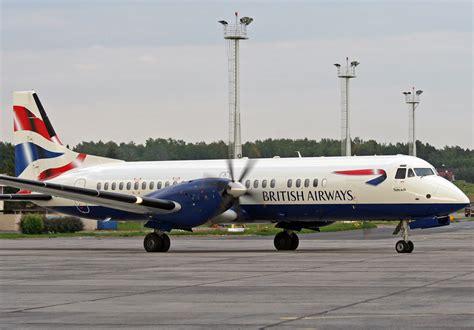
The British Aerospace ATP (Advanced Turbo-Prop) stands as a testament to late-20th-century innovation in regional air travel, marrying fuel efficiency and noise reduction in a way that sought to redefine short-haul operations. Developed from the successful Hawker Siddeley HS 748, the ATP project was born from the twin pressures of the 1979 oil crisis and growing environmental concerns, driving British Aerospace to envision a feederliner that could outperform its predecessors in both economy and passenger comfort.
Drawing on a robust legacy, the ATP’s airframe was extensively redesigned: its fuselage stretched to 26.01 m and wingspan expanded to 30.62 m, accommodating a standard 64-passenger layout while retaining 30 % commonality with the HS 748. Compliance with evolving European and U.S. regulations was baked into the design, ensuring the type would meet the stringent safety and performance mandates of international operators.
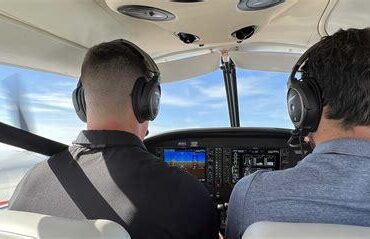
Under the skin, the ATP featured a glass cockpit bristling with digital avionics and multifunction displays, color‑coded instrumentation, and a centralized fault‑warning panel—measures that significantly reduced pilot workload and heralded a new era of cockpit ergonomics and situational awareness.
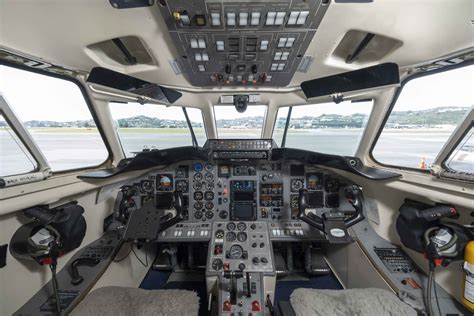
Propulsion represented a core leap forward: twin Pratt & Whitney Canada PW126 turboprops, each delivering 1,978 kW, drove custom six‑blade Hamilton Standard propellers designed to rotate at lower RPMs, slashing cabin noise to levels on par with contemporary jets. Weighing just 468 lb per seat, the ATP cruised notably faster than its predecessor, boasting a top cruise speed of 496 km/h at 15,000 ft.
The prototype took to the skies on 6 August 1986 from Manchester Airport under the command of test pilot Robby Robinson, marking the beginning of a rigorous flight test program. Assembly lines at Woodford and Prestwick brought components together, while the Chadderton facility turned out airframes and wings. British Aerospace eyed 300 sales, but fierce competition from the de Havilland Canada Dash 8, ATR 42/72, and Fokker 50 limited orders to 65 aircraft before production ceased in mid‑1997.
In 2000, six passenger ATPs found a second life as ATPF freighters, converted by West Air Sweden with an HS 748‑derived freight door that boosted cargo capacity by 30 % at only a 10 % rise in operating costs. These freighters underlined the platform’s versatility and solidified its role in niche cargo markets.
Operational Debut and Expansion
Entry into commercial service came in 1988 with British Midland, swiftly followed by British Airways, Loganair, and British Regional Airlines. Charter operators and British World Airlines — with quick‑change passenger/freight configurations — further demonstrated the ATP’s adaptability. By the late 1990s, Sun‑Air bolstered its fleet with second‑hand ATPs to meet growing Denmark–UK traffic, while Air Europa Express doubled its ownership from six to 12 in 1998, underscoring the aircraft’s appeal in European regional networks.
In North America, the ATP breakthrough arrived with Avline’s five‑aircraft order, followed by Wings West’s pivotal 10‑aircraft win in September 1987, with CEO Carl Albert lauding its “lowest seat‑mile costs” against the Dash 8 and Fokker 50. Despite this, the only U.S. carrier to operate the type in scheduled service was Air Wisconsin as United Express under code‑share, illustrating the market’s challenges.
By December 2021, 12 ATPs remained in cargo service—ten with West Air Sweden and two with Deraya—highlighting the type’s enduring freight utility even decades after production ended.
Variants and Unfulfilled Proposals
The ATP lineage extended to the Jetstream 61, featuring a Jetstream 41–derived interior, increased 70‑seat capacity, and more powerful PW127 engines. Only four were built before the 1995 Aero International (Regional) merger with ATR led to its immediate cancellation. Proposed military adaptations included the Maritime ATP (P.132) with under‑fuselage radar, FLIR, and weapon pylons, and the ATP‑AEW airborne early warning concept for Australia; neither advanced beyond design studies.
Global Operators and Legacy
As of March 2024, eight passenger ATPs reactivated in Kenya (formerly stored by West Air Sweden and NextJet between 2018–2024) remain the last civil operators, while 15 airframes are mothballed, four preserved, and the rest scrapped. This sparse roster belies the ATP’s past prominence in regional fleets across Europe and North America.
Accidents and Safety Record
The ATP’s service history includes two fatal accidents: Merpati Nusantara Flight 106 on 19 April 1997, which crashed on approach to Tanjung Pandan Airport with 15 fatalities and 43 survivors; and SATA Air Açores Flight 530 on 11 December 1999, a controlled flight into terrain on São Jorge Island that claimed all 35 on board. These incidents, while tragic, remain the most severe in the type’s history.
Preserved and Repurposed Airframes
Several ATP fuselages serve as training or display assets: G‑11‑068 at Glasgow Prestwick for fire drills; G‑11‑071 at Woodford/Manchester for smoke training; SE‑MHF at the Isle of Man Airport in partial form; and SE‑LHX as G‑MAUD at the Manx Aviation and Military Museum in restored Manx Airlines livery. In East Java, PK‑DGA’s fuselage has been converted into a unique restaurant, while SE‑LPU trains firefighters at Coventry Airport.
Technical Specifications
Crew: 4 (two pilots, two flight attendants)
Capacity: 64 passengers
Dimensions: Length 26.00 m; Wingspan 30.63 m; Height 7.14 m; Wing area 78.3 m²
Weights: Empty 13,595 kg; MTOW 22,930 kg; Fuel capacity 6,364 L
Powerplant: 2 × PW126 turboprops (1,978 kW each) with 6‑blade Hamilton Standard propellers (4.19 m diameter)
Performance: Cruise 496 km/h at 4,575 m; Range 1,825 km (64 pax); Ferry range 4,070 km; Service ceiling 7,600 m
Conclusion
The British Aerospace ATP encapsulates a pivotal moment when turboprop technology was reimagined for greater efficiency, quieter cabins, and enhanced pilot ergonomics. Despite limited production and fierce competition, its innovative design elements—spanning advanced propulsion, glass cockpit avionics, and structural refinements—ensure that the ATP holds a distinguished place in the evolution of regional airliners.