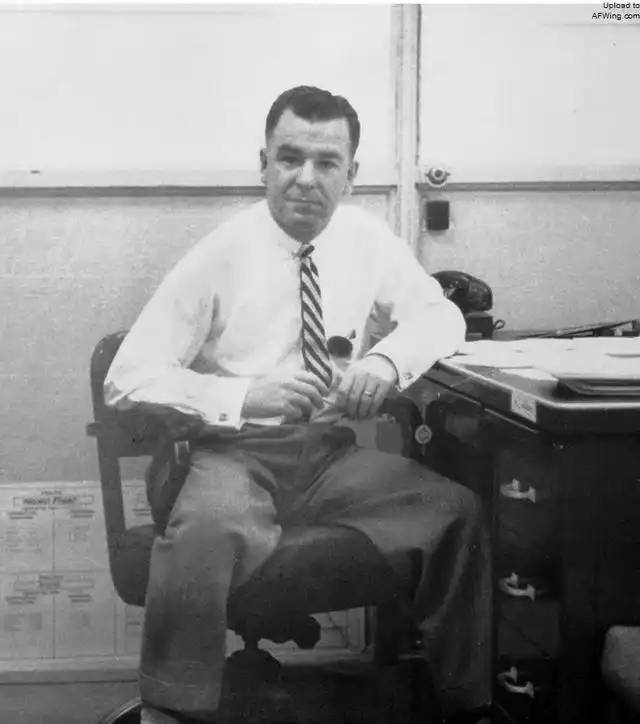
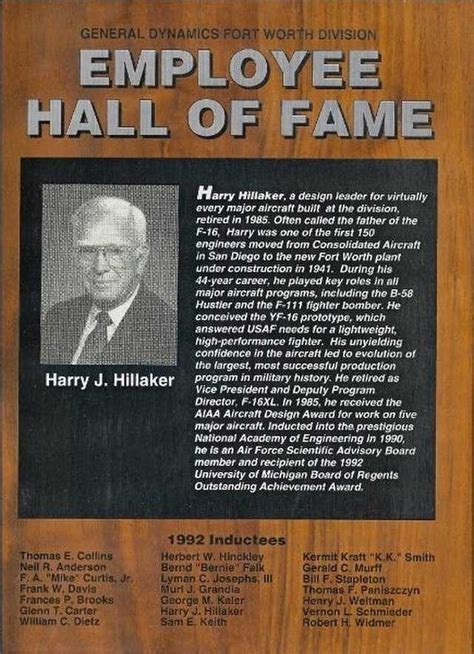
The F-16 Fighting Falcon, one of the most successful and versatile fighter aircraft in the world, owes much of its design brilliance to one man: Harry J. Hillaker, often referred to as the “Father of the F-16.” Hillaker’s revolutionary approach to fighter aircraft design transformed the landscape of modern aerial combat. This article explores his life, his journey to creating the F-16, and the lasting impact his work has had on military aviation.
Harry J. Hillaker: A Pioneer in Aerodynamics
Born in 1919 in Flint, Michigan, Harry J. Hillaker was destined for greatness in the field of aviation, though his early aspirations to become a pilot were hindered by his colorblindness. Instead, he channeled his passion into aerodynamics, an emerging field that was critical to the advancement of military aviation. Hillaker pursued his studies at the University of Michigan, which, at the time, was the only institution in the United States offering a specialized program in aerodynamics. This education set the stage for his future success in the field.
Early Career and Involvement in Aircraft Design
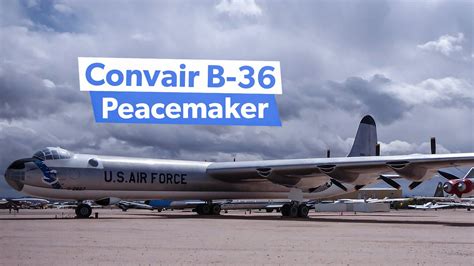
Hillaker’s career began with several significant contributions to the design of heavy bombers during the World War II era. His first major project was the design of the B-36 Peacemaker, at the time the world’s largest bomber. This experience gave Hillaker invaluable insight into the complexities of aircraft design, particularly in terms of structural integrity, weight distribution, and performance at high altitudes.
The B-58 Hustler and F-111
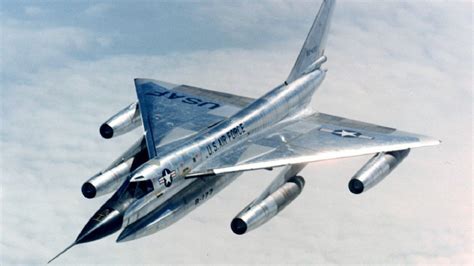
Following his success with the B-36, Hillaker continued his work on cutting-edge aircraft, including the B-58 Hustler, the first supersonic bomber. The B-58 had a troubled history, as it was plagued by accidents and was eventually retired due to its high operating costs and limited effectiveness. Nevertheless, the lessons Hillaker learned from this project would influence his later work on fighter aircraft.
In the early 1960s, Hillaker was involved in the design of the F-111, a versatile fighter-bomber that incorporated revolutionary features such as a variable-sweep wing. Despite its technological advancements, the F-111 failed to meet operational expectations, particularly during the Vietnam War, where its complex systems proved difficult to maintain and operate. This failure led Hillaker to reconsider the very principles of fighter aircraft design, focusing on what truly mattered in combat situations.
The Turning Point: Collaborating with John Boyd
A pivotal moment in Hillaker’s career came during his collaboration with John Boyd, a U.S. Air Force fighter pilot and military strategist. Boyd introduced Hillaker to the Energy-Maneuverability theory, a concept that revolutionized the understanding of aerial dogfights. Boyd argued that the most crucial factor in air combat was not raw speed or firepower, but maneuverability—the ability to outmaneuver an opponent in a high-stakes, close-quarters battle.
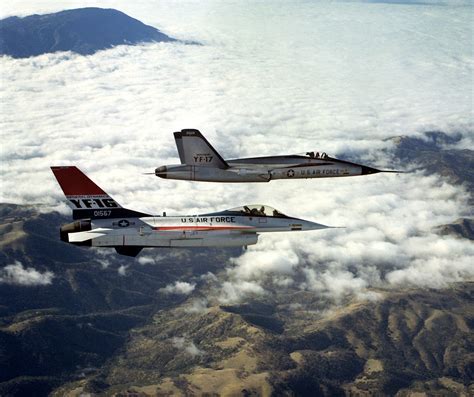
Boyd’s theory emphasized the importance of agility, lightweight design, and the pilot’s experience, all of which became central to the F-16’s design. This collaboration marked a dramatic shift in Hillaker’s approach to fighter aircraft, which had previously been focused on heavy, high-performance bombers. Together, Boyd and Hillaker developed the concept of the lightweight fighter, which would ultimately result in the F-16 Fighting Falcon.
F-16 Fighting Falcon: A Revolutionary Fighter
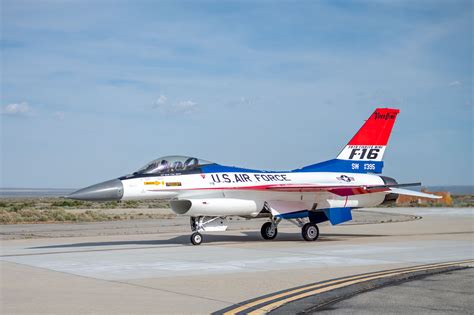
The F-16 Fighting Falcon was the product of Hillaker’s and Boyd’s shared vision of a highly agile, cost-effective, and versatile fighter aircraft. Officially designed under the Lightweight Fighter (LWF) program of the U.S. Air Force, the F-16 was intended to offer superior maneuverability at a fraction of the cost of heavier fighters like the F-15.

The Design Breakthroughs
Hillaker’s team pioneered several groundbreaking design features in the F-16, which would go on to influence aircraft design for decades. One of the most notable innovations was the integrated fuselage and wing design. Unlike conventional fighters of the time, which had distinct fuselage and wing sections, the F-16 featured a blended wing-body design, which improved aerodynamics and overall performance. The aircraft also featured a single vertical stabilizer, a design that reduced weight and drag while enhancing stability during high-speed maneuvers.
Perhaps the most significant advancement was the introduction of the fly-by-wire (FBW) flight control system. This electronic system allowed the aircraft to achieve superior handling and agility, as it could automatically adjust flight surfaces to optimize performance. The F-16’s FBW system gave pilots unparalleled control, making it one of the most responsive fighter jets in history.
Performance and Cost Efficiency
The F-16’s design emphasized a balance between cost and performance. Weighing in at only 8 tons, it was much lighter than other fighter jets of its class, such as the F-15. Despite this, the F-16’s performance was nearly on par with the F-15, at just half the cost. This combination of affordability and capability made the F-16 an attractive option for air forces worldwide.
Since its first flight in 1974, the F-16 has undergone continuous upgrades, including the introduction of the F-16V variant. With its enhanced radar systems, avionics, and weaponry, the F-16V remains one of the most capable multirole fighters in service today. As of 2024, over 4,900 F-16s have been produced, and the aircraft is in service with 25 countries across the globe.

The Philosophy Behind the F-16
Hillaker was clear about the core philosophy that guided the development of the F-16. He believed that the key to creating a successful fighter aircraft was to focus not on the specifications and requirements of contracts, but on the needs and experiences of the pilot. In his own words, the F-16’s success stemmed from the idea that it was designed for pilots, not for the contract.
Hillaker’s collaboration with Boyd and other influential military experts formed the foundation of what became known as the “fighter mafia”—a group of forward-thinking military strategists and engineers who pushed for aircraft that would excel in real-world combat scenarios, rather than theoretical performance metrics.
The Legacy of Harry J. Hillaker
Harry J. Hillaker retired in 1986, but his impact on aviation design and military strategy continues to be felt to this day. Though he stepped away from the U.S. Air Force, Hillaker remained active in the development and improvement of the F-16, which was continually upgraded to meet new challenges in modern aerial warfare. Reflecting on his career, Hillaker considered his greatest achievement to be the creation of the F-16 and his partnership with John Boyd.
Hillaker’s legacy lives on in the continued success of the F-16 Fighting Falcon, which remains one of the most successful and widely used fighter aircraft in history. Moreover, the principles of lightweight design and pilot-centered philosophy have influenced the development of subsequent aircraft, such as the F-35 Lightning II.
Hillaker’s Influence on Modern Air Combat
The influence of Hillaker’s design philosophy extends beyond the F-16. The modern approach to multirole fighters and cost-effective aircraft design owes much to Hillaker’s vision of a fighter that combined agility, cost-effectiveness, and ease of maintenance. The F-35, a fifth-generation stealth fighter, incorporates many of the principles Hillaker championed, including enhanced maneuverability and advanced avionics, all while maintaining a strong focus on the pilot’s experience in combat.

Conclusion
Harry J. Hillaker’s revolutionary approach to fighter design and his collaboration with John Boyd shaped the future of aerial combat. Through the creation of the F-16 Fighting Falcon, Hillaker demonstrated the importance of agility, cost-efficiency, and the human element in aircraft design. His legacy continues to influence modern military aviation, and the F-16 remains a testament to his vision and expertise.
FAQ
1. What were the main design features of the F-16 that set it apart from other fighter jets?
The F-16 Fighting Falcon featured several key design innovations, including its blended wing-body design, single vertical stabilizer, and fly-by-wire (FBW) flight control system. These features made the F-16 one of the most maneuverable and cost-effective fighter jets of its era, offering performance similar to heavier aircraft like the F-15 at half the cost.
2. How did John Boyd’s Energy-Maneuverability theory influence the F-16 design?
Boyd’s Energy-Maneuverability theory emphasized the importance of agility in air combat over raw speed or firepower. This theory played a pivotal role in the development of the F-16, as it led Hillaker and his team to focus on a lightweight design that prioritized maneuverability, allowing the F-16 to excel in close-quarters dogfights.
3. What is Harry J. Hillaker’s legacy in modern aviation?
Harry J. Hillaker’s legacy lives on in the F-16 Fighting Falcon, which remains one of the most successful fighter jets in history. His emphasis on cost-effective, agile design and focus on the pilot’s experience in combat have influenced the development of later aircraft like the F-35 Lightning II, shaping the future of modern aerial warfare.