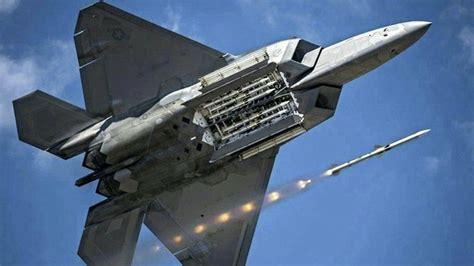
In a surprising turn of events, President Donald Trump has publicly proposed the development of a twin-engine successor to the F-35 Joint Strike Fighter, a bold initiative he dubbed the F-55. The announcement was made during a state visit to Qatar on May 15, 2025, marking a significant departure from the original vision of the Joint Strike Fighter program and potentially reshaping the future of U.S. airpower.
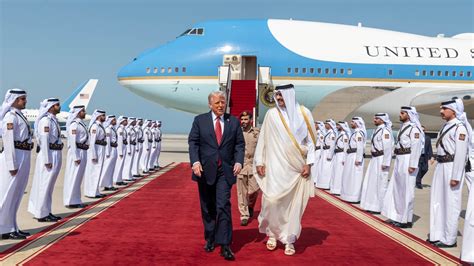
Trump’s F-55 Revelation: A Strategic Bombshell in Qatar
President Trump’s remarks came during a high-profile visit to Al Udeid Air Base in Qatar, a strategic U.S. military hub in the Middle East. Flanked by Boeing CEO Kelly Ortberg and GE Aerospace CEO Larry Culp during a breakfast with business leaders, Trump declared his intent to move beyond single-engine fighter designs, criticizing the F-35’s propulsion configuration: “The F-35 has a single engine. I don’t like single engines… We’re doing an upgrade — a simple upgrade — but we’re also doing an F-55.”
The timing of the announcement coincided with Boeing landing its largest-ever order — a $96 billion deal with Qatar Airways for 160 widebody jets, underlining the deepening military-industrial ties between the U.S. and its Gulf allies.
Industry Reaction and Program History: A Twin-Engine Vision Reemerges
In response, Lockheed Martin, the prime contractor for the F-35, expressed appreciation for the president’s support of both the F-35 and the F-22 programs. The company reaffirmed its commitment to advancing U.S. air dominance but offered no confirmation of any official F-55 development underway.
The concept of a twin-engine F-35 had largely vanished from serious defense discourse since the inception of the Joint Strike Fighter program in the early 2000s. Trump’s remarks mark the first time in years such a variant has been openly discussed at the highest levels of government.
Performance Potential: Why Two Engines Could Transform the F-35 Platform
From an engineering perspective, the switch to twin engines could introduce significant gains. Additional thrust could allow for higher top speeds, improved climb rates, greater payload capacity, and increased survivability — all critical metrics in modern aerial combat. There’s also a fundamental safety advantage in carrier operations and contested environments, where a single engine failure can be catastrophic.
Potential engine solutions for the F-55 include designs from the Next Generation Adaptive Propulsion (NGAP) program, which supports both the Air Force’s NGAD effort and new engine research. NGAP engines, like General Electric’s XA102 and Pratt & Whitney’s XA103, are being developed under $3.5 billion contracts awarded earlier this year. These next-gen engines build on technology from the Adaptive Engine Transition Program (AETP), which, despite being canceled in 2023, continues to influence propulsion advancements.

Engineering Challenges: Cost, Complexity, and Feasibility Concerns
Yet, moving from a single- to twin-engine layout is not a simple upgrade. It would necessitate a near-complete redesign of the F-35 airframe and associated subsystems. The cost implications are substantial, not only in terms of development and unit price but also in long-term maintenance and logistical support.
Additionally, the F-35B variant, which performs Short Takeoff and Vertical Landing (STOVL) for the U.S. Marine Corps, would be practically incompatible with a twin-engine configuration. The aircraft’s lift fan and compact size make it infeasible to adopt two engines without undermining its core design purpose.
Naval Preferences and Global Context: Why the Navy May Push for F-55
For the U.S. Navy, however, the F-55’s design may hold significant appeal. Operating on aircraft carriers, where safety margins are critical and operational risks are high, twin engines provide valuable redundancy. Despite no major F-35C losses from engine failures to date, a shift toward a more robust platform could align with the Navy’s long-term doctrine.
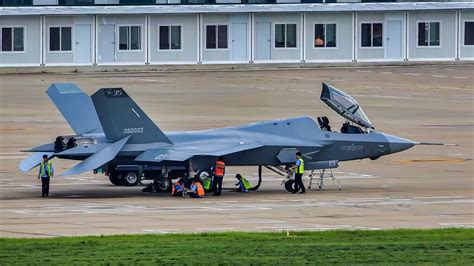
Interestingly, China’s new J-35 fighter, seen by many as a Chinese analog to the F-35, already incorporates a twin-engine configuration. Intended for carrier operations, the J-35’s dual-engine design underscores Beijing’s own emphasis on power and survivability in maritime aviation.
F/A-XX Connections and Lockheed’s Resurgence After Setback
Trump’s F-55 initiative may also be linked to the F/A-XX program, the Navy’s planned sixth-generation stealth fighter. Earlier this year, Lockheed Martin was reportedly eliminated from this competition due to not meeting certain program requirements. However, the F-55 could be a reimagined Lockheed proposal, possibly reviving their F/A-XX ambitions through an evolved F-35C-based concept.
The Pentagon recently confirmed that F/A-XX contract decisions could be delayed by up to three years, opening the door to alternative solutions like the F-55. If Lockheed reenters the fray with a twin-engine derivative of its most successful stealth fighter, the company could be attempting to regain relevance in next-generation naval aviation.
Air Force Constraints and Export Opportunities
The U.S. Air Force, in contrast, is grappling with budget limitations. With the F-47 sixth-generation fighter already testing the boundaries of fiscal feasibility, it’s unclear whether the service could afford to field the F-55 in parallel. That said, a land-based twin-engine F-55 could serve as a lower-cost, lower-risk companion to the F-47, especially if export partners are brought in as co-investors.
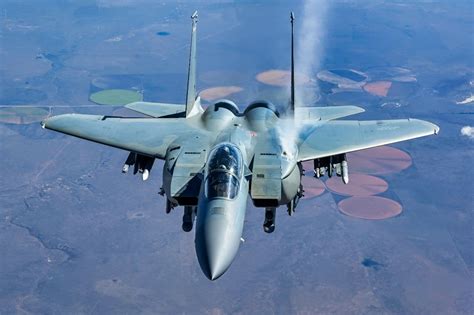
Trump’s timing may not be accidental. Past discussions have linked Saudi Arabia and the United Arab Emirates to possible F-35 purchases. The F-55 might be a strategic alternative, positioned as a collaborative development opportunity for U.S.-aligned nations in the Gulf. Both countries previously invested in enhancements to the F-15EX Advanced Eagle, which the U.S. Air Force is now benefiting from.
Lockheed’s “Ferrari” F-35: Bridging the Gap Between F-35 and F-47
In April, Lockheed Martin CEO Jim Taiclet floated the idea of a souped-up F-35 variant offering 80% of the F-47’s capabilities at half the cost, leveraging technologies from both the F-22 and NGAD. He dubbed it the “Ferrari” of fighters — a concept believed to be closely related to Trump’s mention of a “super upgrade.”
Lockheed is already deep into developing the Block 4 version of the F-35, which integrates advanced weapons, sensors, and electronic warfare upgrades. A separate concept, the unofficial F-35X, continues to circulate within defense circles as a possible next-generation refinement.
F-22 “Super” Upgrade: Trump’s Revival of the Raptor
President Trump also touched on plans to modernize the F-22 Raptor, calling it “the most beautiful fighter jet in the world.” He suggested a future F-22 Super with enhanced stealth capabilities, updated Infrared Defensive Systems (IRDS), and extended range through conformal tanks.
Paradoxically, Trump also downplayed the strategic value of stealth, stating, “Stealth is basically a lot of the design and the shape… So you’re going to design an ugly plane for stealth reasons.” He implied that while China may copy the F-22’s shape, they lack the capacity to replicate the jet’s sophisticated engines.
F-55: Visionary Innovation or Verbal Misfire?
Despite the excitement, there remains a very real possibility that the F-55 does not currently exist in any official capacity. The announcement could reflect nothing more than a spontaneous idea from Trump, similar to his now infamous 2018 comment about delivering “F-52s” to Norway — a fictional aircraft inspired by a misreading of Norway’s 52-unit F-35 order.
Nonetheless, even an off-the-cuff remark by a U.S. president can trigger ripples in defense policy, corporate strategy, and global procurement planning. The War Zone has reached out to both the U.S. Air Force and Navy for clarification on the F-55 and awaits a definitive response.
Whether the F-55 becomes a next-generation export marvel, a carrier-based powerhouse, or simply a passing thought never realized, its unveiling adds a compelling chapter to the evolving saga of American airpower.