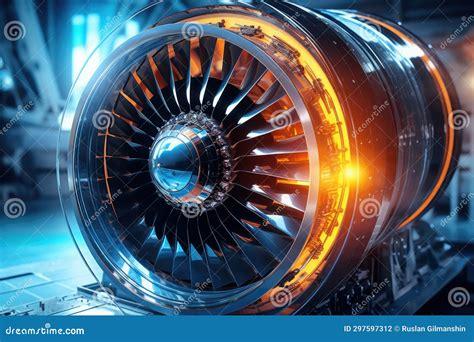
In the modern era of aviation, turbofan engines have become the definitive propulsion system for both commercial airliners and high-performance military aircraft. With origins rooted in the shortcomings of turbojets, the turbofan emerged as a more fuel-efficient, quieter, and versatile alternative, transforming how we think about propulsion at subsonic and transonic speeds. By blending core engine power with a high-bypass airflow, the turbofan achieves optimal balance between thrust, efficiency, and noise control—making it the cornerstone of present-day jet propulsion.
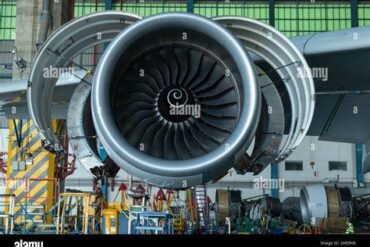
Developed from early turbojet designs, turbofan technology matured through both aerodynamic innovation and thermodynamic refinement. Unlike turbojets that push all incoming air through the combustion core, turbofans divide intake air into two distinct flows: one passing through the core, and the other bypassing it to generate additional thrust. This bypass stream is propelled by a large fan at the front of the engine, yielding increased propulsive efficiency at cruise speeds and significantly lower noise levels.
Fundamentals of Turbofan Operation
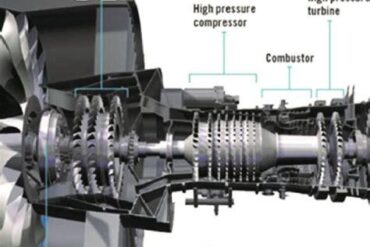
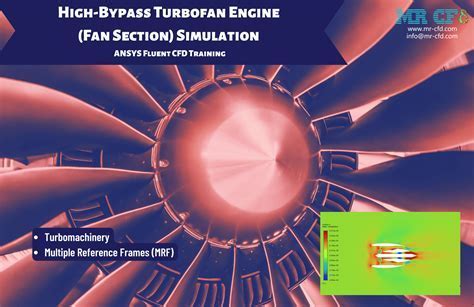
At the heart of a turbofan lies a gas turbine that drives a large-diameter ducted fan. This setup enables the engine to accelerate a larger mass of air at a slower velocity—a key principle for improving fuel efficiency. The division of airflow into core and bypass streams is what distinguishes the turbofan from its predecessor, the turbojet.
The bypass ratio (BPR), defined as the mass flow rate of the bypass stream divided by that of the core stream, plays a critical role in engine classification and performance. High-bypass engines, with BPRs exceeding 5:1, dominate commercial aviation due to their quiet operation and efficiency. Conversely, low-bypass engines—used in fighter aircraft—deliver high specific thrust and support afterburner integration for supersonic performance.
Bypass Ratio and Efficiency Trade-Offs
The strategic aim of increasing the bypass ratio is to boost propulsive efficiency while managing specific fuel consumption (SFC). A turbofan with a BPR of 6, for instance, channels six times more air around the core than through it. This results in lower exhaust velocities, which directly correlates with reduced fuel usage and lower acoustic emissions.
The propulsive (Froude) efficiency improves when thrust is produced by accelerating a larger air mass at lower velocity, as opposed to turbojets which rely on high-speed exhaust. This efficiency gain is most noticeable in the cruise speed range of 500–1,000 km/h, where most commercial aircraft operate.
Thrust Generation in Turbofans
Turbofan thrust derives from both the core jet exhaust and the bypass air stream. The total thrust (( F_N )) is governed by a detailed balance of mass flow and exhaust velocities:
F_N = \dot{m}e v{he} – \dot{m}_0 v_0 + BPR \cdot \dot{m}_c v_f
Here, ( \dot{m}e ) is the core exhaust mass flow, ( \dot{m}_c ) is the core intake, ( v{he} ) the core exhaust velocity, and ( v_f ) the bypass jet velocity. The formula highlights the significant contribution of the bypass flow to overall engine performance.
Evolution of Turbofan Technology
The first conceptual spark for the turbofan can be traced to Frank Whittle’s 1936 UK patent, which envisioned a fan driven by an additional turbine stage to enhance thrust through mass flow manipulation. Although early prototypes such as the German Daimler-Benz DB 670 were ground-tested during World War II, it was the Rolls-Royce Conway—with a BPR of 0.3—that became the first production turbofan in commercial service.
Subsequent advances saw higher bypass designs emerge, including the Soloviev D-20 used in the Tupolev Tu-124 and GE’s CJ805-23, which pioneered the aft-fan architecture. This lineage continued into modern times with GE’s CF6, Rolls-Royce’s RB211, and Pratt & Whitney’s PW4000, culminating in ultra-high-bypass models like the PW1000G geared turbofan, boasting a BPR of 12.5:1.
Noise Mitigation Strategies
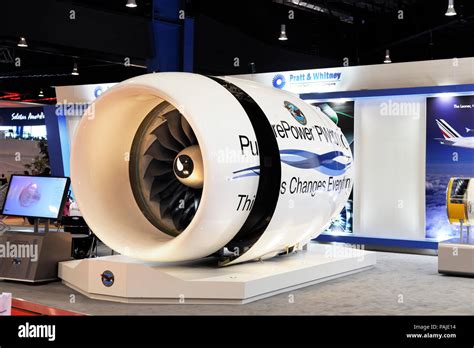
Turbofan engines offer a significant reduction in noise levels compared to turbojets, primarily due to the lower average exhaust velocity of the bypass stream. However, noise sources remain—originating from the fan blades, compressors, turbines, and turbulent mixing zones.
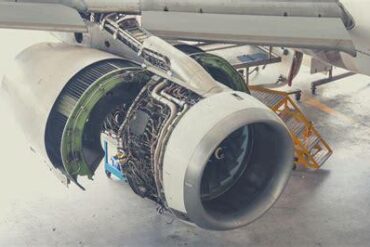
To combat these issues, modern engines integrate acoustic liners within nacelles and apply chevrons to nozzle edges. Such design innovations are prominently seen in engines like the GEnx-2B powering the Boeing 747-8 and Rolls-Royce’s Trent 1000, which services the Boeing 787 Dreamliner.
Turbofan Configurations and Variants
Turbofan architecture is not monolithic; rather, it encompasses a broad spectrum of configurations designed to meet distinct performance profiles:
- Single-spool designs (e.g., Snecma M53) feature a unified shaft for fan and compressor.
- Two-spool architectures separate the low-pressure and high-pressure spools, common in engines like the BR710.
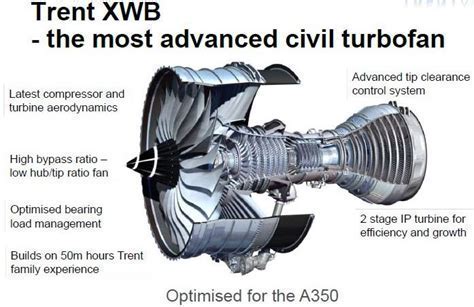
- Three-spool designs, such as the RB211 and Trent series, introduce an intermediate-pressure spool for refined control.
- Geared turbofans—exemplified by the PW1000G—employ reduction gearboxes to decouple fan speed from turbine RPM, enhancing both efficiency and component longevity.
Afterburners and Military Applications
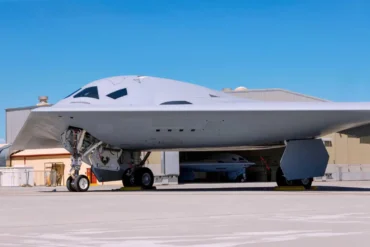
Low-bypass turbofans form the backbone of military aviation, particularly for supersonic flight and combat maneuvering. These engines often incorporate afterburners—secondary combustion chambers that mix additional fuel with bypass and core exhaust to produce short-term thrust spikes.
Examples include the Pratt & Whitney F119, used in the F-22 Raptor, and the GE F110, powering variants of the F-16. These engines prioritize thrust-to-weight ratio and acceleration over fuel economy, often employing multi-stage fans and variable nozzles to adapt to varying flight regimes.
Cycle Improvements and Future Directions
Ongoing efforts in turbofan development focus on increasing the overall pressure ratio (OPR) and turbine inlet temperatures (TIT). Raising these parameters enhances thermal efficiency, yielding more thrust per unit of fuel.
Advanced materials like ceramic matrix composites and single-crystal turbine blades, alongside sophisticated cooling techniques, enable these engines to operate under extreme conditions without sacrificing durability.
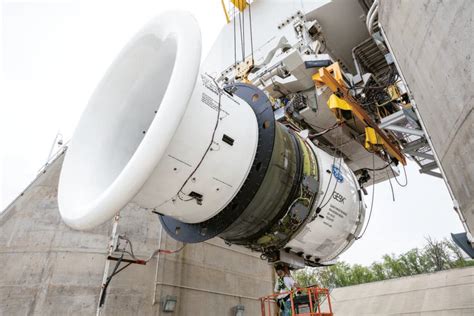
Emerging technologies such as open-rotor concepts, ultra-high-bypass architectures, and hybrid-electric integration promise further performance gains. Engines like the GE9X exemplify this future, blending high OPRs with composite fan blades and reduced carbon footprints.
Conclusion: The Enduring Legacy of Turbofans
Turbofans represent the apex of gas turbine propulsion for a wide array of aircraft. Their ability to combine high thrust with fuel economy, reduced noise, and adaptability makes them indispensable to modern flight. From commercial giants like the Boeing 777X to stealth fighters like the F-22, turbofans continue to evolve, pushing boundaries in both efficiency and capability.
As we look toward more sustainable aviation, the turbofan remains central—not just in its current form, but as a foundation for next-generation propulsion systems. With ongoing enhancements in aerodynamics, thermodynamics, and materials science, the journey of the turbofan is far from over.