The rivalry between the United States and China in Latin America has reached new heights, with both powers vying for influence in one of the most strategically important regions in the world. The battle centers around the control of key ports, which serve not only as crucial trade hubs but also as potential military assets. One of the latest flashpoints in this ongoing war of influence is the U.S.-China rivalry in Peru, particularly over the strategic Port of Callao and the newly built Chancay Port. With the Trump administration aiming to secure its position as Beijing’s biggest trading partner in the region, the U.S. has responded with military support for Peru, signaling a broader geopolitical contest that has far-reaching implications for Latin America’s future.
U.S. Foreign Military Sale to Peru: A Strategic Move
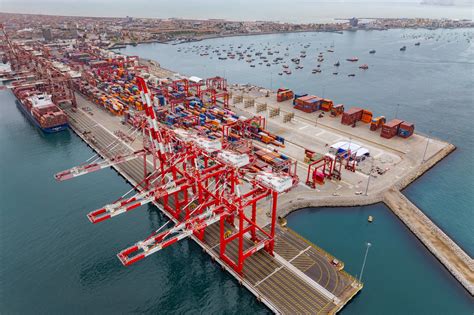
The United States recently approved a possible Foreign Military Sale (FMS) worth $1.5 billion to support the relocation of Peru’s primary naval base at Callao. Situated next to the commercial Port of Callao, the naval base has long served as the operational hub for the Peruvian Navy. However, the base’s proximity to the busy port has led to operational inefficiencies and safety concerns due to civilian-military interactions. This relocation plan has become a critical element of the U.S. strategy in Latin America, where the United States is increasingly concerned about China’s growing footprint in the region.
The U.S. Defense Security Cooperation Agency (DSCA) has indicated that the FMS package will not only help modernize Peru’s naval facilities but also strengthen U.S.-Peru security ties. The package includes the design and construction of maritime and onshore facilities to ensure the relocation of the naval base. The timing of the sale is significant as it comes in the midst of Peru’s growing relationship with China, particularly over the development of Chancay Port.
Chancay Port: The Chinese Threat
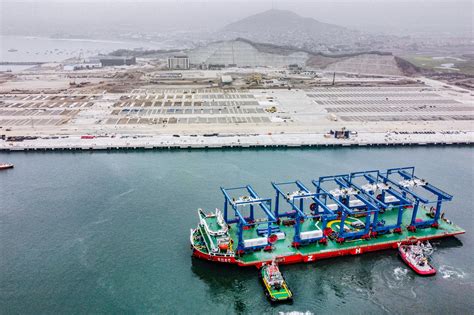
Chancay Port, located just 80 kilometers north of Lima, has become a focal point in the geopolitical struggle between Washington and Beijing. The port, which was inaugurated by Chinese President Xi Jinping in 2024, is operated by Chinese COSCO Shipping and has quickly become a key logistics hub for Chinese exports to South America. With its deep-water capabilities, Chancay Port is designed to accommodate mega-ships, making it the first port on South America’s Pacific coast capable of handling such large vessels. The port’s strategic location and capacity to facilitate direct Asia-South America trade routes have made it a critical asset for China’s growing economic influence in the region.
The U.S. has expressed significant concerns over China’s involvement in Chancay, fearing that the port could serve as a potential military base for the People’s Liberation Army Navy (PLAN). U.S. officials worry that the deep-water port could be used by Chinese military ships for docking or even as a base for intelligence-gathering vessels. The U.S. Southern Command has raised alarms about the port’s potential dual-use capabilities, which could allow Beijing to expand its military reach into the Western Hemisphere.
The Strategic Importance of Callao
In response to the growing Chinese presence at Chancay, the U.S. has focused on strengthening Peru’s strategic position through its investment in the Callao Naval Base. The U.S. FMS package aims to relocate the naval base, allowing the Port of Callao to expand and increase its capacity by up to 80%. This expansion is crucial not only for increasing the commercial capacity of the port but also for enhancing Peru’s security capabilities in the face of Chinese expansion.
While the relocation of the naval base is intended to boost Peru’s commercial competitiveness, it also serves as a direct counter to China’s growing influence in the region. The U.S. is positioning itself as a key partner in Peru’s development, offering both military and economic support in exchange for enhanced security cooperation and strategic alignment.
The Growing Chinese Presence in Latin America
China’s rise in Latin America has been rapid and expansive. Although the country is a relatively latecomer to the region compared to the U.S., it has quickly established itself as the region’s largest trading partner, surpassing the U.S. in bilateral trade in recent years. In 2024, China’s trade with Latin America surpassed $500 billion, with projections to reach $700 billion by 2035. This dramatic shift in trade relations has led many to view China’s actions in the region as an attempt to solidify its economic and geopolitical influence.
Chinese investments have spanned multiple sectors, including mining, technology, energy, and infrastructure. State-owned Chinese companies have poured billions of dollars into building ports, roads, and power plants across Latin America. Many analysts view these investments as part of a broader strategy to gain influence through economic leverage. One of the key tools in this strategy is China’s Belt and Road Initiative (BRI), a global infrastructure development plan that has found significant support in Latin America.
The BRI has now been signed by 22 Latin American countries, with Colombia becoming the latest to join in May 2025. Through the BRI, China is not only gaining access to vital infrastructure projects but also securing influence over key industries, such as mining and telecommunications. In Argentina, for example, China has become the largest buyer of lithium, a critical resource for the global electric vehicle and battery industries. Furthermore, Chinese telecom giants like Huawei have expanded their presence across the region, building 5G networks and securing control over cyber infrastructure.
The U.S. Response to China’s Rising Influence
The U.S. has responded to China’s growing presence in Latin America with a mix of diplomacy, economic pressure, and military cooperation. Washington has consistently voiced concerns over China’s influence in the region, particularly when it comes to strategic infrastructure like ports and energy resources. The U.S. has also raised alarms about China’s increasing control over the region’s telecommunications and satellite networks.
One of the most significant examples of U.S. concern was Argentina’s decision to purchase used Danish F-16 fighter jets rather than the Chinese-made JF-17 Block III aircraft. This move, seen as a victory for Washington, highlighted the ongoing competition between the U.S. and China for military and economic influence in Latin America. Furthermore, the U.S. has sought to curb Chinese investment in sensitive sectors, particularly in the fields of technology and infrastructure.
Washington has also expressed concerns about the potential military implications of China’s involvement in the region. U.S. officials have raised alarms about the security risks posed by Chinese investments in critical infrastructure, such as the Espacio Lejano space station in Argentina. Although China claims the station is used for peaceful space research, U.S. intelligence agencies fear it could be used to track satellites or even guide hypersonic missiles, further escalating tensions between the two powers.
Trump’s Latin American Strategy
The Trump administration’s “America First” policy placed significant emphasis on reducing the U.S. trade deficit and protecting domestic industries. This policy led to a series of tariffs imposed on Chinese goods, including those originating from Latin America. Trump’s administration also took a more aggressive stance toward Latin American countries that were perceived as aligning too closely with China. For example, Trump threatened to take control of the Panama Canal after reports surfaced that China had increased its influence over the waterway.
In response to U.S. pressure, China unveiled a $9.2 billion credit line and an infrastructure investment fund for Latin American countries, further deepening its engagement in the region. The Chinese government has used these financial tools to offer Latin American countries an alternative to U.S. loans, which many countries view as more restrictive and costly.
The Future of U.S.-China Rivalry in Latin America
As the rivalry between the U.S. and China intensifies, Latin America has become a key battleground for influence. The U.S. will continue to press its allies in the region to take sides, while China will use its economic power and investments to expand its foothold. The strategic importance of ports like Callao and Chancay will only grow in the coming years, as both countries seek to secure vital trade routes and military positioning.
The U.S. will likely continue to strengthen its military and economic ties with countries like Peru, while also seeking to counter China’s Belt and Road Initiative through alternative infrastructure projects and investment strategies. At the same time, China will push forward with its plans to expand its presence in Latin America, using both economic incentives and geopolitical strategies to win over key countries in the region.
Ultimately, the outcome of this battle for influence will shape the future of Latin America and its relationship with both the U.S. and China. Whether the region aligns with one of the two superpowers or seeks to maintain a neutral stance remains to be seen, but one thing is certain: the war of ports is far from over.