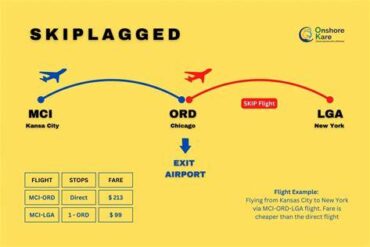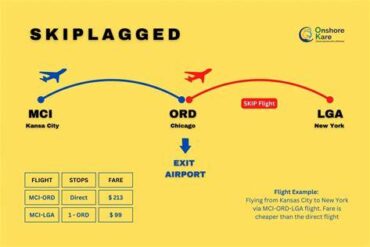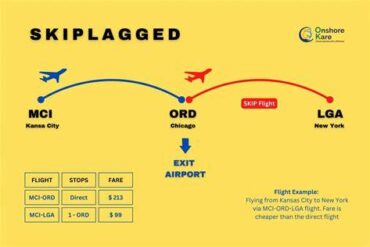
The pursuit of affordable air travel often leads intrepid explorers down rabbit holes of ingenious strategies, and among the most debated and potentially rewarding is hidden city ticketing, also known more colloquially as skiplagging. This practice involves purchasing an airline ticket with the intention of disembarking at a layover point rather than continuing to the ticket’s final, listed destination. The primary allure? The potential for significant cost savings compared to booking a direct flight to your actual desired city. However, this seemingly straightforward travel hack is fraught with complexities, risks, and increasing airline scrutiny, making it essential for any would-be skiplagger to be thoroughly informed before attempting to exploit this pricing anomaly. While recent crackdowns have seen some passengers facing unwelcome consequences, understanding the mechanics, benefits, and pitfalls of hidden city ticketing is crucial for making an educated decision.
At its core, hidden city ticketing exploits inefficiencies or specific strategies in how airlines price their routes. You might find, for instance, that a flight from City A to City C, with a stopover in City B, is considerably cheaper than a direct flight from City A to City B. If City B is your true destination, you would book the A-C ticket and simply exit the airport during the layover in City B, forfeiting the final leg of the journey from B to C. This technique can be applied to one-way trips, but it’s often associated with round-trip journeys where the ‘hidden city’ is the layover on the return leg, allowing travelers to conveniently arrive back in their home city or desired stopover point while saving money.
The Enigma of Airline Pricing: Why Hidden City Fares Emerge
To understand why hidden city ticketing can even exist, one must delve into the often-opaque world of airline fare construction. Airline ticket prices are not simply based on distance traveled; they are a complex amalgamation of factors, with supply and demand playing the most significant role. Airlines operate sophisticated revenue management systems that dynamically adjust fares based on market conditions, competition, time of year, day of the week, and the perceived value of a particular route to different customer segments. A direct, non-stop flight between two major cities, for example, is often in high demand by business travelers who prioritize convenience and time, allowing airlines to command a premium for these seats. Conversely, routes with one or more stops are generally less desirable and may be priced lower to attract more budget-conscious leisure travelers.

The hub-and-spoke system employed by many legacy carriers further contributes to these pricing discrepancies. Airlines often funnel passengers through their major hub airports to consolidate flights and maximize load factors. A flight from a smaller city (spoke) to another smaller city might involve a connection at a large hub. Paradoxically, a flight to that hub city as a final destination might be more expensive than a flight through that hub to a less popular, more competitive final destination. This is because the airline might be aggressively pricing the route to the final, less popular city to compete with other carriers or to fill seats on a less subscribed leg. They price the entire origin-to-destination (O&D) pair, and the sum of the parts (individual flight legs) doesn’t necessarily reflect the price of the whole. Therefore, the leg you intend to fly (e.g., New York to Chicago) might be part of a cheaper overall ticket (e.g., New York to Denver via Chicago) because the demand and competition dynamics for the New York to Denver market dictate a lower price, even though it involves more flying.
Unlocking Significant Savings: The Primary Allure of Skiplagging
The most compelling reason travelers venture into the world of hidden city ticketing is, unequivocally, the potential for substantial financial benefits. Savings can range from modest amounts to hundreds, or even thousands, of dollars on international long-haul flights, depending on the route and the specific fare anomaly identified. For budget-conscious individuals or families, these savings can make the difference between affording a trip or staying home, or allow for a more luxurious experience at the destination. Imagine planning a trip from London to Tokyo. A direct round-trip flight might be quoted at £716. However, a flight from Barcelona to Tokyo, routing through London on the return leg on the exact same dates and even the same British Airways flights for the London-Tokyo segments, might be priced at £476 – a saving of £240. The skiplagger would simply book the Barcelona-Tokyo round trip, arrange a cheap one-way flight from London to Barcelona to start their journey, and on the return from Tokyo, disembark in London and not take the final leg to Barcelona. The percentage savings can be particularly dramatic on routes where a specific airline has a near-monopoly on direct flights to a layover city but faces stiff competition to the ticketed final destination.
Beyond the raw numbers, there’s often a psychological satisfaction for some travelers in successfully navigating the complex airline pricing systems to their advantage. It can feel like “beating the system” or uncovering a secret deal, adding an element of gamification to travel planning. This allure, combined with tangible savings, makes hidden city ticketing a perennially discussed topic in travel communities, despite its inherent risks.
Beyond Cost Reduction: The Unexpected Perk of Multi-Destination Trips
While cost saving is the primary driver, a clever application of hidden city ticketing can sometimes unlock an additional, often overlooked, benefit: the ability to visit two destinations for less than the price of one direct flight. Consider the earlier example of flying from London to Tokyo. By booking the cheaper Barcelona-Tokyo (via London) ticket, the traveler has the opportunity to spend a few days in Barcelona before embarking on their main journey to Japan. If a cheap one-way flight from London to Barcelona is secured, the total cost, including the mini-break in Spain, could still be significantly lower than the direct London-Tokyo fare. This transforms a simple cost-saving maneuver into an enriched travel experience. This strategy requires careful planning and flexibility, as well as ensuring the cost of the positioning flight to the initial departure city doesn’t negate the savings from the hidden city ticket itself. For the adventurous traveler, this can be an exciting way to add an extra city to their itinerary, effectively getting a bonus vacation out of the arrangement.

Navigating the Treacherous Waters: Critical Pitfalls of Hidden City Ticketing
Despite the enticing prospect of cheaper fares and bonus city breaks, hidden city ticketing is not a straightforward path to travel savings. It is laden with potential pitfalls that can turn a dream deal into a travel nightmare. Understanding these risks is absolutely paramount before even considering this strategy.
The Checked Baggage Conundrum: A Deal-Breaker for Many
Perhaps the most significant and common obstacle for skiplaggers is the issue of checked luggage. When you check a bag for a flight, standard airline procedure is to tag and route it through to the final destination printed on your ticket, not your intended layover point where you plan to disembark. This means if you book a flight from New York to Los Angeles via Chicago, intending to get off in Chicago, your checked bag will almost certainly continue its journey to Los Angeles without you. Attempting to retrieve your bag in Chicago would likely alert airline staff to your intentions, potentially leading to complications. Because of this, the cardinal rule of hidden city ticketing is to travel light, with carry-on luggage only, for any segment where you plan to skip the subsequent leg. Trying to convince airline staff to “short check” your bag to the layover point is highly unreliable and often refused, as it goes against their standard operating procedures and can raise red flags.
There is one extremely rare exception to this rule: when your itinerary involves a mandatory airport change in your layover city. For example, if a flight from Tokyo to Barcelona has a layover in London that requires you to transfer from London Heathrow (LHR) to London Gatwick (LGW) to catch the connecting flight, you would naturally have to collect your checked luggage at Heathrow to make the transfer. In this specific scenario, you could collect your bags and simply not proceed to Gatwick for the final leg. However, such itineraries are uncommon, and relying on finding one is not a practical strategy for most hidden city attempts. Therefore, the default assumption must always be: no checked bags if you plan to skiplag.

The Sequential Rule: Order Matters Immensely
Airlines operate on a strict sequential use policy for their tickets. This means you must fly each leg of your ticketed itinerary in the order it was booked. If you miss or deliberately skip any flight segment, the airline’s system will typically automatically cancel all subsequent segments on that same ticket reservation. This has profound implications for hidden city ticketing. You cannot skip the first leg of your journey and expect to board a later connecting flight. For example, if you book that Barcelona-Tokyo (via London) ticket, you absolutely must fly the Barcelona-London leg. You cannot just show up in London to catch the flight to Tokyo. The hidden city trick only works when you intend to discard the final part of a one-way trip or the very final leg of a return journey. Crucially, for a round-trip ticket, you cannot skiplag on an outbound segment (e.g., skip London-Tokyo on a Barcelona-London-Tokyo outbound) because the system would then cancel your entire return journey, even if it’s weeks later.
Operational Disruptions: The Unpredictable Threat of Rerouting
Air travel is subject to numerous operational variables, including weather, air traffic control congestion, and mechanical issues. Airlines reserve the right to reroute passengers to get them to their ticketed final destination in the event of such disruptions. If your flight is rerouted, your carefully planned layover in your desired hidden city might evaporate. For example, if you’re flying New York to Miami via Charlotte, intending to get off in Charlotte, but a storm in Charlotte causes the airline to reroute you through Atlanta instead, your hidden city plan is foiled. The airline’s contractual obligation is to get you to Miami, not necessarily via Charlotte. In such situations, you have little to no recourse; you are essentially at the mercy of the airline’s operational decisions. While these events are not an everyday occurrence, they are a genuine risk that can leave you either continuing to a destination you never intended to reach or scrambling to make alternative arrangements at your own expense. Travel insurance might cover delays or cancellations due to unforeseen circumstances, but it’s unlikely to cover issues arising from your intention to breach the airline’s contract by skiplagging.
Visa and Documentation: An Often-Overlooked Hurdle
This pitfall is particularly pertinent for international hidden city tickets. Airlines are required by law to ensure that passengers possess the necessary visas and entry documentation for their ticketed final destination. It doesn’t matter if you privately intend to disembark at an earlier layover point in a country for which you do have entry rights (or don’t need a visa). If your ticket says your final destination is, for example, China, and you require a Chinese visa but don’t have one because you plan to get off in your layover city of Tokyo (for which you have a visa or visa-free entry), the airline will likely deny you boarding at your initial point of departure. They will check your documents for the ultimate destination on the ticket. Therefore, you must always ensure you meet all entry requirements for every country listed on your ticket itinerary, even the segments you don’t plan to fly. This can add significant cost and complexity if visas are required for the throwaway final destination.
The Specter of Airline Retribution: Growing Scrutiny and Consequences
While hidden city ticketing isn’t illegal in a criminal sense, it is almost universally a violation of the airline’s Contract of Carriage – the terms and conditions you agree to when purchasing a ticket. Airlines are increasingly aware of this practice and are taking more active steps to combat it, as it can disrupt their revenue management models and passenger forecasting. The consequences of being caught can range from inconvenient to severe. Passengers have reported being confronted by airline staff, especially if their travel patterns suggest repeated skiplagging. Potential penalties include:
- Forced payment of the fare difference: The airline might demand you pay the difference between the fare you paid and the typically more expensive direct fare to your actual disembarkation point.
- Cancellation of return legs: As mentioned, but worth re-emphasizing, especially if your intentions are discovered mid-itinerary.
- Invalidation of frequent flyer miles: Airlines may void miles earned on the trip in question, or even for past trips.
- Closure of frequent flyer accounts: Repeat offenders or those engaging in what airlines deem egregious skiplagging risk having their loyalty accounts terminated, losing all accumulated miles and status benefits.
- Banning from future travel: In some documented cases, airlines have banned individuals from flying with them again.

While these more severe penalties are not commonplace for occasional skiplaggers, the risk is ** undeniably present and appears to be growing**. Airlines are investing in data analytics to identify patterns consistent with skiplagging, and some have even pursued legal action against websites that facilitate the finding of such fares.
The Frequent Flyer Dilemma: Jeopardizing Your Miles and Status
For travelers who value their frequent flyer miles and elite status, hidden city ticketing poses a significant risk. Beyond the potential for account closure for repeated violations, simply skipping a leg of a journey can lead to the non-accrual of miles for that entire ticketed itinerary. If an airline flags an account for suspicious activity related to skiplagging, it could jeopardize not only the miles from that specific trip but also the overall standing of the member within the loyalty program. The potential savings from a single hidden city ticket must be weighed carefully against the long-term value of accumulated miles, elite benefits like upgrades and lounge access, and the relationship with the airline.
The Strategic Decision: When is Hidden City Ticketing a Viable Option?
Given the considerable upsides and significant downsides, the decision to book a hidden city ticket is not one to be taken lightly. It requires a careful assessment of individual circumstances, risk tolerance, and the specifics of the potential itinerary. To determine if this strategy is a sensible choice for you, consider the following critical questions:
- Is the layover city genuinely your desired final destination? This is the fundamental premise. If not, the strategy offers no benefit.
- Are the cost savings truly significant? A saving of $20 might not be worth the hassle and risk, whereas a saving of $500 could be compelling. Quantify the benefit and weigh it against the potential negative outcomes.
- Can you easily and affordably reach the initial departure city? If your hidden city ticket starts in a city far from your home, the cost and time of a positioning flight or ground transport to get there must be factored into the overall savings calculation.
- Are you comfortable and capable of traveling with only carry-on luggage? This is non-negotiable for most hidden city scenarios. If you need to check bags, this strategy is generally ill-advised.
- Is your travel schedule flexible? Can you adapt if operational issues cause rerouting, or if you encounter difficulties? If your trip is time-critical (e.g., an important business meeting, a wedding), the unpredictability of hidden city ticketing makes it a poor choice.
- Are you a solo traveler or part of a small, adaptable group? Coordinating this strategy with a large group or family with young children can amplify the complexity and risk.
- What is your risk tolerance regarding airline policies? Are you comfortable with the possibility, however small, of facing repercussions from the airline?
If you can answer ‘yes’ to the viability questions (significant savings, carry-on only, flexible schedule, layover is true destination) and are comfortable with the inherent risks, then hidden city ticketing might be a consideration. However, for many, especially those on crucial trips, traveling with family, or needing checked luggage, the traditional route of booking a direct flight or a standard connecting flight will be the more prudent and stress-free option, even if it costs more.
Mastering the Hunt: Tools and Techniques for Finding Hidden City Fares
Finding hidden city ticket opportunities requires a blend of research, the right tools, and a bit of luck, as airlines do not advertise these fares and actively try to prevent their exploitation.
Google Flights: Your Manual Search Powerhouse
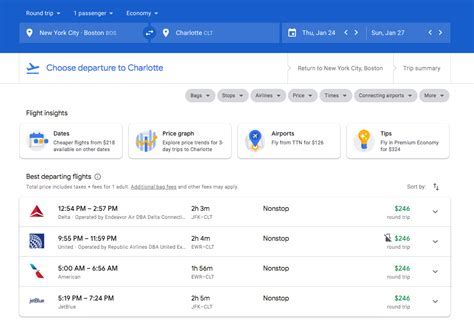
Google Flights is an invaluable tool for manually searching for potential hidden city fares due to its powerful filtering and exploration capabilities. One effective method is to first search for direct flights to your actual desired destination to establish a baseline price. Then, think about cities beyond your desired destination that might be served by airlines laying over in your target city. For example, if you want to go to Chicago (ORD), you could search for flights from your origin to cities like Denver (DEN), Los Angeles (LAX), or Seattle (SEA), and use the Google Flights filter to show only flights that connect through Chicago. Pay close attention to the layover times to ensure they are sufficient for you to disembark and exit the airport. Researching major airline hubs is also key; Wikipedia’s pages for airports often list all destinations served, which can give you ideas for potential final destinations to search for. Remember to also research and price the one-way positioning flight to the initial departure city if your hidden city ticket starts elsewhere.
Skiplagged.com: The Dedicated Hidden City Search Engine
For those who prefer a more automated approach, Skiplagged.com is a website specifically designed to unearth hidden city ticketing opportunities. Users input their actual origin and desired destination, and the platform searches for both direct flights and hidden city itineraries where the desired destination is a layover. While Skiplagged can simplify the search process considerably, it’s important to scrutinize the results. The site will show various options, not all of which are hidden city deals, and it’s still up to the user to understand the implications and risks of any ticket they choose to book. It’s worth noting that Skiplagged itself has faced legal challenges from airlines, underscoring the contentious nature of this practice. Despite this, it remains a popular resource for travelers looking to explore this niche.
Community Knowledge and Diligent Research
Online travel forums and communities, such as FlyerTalk or specific subreddits, can be sources of information where travelers share tips, successful finds, or cautionary tales related to hidden city ticketing. However, information from such sources should be vetted carefully, as deals can be ephemeral and individual experiences may vary. Ultimately, successful hidden city ticketing relies on diligent, independent research and a thorough understanding of all the variables involved. These fares are not consistently available and often depend on specific market conditions at a given time, requiring patience and persistence from the hunter.
The Legal Landscape and Airline Policies: Navigating the Gray Areas
It’s crucial to reiterate a key point: hidden city ticketing is not illegal in the sense of breaking a law that could lead to criminal prosecution. However, it is almost invariably a direct violation of the airline’s Contract of Carriage. This lengthy document, which passengers implicitly agree to when purchasing a ticket, contains clauses that prohibit practices such as “throwaway ticketing” (discarding a flight segment), “back-to-back ticketing,” and “point beyond ticketing” (which is essentially hidden city ticketing). Airlines view these practices as a misuse of their fare structure, arguing that it dilutes their revenue, complicates inventory management, and unfairly circumvents the pricing established for direct routes to popular destinations. Their stance is that if everyone engaged in skiplagging, their ability to offer competitive fares on longer, multi-segment routes would be compromised. This contractual breach is the basis upon which airlines can impose penalties, from voiding miles to, in rare cases, seeking financial recovery or banning passengers. The ethical considerations are also debated: some see it as a clever consumer taking advantage of market loopholes, while others view it as an unfair manipulation of a system that ultimately could raise costs for everyone.
Real-World Scenarios: The Good, The Bad, and The Ugly of Skiplagging
To truly grasp the implications, let’s consider a few hypothetical yet realistic scenarios:
Scenario 1: The Savvy Saver’s Success. Sarah, a flexible solo traveler based in New York, wants to visit friends in Chicago for a long weekend. Direct flights are pricing at $350 round-trip. Using her research skills, Sarah discovers a flight from New York to Omaha, Nebraska, for $220 round-trip, with a convenient 3-hour layover in Chicago on both the outbound and return journeys on the same airline. She travels with only a carry-on. On the outbound, she disembarks in Chicago, enjoys her weekend, and then returns to Chicago O’Hare for her “connecting” flight back to New York (which is the first leg of her Omaha-New York return ticket). She successfully saves $130 and feels quite pleased with her travel hack.
Scenario 2: The Unforeseen Complication. Mark books a ticket from London to Rome via Amsterdam, intending to spend a few days in Amsterdam. He saves £100 compared to a direct London-Amsterdam flight. However, on the day of travel, his London-Amsterdam flight experiences a significant delay due to technical issues. The airline, to ensure he makes it to Rome (his ticketed final destination) with minimal further delay, rebooks him on a direct flight from London to Rome later that day, completely bypassing Amsterdam. Mark’s plans for Amsterdam are ruined, and he has no recourse as the airline fulfilled its contractual obligation to get him to Rome.
Scenario 3: The Airline’s Watchful Eye. David frequently uses hidden city ticketing for his business trips, always traveling light. After his fifth such trip in a year with the same airline, he receives an email informing him that his frequent flyer account has been audited and suspended due to “abuse of fare rules,” and the 50,000 miles he had accumulated have been forfeited. He is also warned that further violations could result in being banned from the airline. The savings from his trips are now overshadowed by the loss of his valuable miles and status.
Hidden City Ticketing: A Calculated Gamble for the Astute Traveler
In conclusion, hidden city ticketing, or skiplagging, presents a tantalizing prospect for reducing air travel costs, sometimes substantially. It leverages anomalies in complex airline pricing structures to the traveler’s advantage. However, it is far from a risk-free endeavor. The practice is laden with potential pitfalls, including severe restrictions on checked luggage, the inflexibility of sequential ticket use, the unpredictable nature of airline operations, visa complications, and the increasingly real threat of airline repercussions. It is a strategy best suited for the flexible, light-packing, risk-tolerant traveler who has done their homework meticulously.
This is not a magic bullet for cheap flights applicable to every journey or every traveler. The decision to attempt hidden city ticketing must be a calculated gamble, where the potential savings are carefully weighed against the numerous risks and inconveniences. Before embarking on such a plan, one must be fully aware of the airline’s Contract of Carriage and the potential consequences of violating it. Proceed with knowledge, caution, and a clear understanding that while the rewards can be high, the path of the skiplagger is one that requires navigating a landscape of considerable uncertainty.