Uttar Pradesh, a state rich in cultural heritage and spiritual significance, is making significant strides in promoting its Buddhist Circuit as a premier destination for tourists and investors, particularly from Japan. With a focus on enhancing tourism infrastructure and fostering economic cooperation, the state’s initiatives are designed to attract both religious pilgrims and potential investors looking to capitalize on the burgeoning tourism industry.
In recent years, Uttar Pradesh has emerged as a pivotal hub for Buddhist tourism, drawing visitors from around the globe to its revered sites such as Kushinagar, Sarnath, and Kaushambi. The state has witnessed a remarkable increase in the number of tourists, with visitor numbers at these sites nearly tripling from 2016 to 2024. For instance, Kaushambi’s visitor count surged from just over 200,000 to an astounding 2.4 million, while Kushinagar welcomed 2.2 million pilgrims last year alone. These figures underscore the effectiveness of the state’s strategic tourism policies, aimed at upgrading infrastructure and integrating global air connectivity to enhance the overall visitor experience.

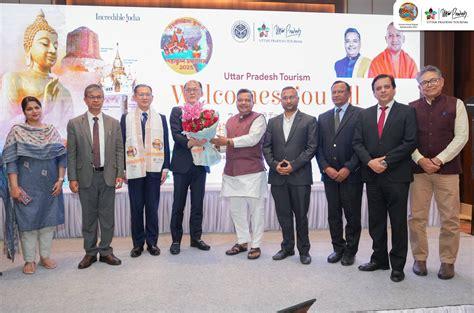
The state’s proactive approach includes a series of initiatives designed to improve not only the spiritual pilgrimage experience but also the economic landscape of Uttar Pradesh. The Uttar Pradesh Tourism Department is gearing up for a strong presentation at the upcoming Japan Tourism Expo in September 2025. This campaign is set to showcase the unique offerings of the Buddhist Circuit, appealing to Japanese investors and tour operators eager to facilitate travel for their compatriots. A delegation led by Finance Minister Suresh Khanna is currently in Japan, attending significant investor meetings and the World Expo in Osaka, highlighting investment opportunities in hotels, meditation centers, and cultural infrastructure projects under a public-private partnership (PPP) model.
The collaboration between Uttar Pradesh and Japan began to take shape last year when Kotaro Nagasaki, Governor of Japan’s Yamanashi Prefecture, visited the state with a delegation of business entrepreneurs. This visit resulted in the signing of Memorandums of Understanding (MOUs) focused on industrial and tourism cooperation, further solidifying the bonds between the two regions. Plans are underway to promote Japan’s iconic Mount Fuji and its natural hot springs alongside India’s spiritual destinations, aiming to create a comprehensive tourism package that appeals to a broader audience.
Moreover, the Uttar Pradesh government is keen on facilitating familiarization trips for Japanese stakeholders. These trips aim to provide firsthand insights into the Buddhist Circuit, allowing potential investors and tour operators to explore opportunities in the region. By placing Uttar Pradesh firmly on the global Buddhist pilgrimage map, the state hopes to significantly enhance cross-border tourism ties.
The rise in tourism numbers is a testament to the state’s commitment to developing its religious tourism sector. As Jaiveer Singh, the Minister of Tourism and Culture, emphasized, the state’s tourism policy is yielding positive results. By prioritizing infrastructure upgrades and engaging local communities, Uttar Pradesh aims to transform the Buddhist Circuit into a globally recognized destination for spiritual and cultural heritage.
In addition to bolstering tourism, the recent delegation to Japan is exploring deeper economic collaborations. During meetings in Osaka, Finance Minister Khanna and Principal Secretary of Infrastructure and Industries Alok Kumar engaged with executives from Tokyo Electron Limited (TEL) to discuss potential investments in semiconductor manufacturing and skill development programs. The discussions also included the establishment of Global Capability Centres (GCC) in Uttar Pradesh, which could serve as a catalyst for technological advancement and economic growth.
The delegation’s visit also included talks with the Osaka Prefectural Assembly, focusing on capacity expansion, youth training, and technology transfer initiatives. Academic partnerships are also on the agenda, with plans to collaborate with institutions such as Portugal’s University of Guarda during the 2025 World Expo. This multifaceted approach not only aims to enhance tourism but also seeks to position Uttar Pradesh as a leader in innovation and education.
In conclusion, Uttar Pradesh is on a path to becoming a world-class destination for spiritual tourism and international investment. With its progressive tourism policy and robust outreach efforts, the state is poised to deepen its relations with Japan, particularly in the context of the Buddhist Circuit. This collaboration is not only enriching the cultural fabric of Uttar Pradesh but also contributing to its economic transformation, setting the stage for a prosperous future in tourism and beyond.