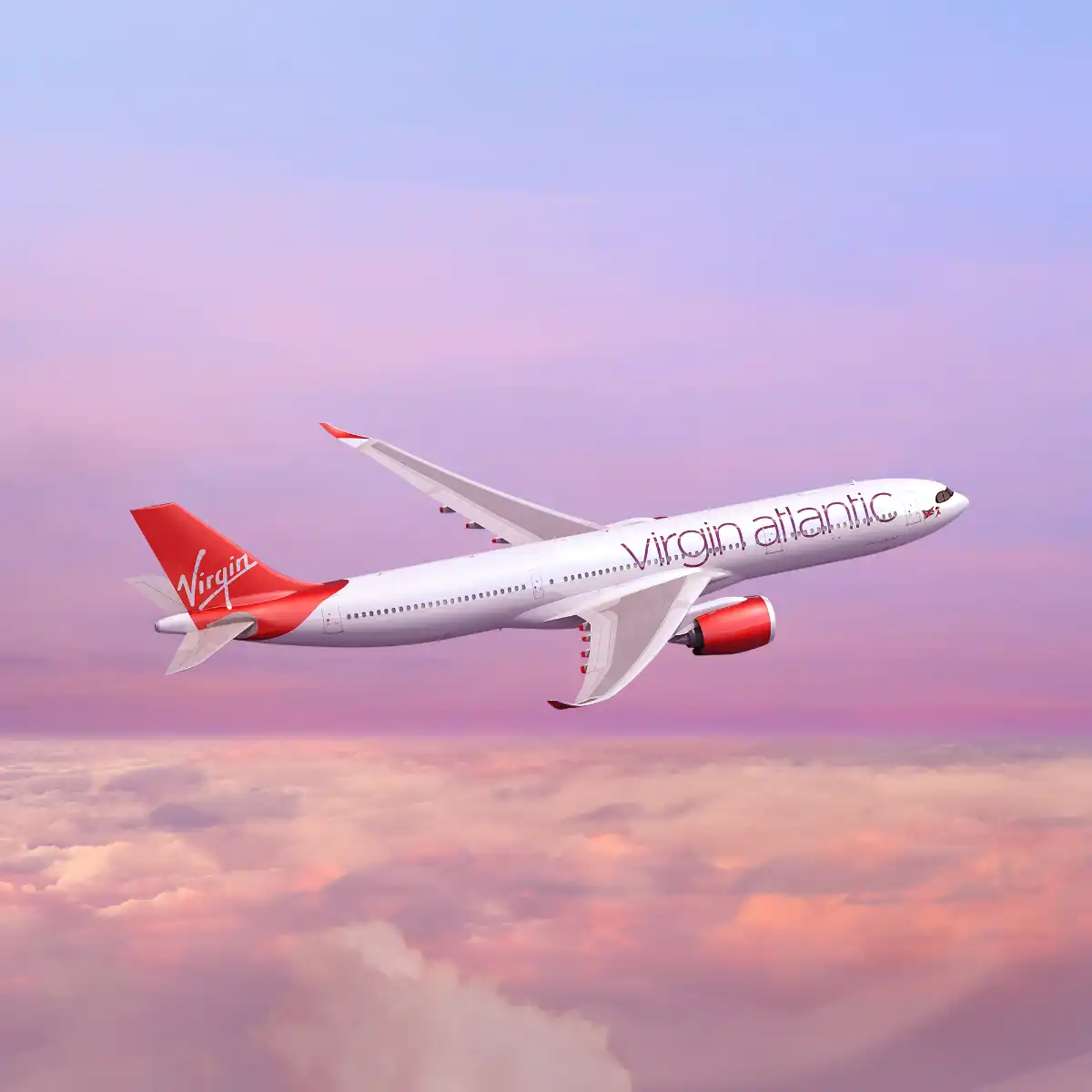
Founded in 1984, Virgin Atlantic Airways Limited has consistently embodied innovation, flamboyant branding, and resilient business strategy. Headquartered in Crawley, West Sussex, and operating through its primary hub at London Heathrow with a secondary base in Manchester, the airline has weathered fierce competition, regulatory battles, financial setbacks, and global crises to remain one of the most recognizable carriers in the sky.
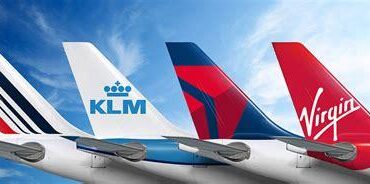
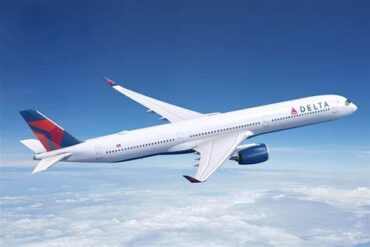
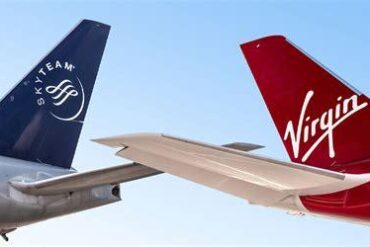
Virgin Atlantic’s current network spans 23 international destinations across North America, the Caribbean, Africa, the Middle East, and Asia, supported by a wide-body fleet of 44 aircraft comprising Airbus A330s, A350s, and Boeing 787s. Its membership in the SkyTeam alliance and a strong partnership with Delta Air Lines, which owns 49% of the company, fortify its position within the transatlantic and global aviation market.
Origins and Strategic Vision (1982–1984)
Virgin Atlantic’s origin traces back to the unlikely pairing of lawyer Randolph Fields and pilot Alan Hellary, who initially sought to serve the London–Falkland Islands route under the name British Atlantic Airways. However, logistical constraints prompted a redirection to a Gatwick–Newark license, a move that became pivotal when Richard Branson entered the scene. Spotting the opportunity to disrupt the staid transatlantic market, Branson provided critical capital and branding direction. The fledgling airline launched its maiden service on 22 June 1984, from Gatwick to Newark aboard a leased Boeing 747-200 named “Maiden Voyager.”
Despite industry skepticism, Virgin Atlantic turned a profit within its first year, buoyed by clever summer scheduling, aggressive pricing, and financial support from the Virgin Records empire. This early success marked the beginning of Branson’s aviation gamble.
Rapid Expansion and Defining the Brand (1984–1992)
The airline’s second phase was marked by rapid route expansion and bold branding. Destinations such as Miami (1986), JFK (1988), Tokyo (1989), Los Angeles (1990), and Boston (1991) joined the network, signaling Virgin’s ambitions to be more than just a niche carrier.
It also introduced feeder services with turboprop aircraft, operating brief routes to Luton and Maastricht, attempting to grow its European connectivity. More importantly, this period established Virgin’s identity as a challenger brand that mixed irreverence with luxury.
Clashing Titans: The BA Dispute and Heathrow Breakthrough (1991–1999)
The 1990s witnessed Virgin’s most contentious battles. Gaining coveted Heathrow slots following the end of London’s Traffic Distribution Rules allowed Virgin to compete on equal footing with British Airways. However, this led to what became known as the infamous “dirty tricks” campaign by BA.
Branson and Virgin sued BA for libel after a coordinated campaign sought to undermine Virgin’s operations and reputation. In the ensuing court battle, BA paid up to £3 million in legal costs and £500,000 in damages, a landmark victory for a relatively young airline.
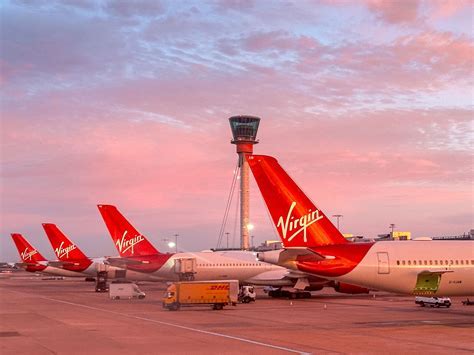
This episode underscored Virgin Atlantic’s refusal to be intimidated by larger incumbents. It also gave rise to bold marketing campaigns like “No Way BA/AA” and iconic aircraft liveries featuring the Union Flag winglets and Scarlet Lady nose art, reinforcing its defiant identity.
Operational Refinement and Fleet Innovation (2000s–2013)
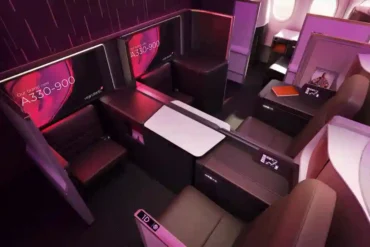
While the early 2000s brought more subdued expansion, Virgin focused on fleet modernization and product innovation. It was among the first to introduce personal entertainment screens in all classes and pioneered the Upper Class Suite, with fully flat beds and the exclusive Upper Class Wing at Heathrow.
The service structure evolved into three well-defined cabins: Economy, Premium (formerly Premium Economy), and Upper Class. These changes coincided with broader efforts to enhance customer loyalty through the Flying Club program and lounges branded as Clubhouse in key airports.
Crisis, Retrenchment, and Renewal (2014–2023)
The 2010s brought shifting dynamics. In 2014, Virgin Atlantic ended its unprofitable Sydney route and gradually exited from Tokyo, Mumbai, Vancouver, and Cape Town, focusing more on transatlantic joint ventures, especially after Delta Air Lines acquired a 49% stake in 2012.
The domestic Little Red experiment (2013–2015), intended to feed passengers into Virgin’s long-haul network via Aberdeen, Edinburgh, and Manchester, failed to meet expectations, with load factors under 38%. Despite using four wet-leased A320s, slot constraints and weak demand led to the brand’s swift discontinuation.
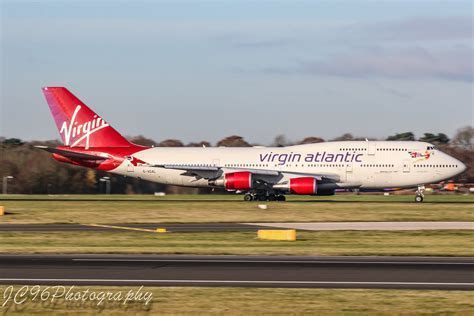
Then came COVID-19. Virgin Atlantic was among the hardest-hit European carriers. It announced 3,000 layoffs in May 2020, retired its Boeing 747 fleet, and exited London Gatwick altogether. Filing for Chapter 15 bankruptcy protection in the U.S., the airline secured a £1.2 billion rescue deal, but not before shedding an additional 1,150 jobs. By 2022, its fleet had shrunk to 35 aircraft.
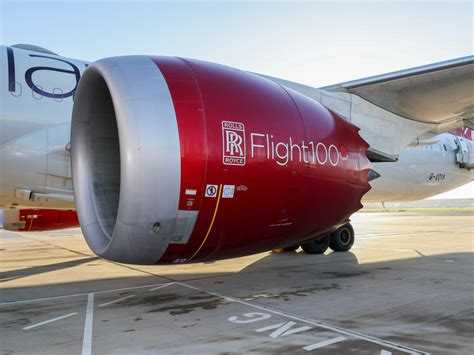
Still, Virgin Atlantic emerged leaner. In 2023, it achieved a historic milestone by operating a 100% sustainable aviation fuel (SAF) test flight from London to New York on 28 November. The airline’s admission into SkyTeam in March 2023 further strengthened its network.
Corporate Governance and Business Trajectory
Virgin Atlantic is governed by Virgin Atlantic Limited, jointly owned by the Virgin Group (51%) and Delta Air Lines (49%). The airline operates under two AOCs: Virgin Atlantic Airways and Virgin Atlantic International Limited, the latter formed in 2015 to manage Caribbean routes and hold Heathrow slots as collateral.
Its financial performance has been mixed. From a turnover of £1.63 billion in 2007, the airline peaked at £3.3 billion by 2024. But the pandemic years brought heavy losses, including a £341.7 million net loss in 2022. Still, under CEO Shai Weiss and Chairman Peter Norris, Virgin Atlantic has shown renewed focus on profitability and environmental sustainability.
Service, Style, and Inclusivity
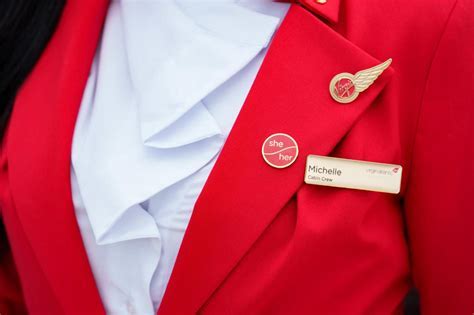
Virgin Atlantic continues to differentiate through service innovation and progressive values. It was among the first airlines to introduce gender-neutral ticketing, with options for “U/X” gender identifiers and the honorific “Mx.” Cabin crew uniforms, redesigned by Vivienne Westwood, now include optional skirts or trousers regardless of gender, along with pronoun badges.
In-flight, Virgin offers Love Hearts packs, a nostalgic gesture marking the end of a journey, and maintains a reputation for stylish, customer-first travel across all classes.
Fleet and Livery Identity
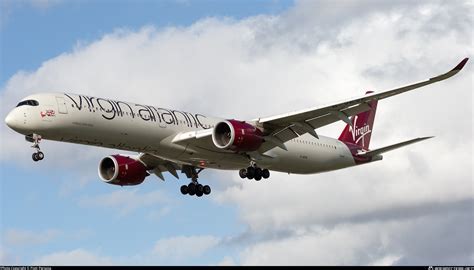
Virgin Atlantic’s 2024 fleet includes:
- 8 Airbus A330-300s
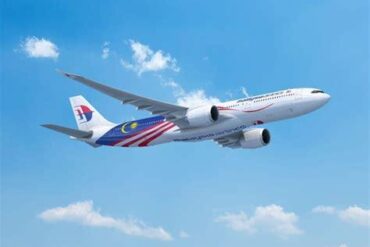
- 7 Airbus A330-900neos
- 12 Airbus A350-1000s
- 17 Boeing 787-9s
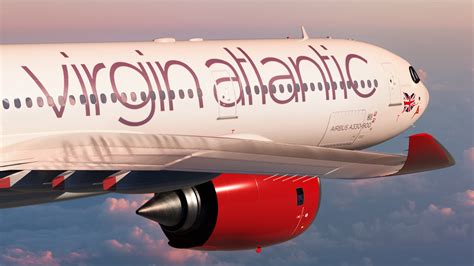
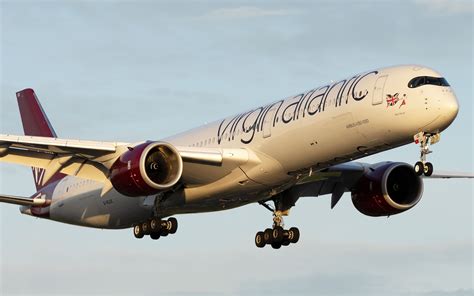
Each aircraft sports unique nose art inspired by Flying Icons, depicting modern, diverse British figures. The livery features metallic silver fuselage, red engines, and Union Flag details on the winglets, preserving continuity while projecting contemporary elegance.
Safety Record and Incidents
Virgin Atlantic has maintained an impeccable safety record, with no passenger fatalities or hull-loss incidents since inception. Notable events include:
- 1997: Emergency landing due to gear jam (A340)
- 2005: Fuel computer malfunction (A340)
- 2011: Taxiway collision during construction (747)
- 2021: Laser attack forcing 787 return to Heathrow
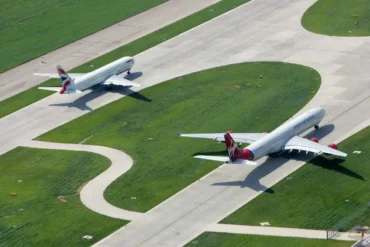
- 2024: Ground collision involving British Airways at Heathrow
These have reinforced the airline’s commitment to operational safety and resilience in critical situations.
Aviation’s Glamorous Rebel with a Cause
From its audacious origins to its current position as a key player in transatlantic travel and member of SkyTeam, Virgin Atlantic remains a uniquely British brand in global aviation. Its fearless marketing, commitment to inclusivity, operational innovation, and sustainable ambitions continue to define its path forward.
As the industry evolves, Virgin Atlantic stands as a case study in how bold branding, customer focus, and relentless adaptability can sustain an airline through crises, competition, and change.