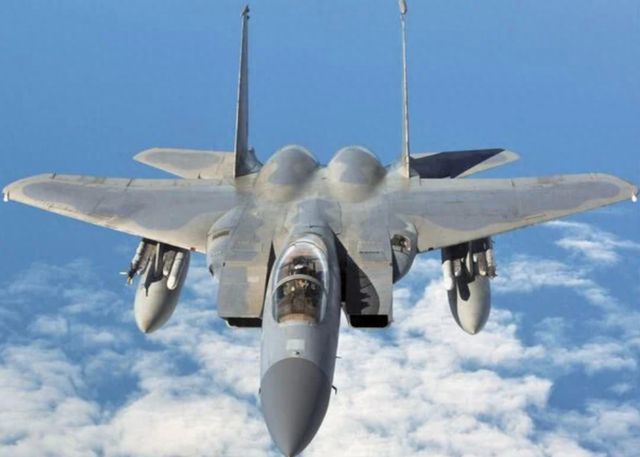
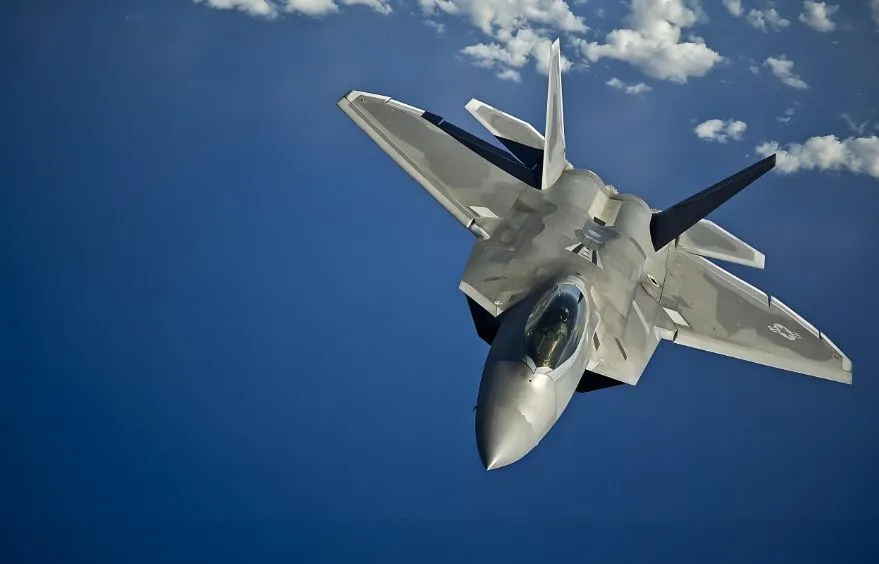
The F-22 Raptor, an icon of modern aerial warfare, continues to serve as the United States Air Force’s premier air superiority fighter. However, its future is uncertain as discussions about its retirement and replacement unfold. The decision of when and how to retire the F-22 is influenced by various complex factors, including congressional opposition, modernization efforts, delays in the Next-Generation Air Dominance (NGAD) program, and evolving strategic priorities. In this article, we will explore these factors in detail to provide a clearer understanding of the F-22’s future retirement timeline.
Congressional Opposition to Immediate Retirement
One of the most significant hurdles to retiring the F-22 is congressional opposition. Over the years, the U.S. Congress has repeatedly blocked the U.S. Air Force’s attempts to retire early models of the F-22, particularly the Block 20 variants. In 2023, the Air Force proposed retiring 32 Block 20 F-22s, primarily used for training, citing their lack of combat readiness and high maintenance costs. However, Congress rejected this proposal in the 2024 National Defense Authorization Act. The reasoning behind this decision was that retiring these aircraft would strain the operational fleet and reduce the overall availability of fifth-generation fighters, which are critical to maintaining air superiority.
The continued resistance from Congress makes it clear that any attempt to retire the F-22 prematurely faces significant political challenges. As such, the timeline for the F-22’s retirement is closely tied to future political negotiations and decisions, with Congress having considerable influence over when the aircraft will be retired.
Modernization Efforts to Extend Service Life
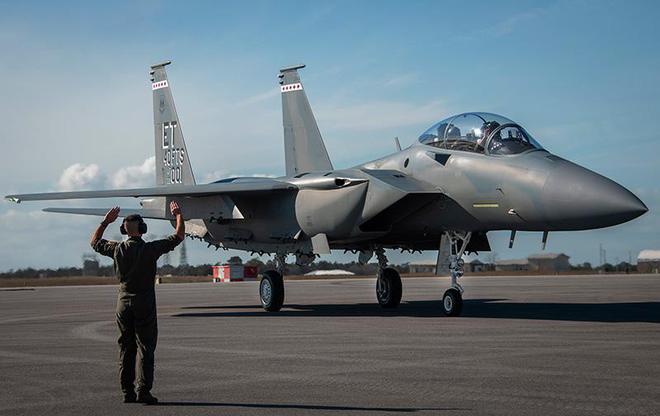
The U.S. Air Force has taken proactive steps to extend the service life of the F-22 through a massive modernization initiative. This $10 billion modernization program is designed to address the aircraft’s aging technology and ensure its continued relevance in the face of rapidly advancing adversary capabilities.
Key components of the modernization program include:
Avionics and Sensor Upgrades
Modern infrared search and track (IRST) systems are among the most significant updates. These systems, designed to detect stealth targets passively, are crucial in maintaining the F-22’s edge over competitors like China’s J-20. The improved Distributed Aperture System (DAS) allows for enhanced situational awareness, providing pilots with the ability to detect and track targets over vast distances, even in contested environments.
Engine Upgrades
The F119 engine, developed by Pratt & Whitney, is undergoing a significant upgrade under a $1.5 billion contract. The engine improvements focus on enhancing reliability, reducing operating costs, and extending the engine’s operational life. These upgrades ensure that the F-22 fleet remains capable of operating well into the 2040s and beyond.
Weapon System Enhancements
The integration of the AIM-120D-3 missiles, with enhanced range and resistance to electronic warfare, further bolsters the F-22’s offensive capabilities. These missiles provide the aircraft with the ability to engage targets at longer distances, maintaining its air superiority in increasingly complex and contested environments.
These upgrades are vital to the F-22’s continued relevance, allowing the aircraft to remain operational until its successor, the Next-Generation Air Dominance (NGAD) system, is ready for deployment. However, the ultimate success of these modernization efforts hinges on continued funding and technological advancements.
Delays in the Next-Generation Air Dominance (NGAD) Program
The NGAD program, which aims to replace the F-22 with a next-generation fighter capable of maintaining air dominance in the 21st century, has faced significant delays. Initially, the Air Force had hoped to field the NGAD by the mid-2030s, with the new platform expected to be a sixth-generation fighter incorporating cutting-edge stealth technology, autonomous capabilities, and advanced sensors. However, the program has encountered technical and budgetary challenges that have pushed its timeline further into the future.
As a result of these delays, the F-22 may need to remain in service longer than initially anticipated. If the NGAD program continues to face setbacks, the F-22 could continue to serve well into the 2050s, well beyond the original retirement projections. The uncertainty surrounding the NGAD program highlights the importance of modernization efforts in ensuring the F-22 remains relevant in an increasingly competitive global airspace.
Strategic Implications of NGAD Delays
If the NGAD program is delayed further, the F-22 may find itself in competition with more advanced, sixth-generation fighters from other countries, including China’s J-36 and Russia’s Su-57. These aircraft, which are expected to enter service by the late 2020s or early 2030s, could challenge the F-22’s dominance in the skies.
While the F-22 is still considered the world’s most capable air superiority fighter, experts warn that it may struggle to maintain its edge against these new technologies. As a result, the need for a next-generation platform becomes even more critical, driving the urgency for the NGAD program’s successful development and deployment.
Retirement of Early Block 20 Models
While the retirement of the entire F-22 fleet is still a distant prospect, the U.S. Air Force is actively working to retire specific early models, notably the Block 20 F-22s. These variants, which were primarily used for training, lack several modern features such as data links, electro-optical targeting systems (EOTS), and other advanced combat capabilities. These limitations make the Block 20 models unsuitable for frontline combat operations.
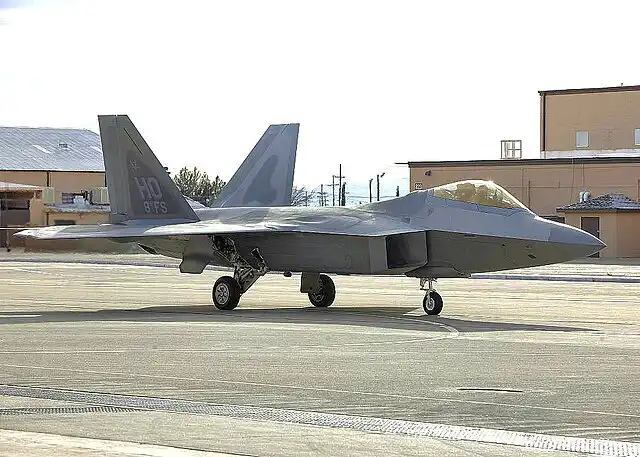
Despite the Air Force’s push to retire these models, Congress has continued to block such efforts, citing the need for a larger, operational fleet of fifth-generation fighters. However, the eventual retirement of these older variants seems likely, especially as the Air Force continues to upgrade and prioritize its more capable Block 30 and Block 35 variants.
Current Projections and Retirement Timeline
As of 2025, the U.S. Air Force plans to retain approximately 150 upgraded F-22s (Block 30/35 variants) through at least 2040, assuming the modernization efforts are successful and the NGAD program stays on track. However, this timeline remains uncertain and subject to change due to several key factors.
Factors Affecting the F-22’s Retirement
- Success of Modernization Initiatives
If the modernization program proceeds as planned, the F-22 could remain operational for another two decades. However, any delays or cost overruns could impact the aircraft’s service life, potentially shortening its time in service. - NGAD Deployment
If the NGAD program is successfully deployed in the 2030s, the F-22 could be retired earlier than planned. Conversely, if NGAD faces further delays, the F-22 may remain in service into the 2050s, continuing to adapt to evolving threats and technological advancements. - Budget Constraints
The future of the F-22 also depends on fiscal considerations. Budget constraints and shifting defense priorities could force the Air Force to make difficult decisions regarding the retirement and replacement of its fleet, potentially accelerating or delaying the F-22’s eventual retirement. - Geopolitical and Strategic Considerations
The global security environment will also play a significant role in the decision to retire the F-22. Rising threats from adversaries like China and Russia may drive the U.S. to maintain a robust air superiority capability, further extending the F-22’s service life.
Summary Table: Key Factors Impacting F-22 Retirement
| Factor | Impact on Retirement Timeline |
|---|---|
| Congressional Opposition | Delays retirement of early Block 20 models. |
| Modernization Success | Extends service life to around 2040, possibly beyond. |
| NGAD Development | Earlier retirement if NGAD is deployed in the 2030s. |
| Budget Constraints | May force adjustments to the retirement timeline. |
| Geopolitical Considerations | Rising global threats could extend F-22 service life. |
Conclusion: A Future in Flux
The retirement of the F-22 Raptor is far from a straightforward issue. Despite the Air Force’s desire to phase out older models and eventually retire the entire fleet, political, budgetary, and technological factors complicate the process. While the modernization program has breathed new life into the F-22, the future remains uncertain, particularly with the delayed NGAD program and the emergence of sixth-generation fighters.
For now, the F-22 is expected to remain a central part of the U.S. Air Force’s capabilities, with upgraded variants serving through at least 2040. However, as the global security landscape evolves, the fate of the F-22 will be closely tied to the successful development of its successor, the Next-Generation Air Dominance fighter. Until then, the F-22 will continue to dominate the skies, ensuring air superiority for the U.S. military in the coming decades.