Wearing shorts or a skirt on a flight may seem like the most sensible choice when departing a hot destination, particularly when the airport is warm and the aircraft cabin feels comfortable before departure. Yet experienced flight attendants have repeatedly pointed out that what feels comfortable in the terminal is not necessarily the best clothing choice for a flight. The concern is not about fashion, appearance, or an old-fashioned expectation that passengers should dress formally. Instead, it comes down to a combination of hygiene, temperature, personal space, and emergency protection.
Modern air travel has become far more casual than it was during the early decades of commercial aviation. Passengers can now board an aircraft in athletic clothing, beachwear, pajamas, or almost anything else that meets an airline’s basic rules. At the same time, aircraft operate on extremely tight schedules, with some flights turning around in well under an hour. That creates an important question: how thoroughly is the passenger cabin actually cleaned between flights?
For passengers who normally think of an aircraft seat as simply another clean public seat, the answer can be surprisingly uncomfortable. Flight attendants see parts of the cabin that passengers rarely notice, and some have explained why covering more of the body can make sense during a flight. Shorts and short skirts are not inherently unsafe, but longer clothing provides an additional layer between your skin and the aircraft environment.
Airplane Seat Hygiene Is One Reason to Wear Longer Clothing
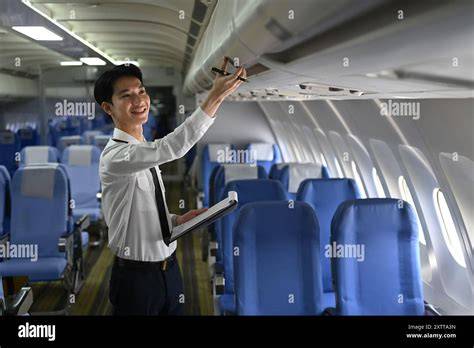
An aircraft passenger seat can look perfectly clean while still being a high-use surface that has been occupied by hundreds or thousands of travelers. During a typical turnaround, cleaning crews have limited time to prepare the cabin for the next group of passengers. Trash is removed, obvious debris is addressed, lavatories and galleys receive attention, and frequently touched surfaces may be wiped down, but a full deep clean of every seat is not performed between every flight.
Experienced cabin crew have described seeing substances on seats that passengers would understandably rather not think about. Diaper changes, spilled drinks, food, vomit, and other bodily fluids can all become part of the unpleasant reality of heavily used aircraft cabins. Even when a seat appears spotless, passengers cannot know everything that happened there during previous flights.
This is where trousers or a longer skirt can provide a simple practical advantage. Fabric creates a barrier between the passenger’s skin and the seat surface, reducing direct contact with whatever residue might remain. It does not make someone immune to germs, of course, and clothing itself can become contaminated, but covering the legs is a straightforward way to reduce exposed skin contact.
The issue becomes particularly relevant on aircraft with very short turnaround times. When an airplane arrives and departs again within a limited window, cleaning crews have to prioritize the areas requiring the most immediate attention. A more extensive overnight or periodic deep-cleaning process can address the cabin more thoroughly, but that does not mean every seat receives the same level of attention before every passenger boards.
Why Airplane Cabins Can Feel So Cold
Temperature is another reason flight attendants sometimes encourage passengers to think twice about wearing shorts. Aircraft cabins can have remarkably different temperatures during different stages of a journey. The cabin may feel hot before departure and noticeably cooler once the aircraft reaches cruising altitude, creating a situation in which passengers who dressed for the destination suddenly find themselves reaching for a blanket.
When an aircraft is sitting at the gate, particularly in a hot climate, keeping the cabin comfortable can be challenging. The aircraft’s engines may not be providing the same environmental-control conditions available during flight, while ground equipment or the auxiliary power unit supplies electricity and conditioned air. Opening and closing doors can also affect the cabin environment, and a crowded cabin can become warm surprisingly quickly.
Once airborne, however, the experience can change. The aircraft’s environmental-control system uses conditioned air to maintain the cabin at an appropriate temperature and pressure. Individual passengers can perceive the cabin differently, but people wearing shorts, sleeveless tops, or short skirts may find exposed skin becomes uncomfortable when the temperature drops.
This is especially common on flights departing from tropical or subtropical destinations. A passenger may arrive at the airport wearing clothing suitable for a beach resort and assume the same outfit will remain comfortable throughout the journey. Several hours later, however, the same passenger may be asking a flight attendant for an additional blanket.
That does not mean passengers should dress for winter when flying from a hot country. A lightweight pair of trousers and a breathable long-sleeved layer can offer a useful middle ground, allowing travelers to remain comfortable without being excessively dressed for the departure airport.
Shorts Can Also Create an Awkward Personal-Space Problem
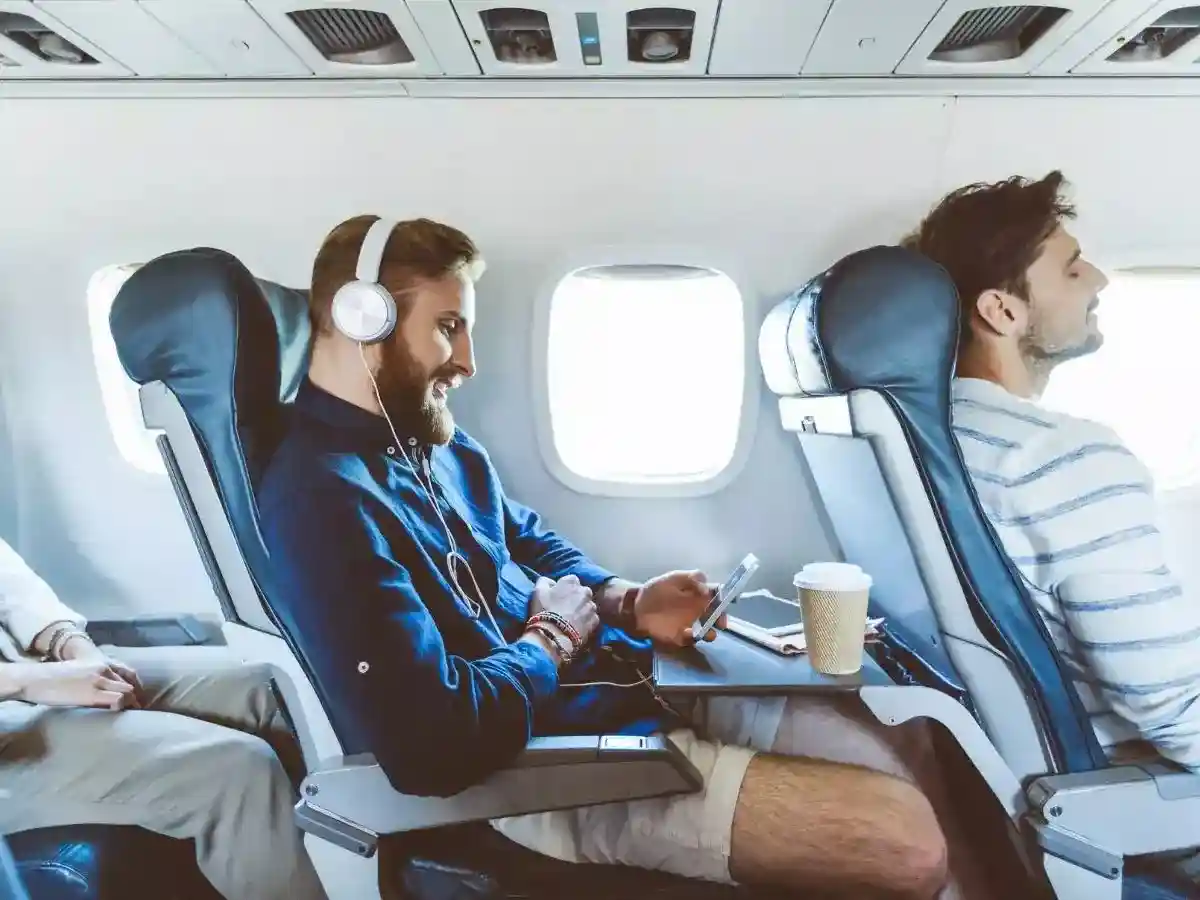
There is another consideration that has little to do with aircraft systems and much more to do with the realities of economy-class seating. Modern aircraft cabins can place passengers extremely close together, particularly in the middle and window seats. With limited legroom and narrow seat boundaries, bare skin can make accidental contact more noticeable and uncomfortable.
A passenger wearing shorts may find their knees, thighs, or lower legs close to those of the people sitting beside them. In a middle seat, where both neighboring passengers may also be wearing shorts, there can be very little separation between exposed legs.
Accidental contact does not necessarily represent bad behavior. Aircraft seats are simply confined spaces, and passengers cannot always avoid every moment of physical contact. Nevertheless, covering the legs can make those encounters less awkward because clothing creates a physical layer between passengers.
The same principle applies to sleeping. Passengers often shift positions during long flights, and someone who falls asleep may unintentionally move into another person’s space. Respecting the boundaries of your seat remains the most important consideration, but wearing clothing that provides greater coverage can reduce some of the discomfort associated with unavoidable proximity.
The More Serious Reason: What Happens During an Emergency?
Hygiene and comfort may be the everyday reasons to consider longer clothing, but emergency evacuation is the more significant safety argument.
Nobody boards an aircraft expecting an emergency, and modern commercial aviation is highly safety-focused. Nevertheless, passengers are encouraged to think about what they would actually be wearing if an evacuation became necessary. During an emergency landing or evacuation, passengers could encounter smoke, flames, hot surfaces, sharp debris, damaged aircraft components, or the rough surface of an evacuation slide.
Bare legs offer little protection against those hazards.
Long trousers can provide an additional layer between the skin and hot or abrasive surfaces. The same principle applies to long sleeves. Clothing made from natural fibers such as cotton, linen, or wool can be preferable to certain synthetic materials in circumstances involving heat or fire because some synthetic fabrics can melt or adhere to skin when exposed to intense heat.
That does not mean every pair of shorts will make an evacuation dangerous, nor does it mean passengers wearing shorts cannot evacuate safely. The point is more straightforward: more skin coverage can provide more physical protection in an unusual and hazardous environment.
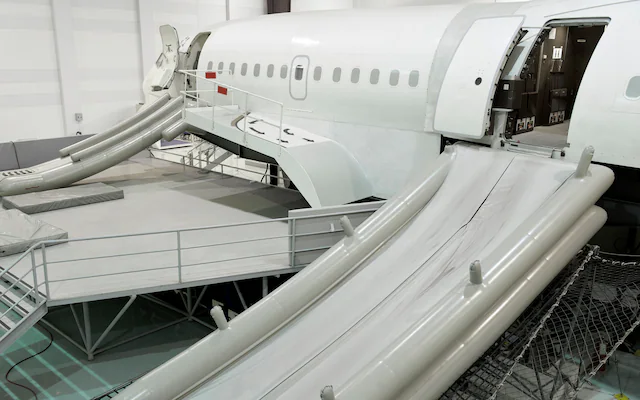
Footwear deserves just as much attention. Flip-flops, loose sandals, high heels, and other footwear that can easily come off are less practical during an evacuation. Sturdy shoes, such as sneakers or secure closed-toe footwear, can help protect feet from debris and hot or damaged surfaces.
Passengers should also keep their shoes on during takeoff and landing, when emergency preparedness is particularly important. If an evacuation occurs, footwear that stays securely attached to the feet is considerably more useful than something that can fall away after the first few steps.
Clothing Is Only One Part of Being Prepared
The advice about shorts and skirts should not be interpreted as an official universal prohibition. Passengers are generally not required to wear trousers, and there is no simple rule stating that shorts or skirts automatically make someone unsafe to fly. The recommendation is better understood as practical advice from people who regularly work inside aircraft cabins and understand the environment from a different perspective.
What matters most is choosing clothing that balances comfort with basic protection. A breathable pair of trousers can work in warm weather, while a lightweight cardigan or long-sleeved shirt can be added or removed depending on cabin temperature. Travelers can also carry a small layer in their personal item rather than relying on an airline blanket.
Seat hygiene can be addressed to some extent with disinfectant wipes. Passengers can wipe down high-contact surfaces such as tray tables, seatbelt buckles, and armrests, although cleaning a fabric or heavily textured seat is much more difficult. Personal hygiene also extends to the lavatory, where wearing shoes is particularly important.
Walking barefoot through an aircraft lavatory is a habit worth avoiding. The liquid found on a lavatory floor should not be assumed to be clean water, and passengers have little reason to expose their bare feet to it. Disposable slippers can provide an alternative for people who want something more comfortable during a long flight.
Why Flight Attendant Advice Focuses on Practicality
The central point behind the warning is not that passengers wearing shorts or skirts are doing something wrong. Air travel is informal now, and passengers understandably want to dress comfortably, particularly on long journeys. The issue is that an airplane is not a beach, hotel room, or private vehicle. It is a densely occupied environment with shared surfaces, variable temperatures, limited personal space, and the possibility—however unlikely—of an emergency.
Longer clothing therefore offers several small advantages at once. It creates more separation from the seat surface, protects exposed skin from cold, reduces awkward skin-to-skin contact, and provides an additional layer of protection if something goes wrong.
For many travelers, the most practical solution is not to abandon comfort but to choose comfortable, breathable clothing with a little more coverage. Loose trousers, a lightweight long-sleeved shirt, and secure shoes can work in both hot departure airports and cooler aircraft cabins.
Ultimately, the advice from experienced flight attendants is less about dressing up for the airplane and more about understanding the environment. A flight is a confined, shared space that can change dramatically from the gate to cruising altitude and, in rare circumstances, during an emergency. Shorts and short skirts remain possible choices, but passengers who want to maximize comfort, hygiene, and basic protection have good reasons to consider covering more of their skin.