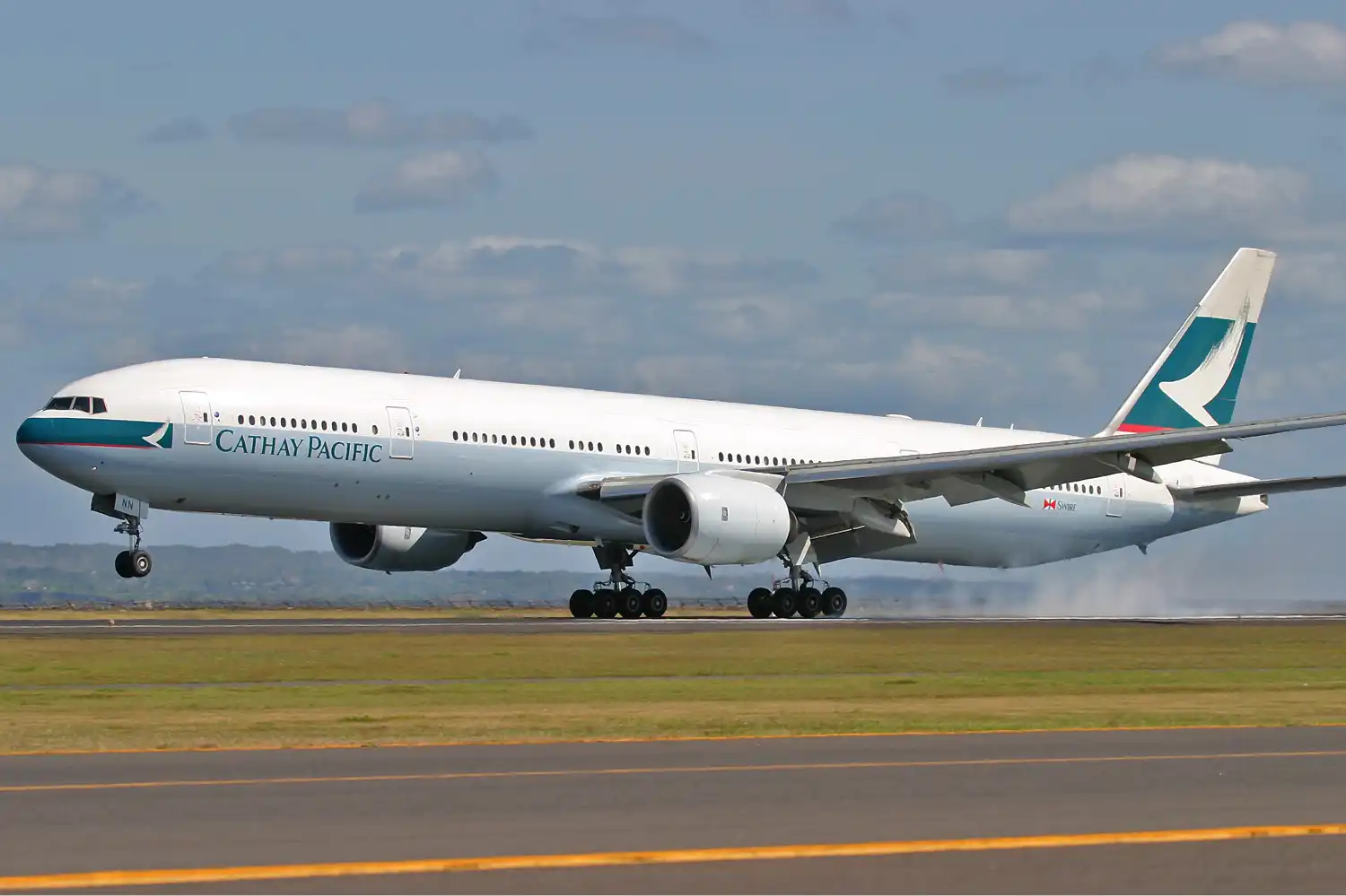
Flying has become an almost mundane miracle. Millions of people cross continents daily inside aluminum tubes cruising at 35,000 feet, and the overwhelming majority arrive without incident. This didn’t happen by accident. Modern aviation safety is the product of hard-earned lessons, relentless engineering refinement, procedural discipline, and a culture that treats complacency as the enemy. While today’s large commercial airlines operate under similarly strict regulatory frameworks, history still matters. Long-term safety records reveal how airlines behave across different technological eras, geopolitical disruptions, fleet transitions, and operational stresses.
Some carriers stand out not because they are magically immune to risk, but because they have consistently managed risk better than their peers over decades. Their stories are not about perfection; they are about resilience, transparency, and learning faster than failure spreads. The following five airlines have built reputations anchored in exceptionally clean safety histories, making them enduring case studies in how aviation safety is actually achieved.
In aviation, statistics alone can be misleading without context. A spotless record does not mean an absence of incidents, nor does an incident imply recklessness. What matters is how systems respond when something goes wrong. These airlines earned their reputations by ensuring that when failure knocked, catastrophe did not answer.
Cathay Pacific: A Safety Culture Forged Over Half a Century
Cathay Pacific occupies a unique place in global aviation. Based in Hong Kong, the airline grew from a regional operator into a long-haul heavyweight while maintaining a safety record that spans generations of aircraft technology. Its last fatal accident occurred in 1972, a striking statistic when viewed against the sheer scale of its operations since then.
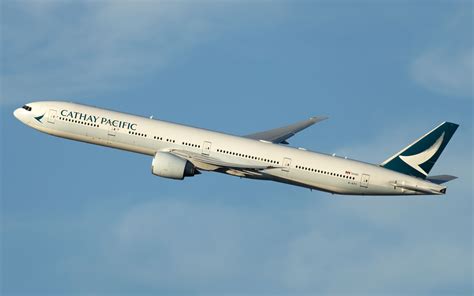
Cathay’s modern reputation rests on a rigorous safety culture reinforced by disciplined training and meticulous maintenance. The airline’s most serious recent incident, in 2010, illustrates this approach. An Airbus A330-300 landed at nearly twice its normal approach speed after suffering engine anomalies caused by fuel contamination. The situation was severe, yet the outcome was textbook: the aircraft stopped safely, all passengers evacuated without loss of life, and the jet was repaired and returned to service. The event became a valuable training reference rather than a tragedy.
The airline’s earlier history includes accidents typical of an era when aviation was less forgiving, including a bombing aboard Flight 700Z in 1972 and piston-era incidents that reflected the technological limits of the time. What distinguishes Cathay Pacific is not denial of these events but the institutional learning that followed. Today, the carrier operates one of the most modern fleets in Asia, including Boeing 777s, Airbus A350s, and A321neos, supported by a substantial cargo operation using Boeing 747 freighters.
Operating exclusively from Hong Kong International Airport, Cathay Pacific benefits from centralized oversight and standardized procedures. As a founding member of the oneworld alliance, it also aligns its safety practices with global partners, reinforcing consistency across international operations. The result is an airline that has quietly gone more than five decades without a fatal accident, a feat built on discipline rather than luck.
EasyJet: Low-Cost Does Not Mean Low Safety
Budget airlines are often misunderstood. Cheap tickets are wrongly equated with corner-cutting, yet the operational reality tells a different story. EasyJet, one of Europe’s largest low-cost carriers, demonstrates how simplified business models can enhance safety rather than undermine it.
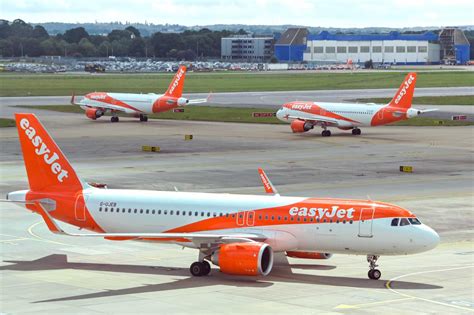
Since launching operations in 1995, EasyJet has never experienced a fatal accident. This is not due to limited exposure; the airline operates hundreds of aircraft across dozens of European bases, flying some of the continent’s busiest routes. Its fleet strategy is deliberately narrow, relying exclusively on Airbus A320-family aircraft. This uniformity reduces training complexity, minimizes maintenance variability, and improves crew familiarity with aircraft systems.
The airline’s most serious incident occurred in 2006, when an Airbus A319 suffered a major electrical failure en route from Alicante to Bristol. Multiple systems went dark, including radios and flight displays, leaving the crew temporarily unable to communicate with air traffic control. Despite a near miss with another aircraft, the pilots managed the situation, squawked an emergency code once systems partially recovered, and landed safely. The incident highlighted not recklessness, but robust crew training under abnormal conditions.
EasyJet’s multinational structure, with operating certificates in the UK, Europe, and Switzerland, subjects it to some of the world’s most demanding regulatory oversight. The airline’s safety performance underscores a critical truth: modern low-cost carriers often benefit from younger fleets, standardized procedures, and data-driven maintenance, all of which contribute to strong safety outcomes. EasyJet’s bright orange branding may signal affordability, but its safety record signals seriousness.
Virgin Atlantic: Widebody Operations Without a Hull Loss
Virgin Atlantic has always punched above its weight. Operating only long-haul routes with an all-widebody fleet, the airline faces operational challenges that short-haul carriers simply do not. Long overwater flights, extended duty times, and complex aircraft systems all increase exposure to risk. Yet since its founding in 1984, Virgin Atlantic has never lost an aircraft in an accident.
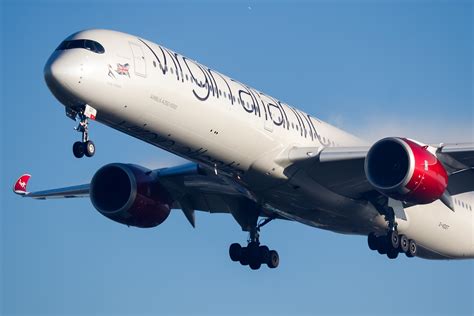
The airline’s most severe accident occurred in 1997 when an Airbus A340-300 suffered a landing gear failure during approach to London Heathrow. The aircraft landed with partial gear deployment, damaging engines and runway infrastructure. The evacuation was successful, injuries were minor, and the aircraft was repaired rather than written off. This distinction matters. A hull loss is not just about damage; it reflects whether an event overwhelms the aircraft’s survivability envelope. Virgin Atlantic has consistently stayed on the right side of that line.
Virgin’s fleet evolution reflects a measured approach to technology adoption. From early Airbus widebodies to modern A350-1000s and Boeing 787-9s, the airline has prioritized aircraft with strong safety margins and proven performance. Its operations out of London Heathrow and Manchester place it in some of the world’s most congested airspace, yet its incident record remains remarkably clean.
As a member of the SkyTeam alliance, Virgin Atlantic integrates its safety management systems with global partners, reinforcing best practices across borders. The airline’s reputation among passengers for comfort and service often overshadows its quieter achievement: four decades of widebody flying without a single hull loss.
Qantas: The Benchmark That Became a Legend
Few airline names are as tightly bound to safety as Qantas. In Australia, the airline’s safety record is more than a statistic; it is a point of national identity. Qantas has not experienced a fatal accident involving a jet airliner, a distinction that spans more than half a century of jet operations.
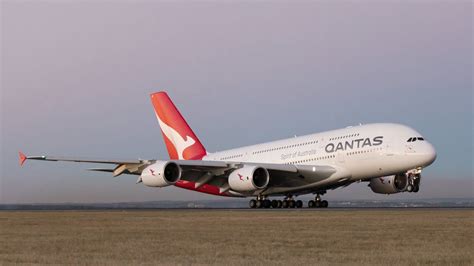
This record does not imply an absence of danger. Qantas has faced serious incidents that tested aircraft design, crew training, and organizational response. In 2008, a Boeing 747 suffered an explosive decompression. That same year, an Airbus A330 experienced uncommanded pitch-down events linked to flight control software. In 2010, an Airbus A380 suffered an uncontained engine failure that scattered debris across the aircraft and disabled multiple systems. Each event had the potential to escalate into disaster.
What followed instead were successful emergency landings, professional crew performance, and transparent investigations that fed improvements across the global aviation industry. These incidents reshaped maintenance practices, software certification standards, and engine containment requirements far beyond Qantas itself.
Qantas operates a diverse fleet including Airbus A321XLRs, A330s, A380s, and Boeing 737s and 787s, serving a continent-sized domestic network and ultra-long-haul international routes. The airline’s safety culture emphasizes training depth, decision-making autonomy for pilots, and conservative operational thresholds. Its record is not magic; it is the cumulative effect of thousands of small decisions made correctly, day after day.
Hawaiian Airlines: Nearly a Century Without a Fatal Accident
At the top of this list sits an airline whose safety record borders on the improbable. Founded in 1929, Hawaiian Airlines has never experienced a fatal accident or a hull loss, making it the oldest airline in the world to maintain such a record. In an era when early aviation was perilous by default, this achievement stands apart.
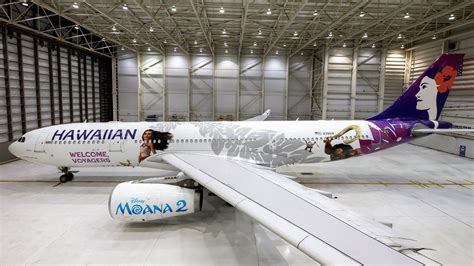
Hawaiian’s operational environment is deceptively challenging. The airline flies long overwater routes between islands and across the Pacific, where diversion options are limited and weather can change rapidly. Despite this, its history includes only non-fatal incidents such as runway overruns, engine fires successfully handled after landing, cabin smoke diversions, and turbulence injuries. These events reinforce an essential truth of aviation: incidents are inevitable; outcomes are not.
Now operating under the Alaska Air Group umbrella, Hawaiian’s fleet includes Airbus A321neos, A330s, Boeing 717s, and 787s. Fleet transitions are underway, but the airline’s safety philosophy remains unchanged. Conservative dispatch decisions, strong crew resource management, and deep familiarity with Pacific operations define its approach.
Hawaiian Airlines’ record is especially remarkable because it spans periods when aviation lacked modern navigation, weather forecasting, and aircraft redundancy. Its survival through those eras without a fatal accident speaks to organizational caution embedded long before safety management systems became formalized.
Why These Records Matter in Modern Aviation
It is tempting to rank airlines by safety as if risk were a scoreboard. In reality, modern commercial aviation is uniformly safe across reputable carriers. What distinguishes these five airlines is not immunity from danger, but consistency across time. They navigated technological revolutions, regulatory changes, and operational crises without crossing the thin line between incident and catastrophe.
Their histories reveal a shared pattern: investment in training, respect for procedures, willingness to learn publicly from mistakes, and a refusal to normalize risk. Safety, in aviation, is not a feature. It is a culture, renewed every day, flight by flight.
For passengers, these records offer reassurance rather than exclusivity. The sky is safer than it has ever been, not because accidents vanished, but because airlines like these proved, repeatedly, that preparedness beats probability.