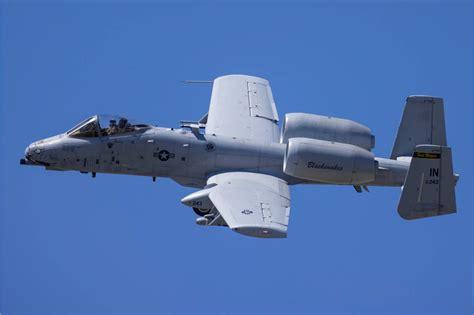
The A-10 Thunderbolt II, often affectionately known as the “Warthog,” has earned a mythic status among military aircraft. Rugged, iconic, and surrounded by controversy, the Warthog’s role in modern combat has been hotly debated as the U.S. Air Force prepares to retire the fleet by the early 2030s. In this article, we dismantle ten persistent myths surrounding this aircraft—offering deep insights, historical evidence, and technical reality checks that go beyond popular assumptions.
Myth 1: The A-10 Was Designed Entirely Around Its Gun
It’s commonly believed that the A-10 was engineered solely to carry the GAU-8/A Avenger cannon, a fearsome 30 mm rotary gun known for tearing through enemy armor. However, this oversimplification ignores a rich development history.
The A-10 emerged from the USAF’s 1966 AX (Attack Experimental) program, which prioritized attributes essential to close air support (CAS): survivability, extended loiter time, low-speed maneuverability, and the ability to operate from austere, short-field environments. While the GAU-8 was incorporated early, the design emphasis was holistic. By the 1970 RFP, armament flexibility was crucial, and the 9,500-lb ordnance requirement didn’t even mandate a gun.
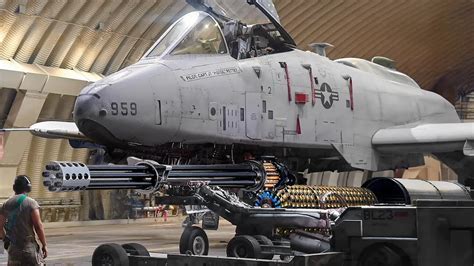
Historical and pilot accounts, such as from historian Dr. Richard Hallion, stress that the A-10 was conceived as an integrated CAS system. The inclusion of the GAU-8 served the mission—but did not define it entirely. Throughout its operational life, the Warthog’s effectiveness with guided munitions, missiles, and bombs has often overshadowed its iconic cannon.
Myth 2: The A-10 Is Too Slow and Weak for Modern Combat
Critics frequently point to the Warthog’s cruise speed of approximately 300 knots as a fatal weakness in a fast-paced, high-threat battlespace. However, this underestimates the Warthog’s entire design philosophy. Low-and-slow isn’t a flaw—it’s a feature.
This flight profile allows precise visual identification, close coordination with ground forces, and exceptional maneuverability at low altitudes. Combined with a suite of countermeasures, terrain masking, and rugged construction, the A-10 can operate under conditions that would ground or doom more modern jets. Its record in Desert Storm—over 8,000 sorties, two helicopter kills, and multiple returns from heavy battle damage—speaks volumes.
While it’s true that the GAU-8 struggles against modern main battle tank (MBT) frontal armor, it remains lethal to light armor, APCs, IFVs, and soft targets. Precision-guided munitions, added in the 2010s, further enhanced its lethality.
Myth 3: The A-10 Is Outdated and on Its Last Legs
Dismissing the Warthog as a Cold War relic ignores its constant evolution. The A-10C modernization brought glass cockpits, advanced targeting pods like Sniper XR and Litening ATP, and full integration of JDAMs and digital communications.
Moreover, the 2022 upgrade program introduced durable new wings, extending service life and enabling continued deployments. From Iraq to Afghanistan, the A-10C has demonstrated reliable precision performance in low-visibility environments, including night ops and dust storms.
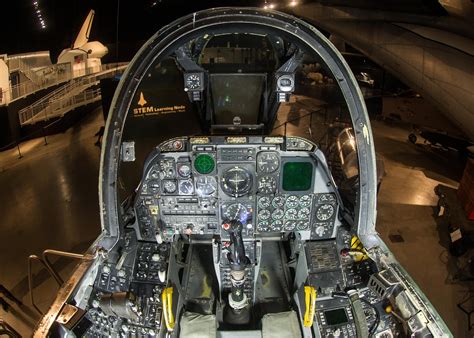
Despite some losses in Desert Storm—six aircraft, mostly to infrared-guided missiles—the Warthog’s titanium armor, redundant systems, and damage-tolerant engineering allowed many pilots to return safely with severe structural hits. Pilots like Capt. Kim Campbell, who flew a crippled jet back from Baghdad in 2005, exemplify the aircraft’s endurance.
Myth 4: The A-10 Strafes in Straight Lines
Hollywood has done no favors to the public’s understanding of strafing mechanics. The Warthog doesn’t simply fly in a straight line, spitting rounds—its GAU-8 system is paired with Precision Attitude Control (PAC), a system that locks the aircraft’s controls to ensure pinpoint accuracy during firing.
Pilots engage a target, fire in short bursts, then reposition. While PAC can be disabled, doing so reverts to less accurate, more dangerous WWII-style tactics. The A-10’s design optimizes for near-level attacks on side and rear armor, not vertical dives. Misconceptions about its attack style underestimate the sophistication and intent behind each sortie.
Myth 5: The A-10 Can’t Survive Damage
The Warthog’s reputation for surviving punishment is more than legend—it’s engineering reality. Its titanium bathtub, between 0.5–1.5 inches thick, shields the pilot and vital systems from small arms and shrapnel.
Fuel tanks are self-sealing, and control systems are intentionally separated to avoid cascading failures. In Desert Storm, Col. Bob Efferson’s A-10 returned with 17 major holes under the cockpit—yet he landed safely. Combat missions in Iraq and Afghanistan echoed this resilience, with aircraft returning with massive wing and fuselage damage. Few modern airframes can match this tolerance.
Myth 6: The A-10 Is Less Cost-Effective Than Modern Multi-Role Jets
From a fiscal standpoint, the A-10 is a budgetary triumph. Flying at around $20,000 per hour, it costs nearly half as much as the F-35A, which exceeds $36,000 per hour. The Warthog’s modular, rugged design reduces maintenance complexity, and field crews can often repair it without extensive logistics chains.
RAND studies and the Belfer Center’s “Thunder versus Lightning” report highlight how replacing the A-10 with F-35s for CAS is financially and operationally unsound. For low-intensity engagements and precision support, the Warthog remains an unmatched blend of affordability and combat capability.
Myth 7: The A-10 Was the First Armored Aircraft
While the A-10’s armor is impressive, it did not pioneer the concept. The Junkers J.1 (1917) featured a full steel protective shell. In WWII, the Soviet Il-2 Shturmovik was nicknamed the “Flying Tank” for its comprehensive armor shielding, including the crew, engine, and avionics. The A-1 Skyraider, too, featured armored cockpit protection long before the A-10 was imagined.
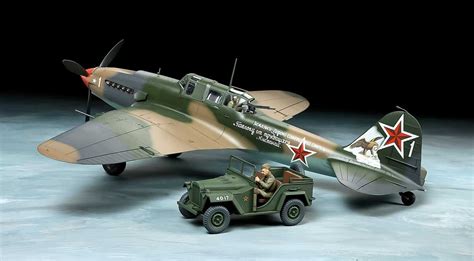
What the A-10 does represent is the most refined execution of these principles, brought into the jet age with focused intent.
Myth 8: The A-10 Can’t Operate in a Modern Networked Battlespace
Critics often claim the A-10 lacks the tech to operate in joint-force, multi-domain environments. That claim is flatly false. The A-10C model features Link 16, Situational Awareness Data Link (SADL), secure comms, and modern digital threat displays.
It operates side-by-side with drones, FACs, and stealth jets. In 2022, A-10s even carried ADM-160 MALDs, simulating decoys for F-22/F-35 formations. Agile Combat Employment drills have demonstrated A-10s taking off from highways, dirt runways, and rugged forward bases—exactly as envisioned in its 1970s design brief.
Myth 9: Pierre Sprey Designed the A-10
Though Pierre Sprey is widely associated with the “Fighter Mafia” and concepts of survivability, he did not design the A-10. The actual designer was Alexander Kartveli of Fairchild Republic, who led development from its inception.
Sprey’s role has often been inflated post-facto. He never worked at Fairchild, and the A-10 first flew in 1972, predating many of the “Blitzfighter” concepts often credited to Sprey and James G. Burton. While he influenced broader procurement philosophy, the A-10’s DNA belongs firmly to Kartveli’s team.
Myth 10: The A-10 Is Obsolete Because Drones and F-35s Exist
The notion that drones or stealth jets can fully replace the Warthog’s CAS role is unsupported by field experience. The MQ-9 Reaper excels at ISR and precision strikes but lacks survivability and loiter endurance at low altitudes. The AC-130 provides powerful fire support but is limited by altitude and vulnerability.
A 2018 USAF test found the F-35 struggled to match A-10 responsiveness and accuracy in CAS trials. Ground troops consistently report a sense of security when A-10s are overhead, and in some cases, enemy combatants have ceased engagement simply upon hearing its iconic buzz.
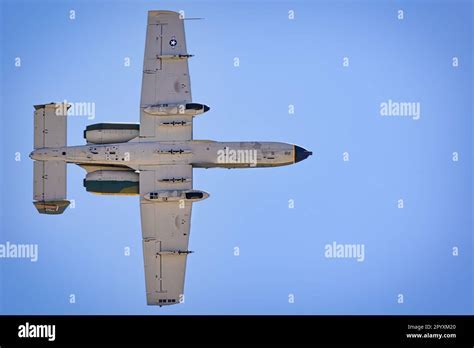
Until a dedicated CAS replacement is developed—and tested thoroughly—the A-10 remains the most effective tool to support troops in direct combat.
Conclusion: The Warthog’s Enduring Legacy
The A-10 Thunderbolt II is more than just a gun with wings. It is a symbol of air-ground cooperation, a mechanical guardian angel to those in the mud and fire, and a masterclass in mission-driven engineering. As its retirement looms, its myths must give way to facts.
In its simplicity, the Warthog achieves what more complex systems cannot: it shows up, it stays in the fight, and it brings its people home.