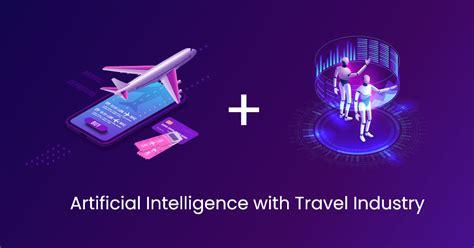
The business travel landscape is undergoing a profound transformation, driven by the rapid advancements in artificial intelligence (AI). As we navigate through 2024, it has become evident that AI is not merely a tool but a revolutionary force reshaping corporate travel management. At the recent Business Travel Show Europe, key industry executives expressed their optimism about AI’s potential to enhance traveler experiences, boost efficiency, and increase overall productivity. This shift promises to redefine the future of business travel, making it imperative for companies to adapt and innovate.
In 2024, one of the most significant milestones was the introduction of the European Union’s AI Act, the world’s first comprehensive regulatory framework for artificial intelligence. This legislation, which became law, established guidelines for AI use based on varying risk levels. It notably bans harmful practices such as the manipulation of vulnerable groups, social scoring, and the use of biometric identification and facial recognition. This landmark legislation is expected to influence how AI tools are adopted across industries worldwide, with profound implications for the business travel sector that increasingly relies on AI technologies for operations and customer services.
AI Innovations Revolutionizing Travel Technology
Over the past year, numerous AI-powered tools and models have emerged, each contributing significantly to the transformation of corporate travel management. Leading this innovation are technologies such as OpenAI’s GPT-4.1 and Google’s Gemini 2.5, which are enhancing the efficiency of travel programs and streamlining day-to-day operations. A particularly noteworthy advancement was the release of DeepSeek, an AI model from China that demonstrated the feasibility of creating cost-effective models that do not rely on the high computing power typically associated with Nvidia GPUs. This breakthrough challenges existing AI frameworks, paving the way for more accessible and scalable solutions within the business travel space.
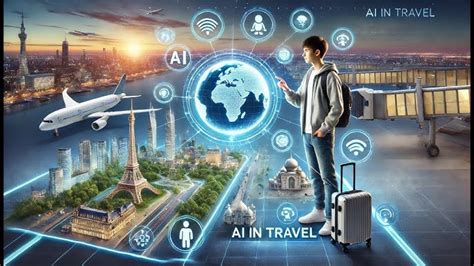
The Role of AI in Corporate Travel Optimization
A recent survey conducted by Serko/Sabre revealed that 44% of corporate travel managers anticipate AI will significantly impact their travel programs in the next five years. Additionally, 22% believe AI will be transformative, completely reshaping the business travel landscape. The influence of AI is already visible through various platforms. For instance, in July 2024, Altour launched an AI-driven suite of tools designed to assist with booking, travel disruption management, and the introduction of a natural language interface for travel managers. This trend reflects a growing reliance on AI to optimize corporate travel processes.
Similarly, Amex GBT introduced its AI initiative early in 2024, enhancing its Egencia platform with features such as a virtual agent and a natural language query system for data analysis. These enhancements are expected to fully launch by 2026, allowing managers to retrieve important program data by simply asking questions in plain language. Furthermore, in May 2024, HRS unveiled its AI-powered Copilot platform, which combines Anthropic’s large language model with specialized AI tools from HRS Labs. This platform aims to help travel and procurement managers optimize hotel programs more effectively by providing insights and recommendations based on real-time data.
Beyond Cost: Optimizing Travel Programs with AI
While much focus has been placed on the booking experience, experts like Martin Biermann from HRS argue that AI’s true potential lies in the optimization of the entire travel program. In the evolving travel industry, it is no longer sufficient to merely save costs; today’s programs must prioritize sustainability, satisfaction, and safety—elements that can be significantly enhanced with AI. By continuously refining travel programs, AI enables companies to align their offerings with the specific needs of travelers, leading to increased adoption rates and improved overall program success.
AI also assists businesses in analyzing data such as spending patterns, loyalty trends, and employee profiles, allowing for more tailored and effective programs. By incorporating data about markets, supplier structures, and traveling personas, AI helps balance cost savings, rate accuracy, supplier compliance, and sustainability goals.
Addressing Data Privacy and Security Concerns
Despite the many advantages AI brings to the travel industry, concerns surrounding data privacy and security remain a significant hurdle for widespread adoption. According to Biermann, HRS ensures that its AI tools operate within its own cloud infrastructure, guaranteeing that all client data remains private and secure. This level of transparency provides businesses with the ability to monitor AI actions, review decision logs, and comprehend which recommendations have been implemented.
Securing IT approval for AI-powered travel solutions presents another challenge. Keesup Choe, CEO of PredictX, notes that obtaining IT clearance for AI tools has become more complicated, as organizations are increasingly cautious about implementing new technologies. Sophie Taylor, CTO of Gray Dawes Group, highlights that while many companies are excited about AI, few possess a clear vision of how it will integrate practically into their travel management systems.
The Divide Between Developers and Users
One of the key obstacles to faster adoption is the knowledge gap between AI developers and corporate travel managers. Both parties are still striving to understand how AI can be applied effectively in real-world scenarios. Moreover, many corporate security teams hesitate to embrace AI due to concerns over accuracy, particularly the risk of “hallucinated” answers—incorrect or misleading information generated by AI models. Even small inaccuracies in travel bookings or recommendations could have serious ramifications for companies relying on precise data for budgeting and travel safety.
Despite these challenges, Choe remains optimistic about AI’s future in business travel. He points to emerging technologies like diffusion models, which could enhance visual content creation, potentially revolutionizing how travel companies manage branding, marketing, and customer engagement in the near future.
The Long-Term Role of TMCs in an AI-Driven World
While AI is undoubtedly reshaping the future of travel management, Travel Management Companies (TMCs) are not expected to disappear anytime soon. Taylor from Gray Dawes Group asserts that while AI will transform many aspects of corporate travel, TMCs will continue to play a crucial role, especially in crisis management. When unexpected disruptions occur—such as flight cancellations, natural disasters, or pandemics—TMCs will remain indispensable. These situations demand human intervention, where expertise and problem-solving skills surpass any AI system’s capabilities.
In conclusion, while AI is poised to transform how business travel is managed, TMCs will evolve to incorporate these new tools while continuing to serve as a vital safety net during unforeseen challenges. The rise of AI in business travel is inevitable, yet human touchpoints will remain essential in navigating the complexities of this dynamic industry.