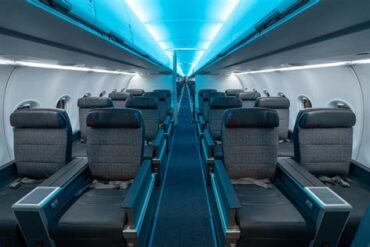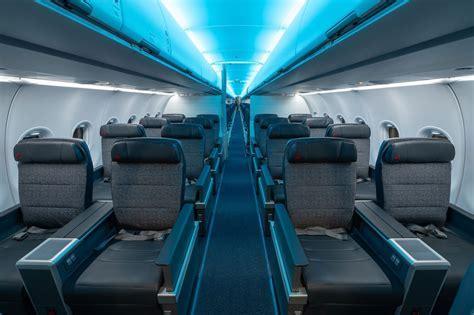
Air Canada operates one of the most fascinating niche fleets in North American aviation. Hidden within its standard commercial network is a tiny group of Airbus A320 aircraft unlike anything else flying for a major airline today. These jets are not built around maximizing passenger numbers or squeezing in extra economy rows. Instead, they are configured with just 70 spacious Business Class seats, creating an experience that feels closer to a private sports charter than a normal airline flight.
For most travelers, these aircraft remain almost invisible. They spend the majority of their time transporting NHL teams, celebrity tours, executives, and private groups across North America. Yet several times a year, Air Canada quietly inserts these aircraft into scheduled commercial service, allowing ordinary passengers to book seats on one of the rarest airline products in the world.
That unusual combination of exclusivity and accessibility has turned Air Canada Jetz into an aviation cult favorite. Enthusiasts track the aircraft obsessively, while premium travelers jump on the rare opportunities to experience a cabin normally reserved for professional athletes and VIP clients.
The latest batch of scheduled flights in June and July 2026 once again places these black-liveried Airbus A320s into public view across six routes from Toronto and Montreal.
Air Canada may operate hundreds of standard flights every day, but few attract the same attention as these ultra-premium narrowbody services.
Air Canada Jetz: A Private Charter Airline Hidden Inside Air Canada
Air Canada Jetz launched in late 2001 with a very specific mission. Rather than competing with private jet operators directly, the airline created a premium charter product capable of carrying large groups in comfort while maintaining privacy and operational flexibility.
The concept proved particularly attractive to professional sports organizations. Teams traveling constantly throughout long seasons needed aircraft with significantly more comfort than standard commercial cabins, but they also required enough seating for players, coaches, medical staff, media personnel, and equipment coordinators.
Instead of packing more than 140 passengers into a narrowbody layout, Air Canada transformed these Airbus aircraft into spacious flying lounges.
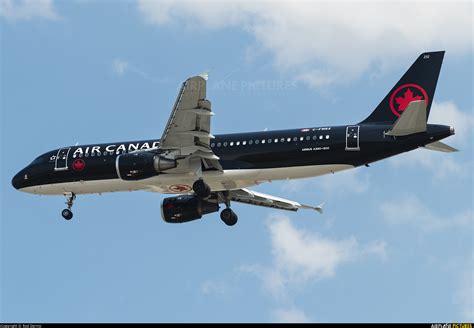
The original fleet consisted of Airbus A319 aircraft fitted with just 58 premium seats. In 2022, those jets were replaced by four Airbus A320-200 aircraft configured with 70 Business Class recliner seats. While the aircraft themselves are relatively old, averaging more than three decades in age, their interiors and mission profile give them an entirely different identity from conventional commercial A320s.
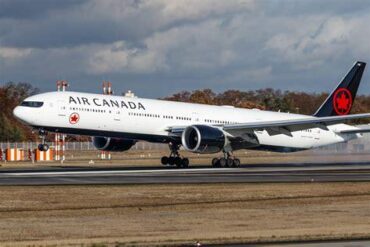
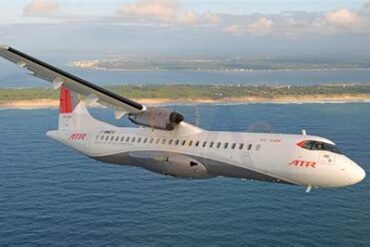
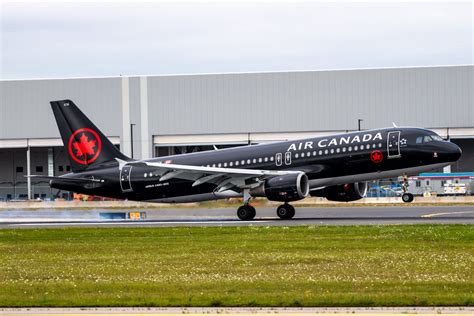
Each aircraft wears a striking black Air Canada Jetz livery, immediately distinguishing it from the standard white-and-red branding seen across the mainline fleet. On airport ramps crowded with ordinary narrowbody jets, the Jetz aircraft look unmistakably exclusive.
The current fleet includes:
- C-FKPT
- C-FKOJ
- C-FMSX
- C-FNVV
These aircraft primarily serve Canadian NHL teams including the Toronto Maple Leafs and Montreal Canadiens, but the operation has expanded significantly in recent years. US-based NHL organizations such as the Dallas Stars and Colorado Avalanche now utilize the service, alongside teams from the NBA and Major League Baseball.
The entertainment industry also represents a major client category. Over the years, artists including U2, Bruce Springsteen, The Rolling Stones, and The Spice Girls have used Air Canada Jetz for tour transportation.
Unlike a private Gulfstream or Bombardier business jet, the A320 platform allows entire touring crews or sports rosters to travel together while still maintaining premium levels of comfort.
Why Air Canada’s 70-Seat A320s Feel So Different
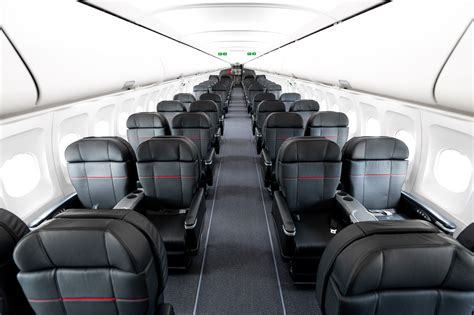
Most Airbus A320 aircraft are optimized for efficiency. Airlines typically install between 140 and 180 seats depending on configuration. Legroom is carefully balanced against revenue potential, and premium cabins usually occupy only a small section at the front.
Air Canada Jetz flips that formula entirely.
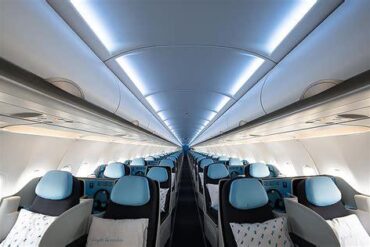
With only 70 seats onboard, passengers experience dramatically more personal space. Boarding becomes quicker, overhead bin competition nearly disappears, and the cabin atmosphere feels calmer and quieter than on a traditional commercial flight.
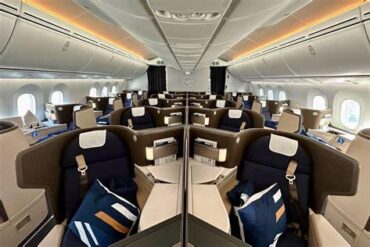
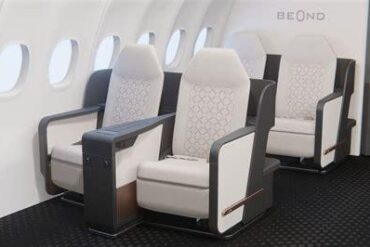
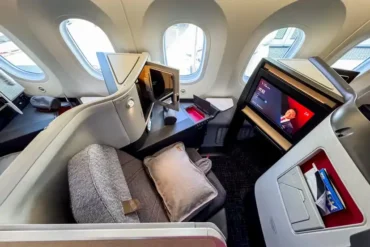
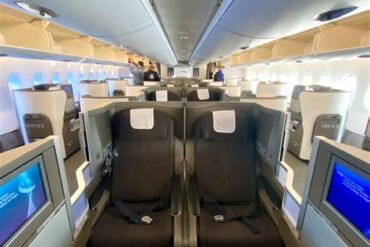
The recliner-style Business Class seats are arranged throughout the aircraft, eliminating the separation between premium and economy cabins found on most airlines. Every passenger effectively occupies what would normally be considered domestic Business Class seating.
This creates an unusually upscale environment for relatively short North American flights.
For aviation enthusiasts, the experience is particularly compelling because these aircraft retain the operational DNA of sports-charter flying. Travelers are essentially purchasing access to an aircraft designed around elite clients rather than mass-market airline economics.
That distinction matters. The entire onboard atmosphere changes when a narrowbody aircraft carries fewer than half the passengers normally expected.
The 6 Routes Where Air Canada Is Flying Jetz Aircraft
Air Canada’s scheduled Jetz operations for June and July 2026 remain extremely limited. According to the latest schedule updates, only 15 departures are currently planned across six routes.
These services include:
- Montreal to Winnipeg
- Toronto to New York LaGuardia
- Toronto to Halifax
- Toronto to Quebec City
- Toronto to Montreal
- Toronto to Winnipeg
Rather than operating consistently on daily schedules, the aircraft appear sporadically on selected dates. That unpredictability is part of what makes the flights so desirable among frequent flyers and aviation enthusiasts.
The Toronto–Montreal corridor receives the largest concentration of Jetz flying, with five scheduled departures. Toronto–Winnipeg follows with four flights, while the remaining routes receive only one or two appearances.
Among the most interesting additions is the Toronto Pearson to New York LaGuardia service. Flying an all-Business Class charter-configured A320 into one of America’s most slot-constrained airports creates an unusually premium transborder experience rarely seen in the North American market.
Meanwhile, domestic services to Halifax and Quebec City provide travelers with a chance to experience a quasi-private airline product on relatively short routes.
The flights are not heavily marketed by Air Canada itself. In many cases, passengers discover them accidentally while browsing schedules or through aviation-focused route tracking communities.
Why These Flights Are Surprisingly Expensive
Despite occasionally being sold under Economy fare categories, Air Canada Jetz flights often command significantly higher prices than standard alternatives on the same route.
A Toronto to Halifax example illustrates the difference clearly. On June 22, standard Air Canada flights were available from roughly $140 one-way, while the Jetz-operated service started around $622.
That pricing gap may seem extreme for a domestic flight lasting only a few hours, but demand for these aircraft rarely behaves like a normal airline market.
Passengers booking Jetz services are often purchasing the novelty and exclusivity as much as the transportation itself. Aviation enthusiasts actively seek these flights because opportunities are exceptionally rare. Frequent flyers value the spacious cabin and quieter onboard environment. Some travelers simply enjoy the chance to experience a premium charter aircraft without needing to charter an entire jet.
Scarcity drives attention quickly.
Once aviation communities identify a scheduled Jetz operation, premium seats tend to disappear rapidly despite the higher pricing.
The aircraft also create an unusual branding halo for Air Canada. Even travelers who never fly Jetz become aware that the airline operates a highly exclusive sub-fleet normally associated with sports teams and celebrities.
Delta Air Lines Is The Closest Competitor
Within North America, the closest equivalent to Air Canada Jetz comes from Delta Air Lines.
Delta operates a dedicated sub-fleet of Boeing 757-200 aircraft configured specifically for sports charters. Known internally as the “75C” fleet, these aircraft feature 72 premium recliner seats and regularly transport teams from the NBA, WNBA, NFL, NHL, and MLB.
Delta’s charter operation is considerably larger than Air Canada Jetz, with 11 aircraft dedicated to the mission.
However, there is one critical difference.
Delta does not regularly place these aircraft into commercial passenger service. Travelers cannot casually book seats on a sports-charter-configured Delta 757 through ordinary ticket searches. The aircraft remain largely invisible to the public despite their extensive operations.
Air Canada takes the opposite approach.
By occasionally integrating Jetz aircraft into standard schedules, the airline transforms a niche charter fleet into a rare public-facing premium experience. That strategy has elevated the aircraft to near-mythical status among aviation fans.
The distinctive black livery further enhances that identity. While Delta’s sports-charter aircraft visually blend into the rest of its fleet, Air Canada Jetz aircraft immediately stand out on any airport apron.
Why Aviation Enthusiasts Obsess Over Air Canada Jetz
Modern airline travel increasingly revolves around efficiency, density, and cost optimization. Aircraft cabins continue adding seats while reducing personal space, particularly on short-haul routes.
Air Canada Jetz represents the exact opposite philosophy.
These aircraft preserve a style of premium narrowbody flying that has become increasingly rare in commercial aviation. Spacious seating, limited passenger counts, and charter-focused service create an atmosphere that feels disconnected from modern airline norms.
The fact that these jets occasionally appear on ordinary scheduled routes only increases their appeal.
For a brief period, regular passengers gain access to an aircraft usually reserved for NHL players, touring musicians, and corporate executives. That crossover between private charter exclusivity and commercial accessibility is almost unheard of among major global airlines.
With only four aircraft in the fleet and very limited scheduled appearances, Air Canada Jetz remains one of the rarest passenger experiences in North American aviation.
For travelers searching for something genuinely different from the standard narrowbody flight, these 70-seat Airbus A320s continue to occupy a category entirely their own.