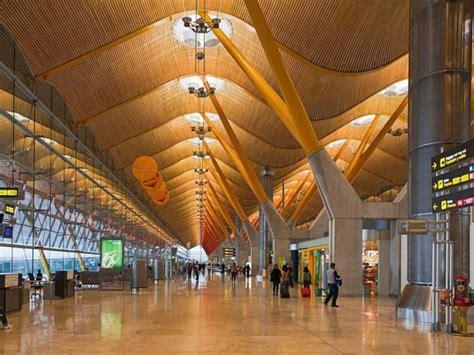
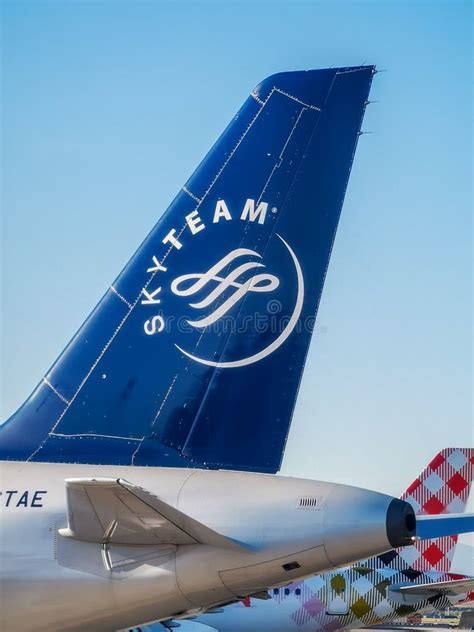
Air Europa Líneas Aéreas, S.A.U., operating under the prominent brand name Air Europa, stands as a significant force in the Spanish aviation sector, proudly holding its position as the nation’s third-largest airline, surpassed only by Iberia and Vueling. With its corporate headquarters strategically located in Llucmajor, Mallorca, Spain, Air Europa has established a robust operational framework. The airline’s primary hub is the bustling Adolfo Suárez Madrid–Barajas Airport, a critical nerve center for its extensive network. Complementing this main hub, Air Europa maintains focus city operations at Palma de Mallorca Airport and Tenerife North Airport, further strengthening its presence in key Spanish tourism and travel markets. The airline’s reach is considerable, connecting Spain to over 44 destinations across the globe, encompassing routes within Spain, throughout the rest of Europe, and extending to pivotal cities in South America, North America, the Caribbean, Morocco, and Tunisia. A testament to its international standing and commitment to global connectivity, Air Europa became a valued member of the prestigious SkyTeam alliance in September 2007, enhancing its service offerings and global reach through partnerships with other leading international carriers.
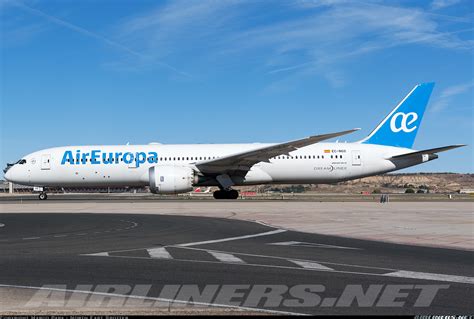
The journey of Air Europa began in 1986, when it was registered in Spain as Air España SA, having previously been known by that name. It emerged as an integral part of the British ILG-Air Europe Group, with a significant 75% ownership stake held by Spanish banks. In its nascent phase, Air Europa’s aircraft sported a livery that bore a striking resemblance to that of its British counterpart, Air Europe, distinguished by the prominent “Air Europa” titles and Spanish aircraft registrations. The airline’s initial focus was on the burgeoning holiday charter market, utilizing a fleet primarily composed of Boeing 737-300s and Boeing 757s to transport travelers between popular Mediterranean resorts and various European cities. A pivotal moment in its early history was becoming the first private Spanish company to operate national scheduled flights, a significant expansion beyond its core charter flight business, which had previously been its mainstay. This pioneering move marked a new era for private aviation in Spain. The airline demonstrated remarkable resilience when its parent company, ILG, ceased trading in 1991. Air Europa not only weathered this storm but continued to operate profitably, progressively expanding its fleet of Boeing 737s and 757s. A strategic, though later dissolved, franchise agreement was signed with Iberia in January 1998. Subsequently, ownership transitioned to Globalia Corporación Empresarial S.A., a major Spanish tourism group, which remains its parent company. The late 1990s heralded a period of modernization for Air Europa, characterized by the introduction of the more advanced Boeing 737-800 jets into its fleet and the unveiling of a refreshed, contemporary livery, signaling its ambitions for future growth and development.
Forging Alliances and Expanding Horizons
The early 2000s saw Air Europa actively seeking to strengthen its international presence and network capabilities. In June 2005, a significant announcement was made: Air Europa was slated to become one of four future associate members of the SkyTeam alliance, with an anticipated joining date in 2006. However, this timeline experienced a postponement. Ultimately, Air Europa officially cemented its place within the global airline alliance on September 1, 2007. This membership was a landmark achievement, providing Air Europa passengers with access to a vastly expanded network of routes and services offered by fellow SkyTeam member airlines, and enhancing its competitiveness on the global stage. During this period, Air Europa also ventured into an international partnership as the parent company for Air Dominicana, envisioned as the new flag carrier of the Dominican Republic. Unfortunately, this endeavor was short-lived, as Air Dominicana declared bankruptcy on September 21, 2009, leading to the cessation of its operations. Despite this setback, Air Europa continued to evolve its own services. A notable fleet transition occurred on April 13, 2012, when the airline retired its last Boeing 767 aircraft, marking a step in its ongoing fleet modernization strategy. A particularly interesting development unfolded on May 22, 2019, when the National Civil Aviation Agency of Brazil (ANAC) granted Air Europa a groundbreaking authorization to operate domestic flights within Brazil. This was an unprecedented move, making Air Europa the first foreign-owned company to receive such permission following changes in Brazilian legislation that allowed for full foreign ownership of domestic airlines. While Air Europa already served the Brazilian market with international flights from Madrid to destinations like Salvador and Recife, the specifics of its future domestic operations in Brazil remained under development at that time, representing a potentially significant expansion of its footprint in South America.
The Protracted IAG Acquisition Saga
One of the most significant chapters in Air Europa’s recent history has been the proposed acquisition by International Airlines Group (IAG), the parent company of Iberia and British Airways. The initial announcement of this transformative deal came on November 4, 2019. IAG revealed its ambitious plans to acquire Air Europa from Globalia for a substantial sum of €1 billion (approximately $1.1 billion USD). At that juncture, Air Europa was operating a diverse fleet of 66 aircraft and had demonstrated solid financial performance, generating an operating profit of €100 million in 2018. IAG’s strategic intent was to integrate Air Europa into its Iberia subsidiary, thereby consolidating the Spanish market and significantly strengthening its Madrid hub. While integration was key, IAG also expressed its intention to retain the Air Europa brand indefinitely. The group anticipated achieving a return on investment by the fourth year post-acquisition, with full synergies expected by 2025. These synergies were envisioned to arise from inter-group codeshares, optimized flight scheduling and bank timings at Madrid Airport, and the alignment of sales strategies and loyalty programs.
However, the global landscape shifted dramatically with the onset of the COVID-19 pandemic, which had a devastating impact on the aviation industry. In recognition of these changed circumstances, IAG and Globalia agreed in January 2021 to a revised transaction price, effectively halving the original valuation to €500 million. Despite this adjustment, the path to acquisition proved fraught with challenges. By November 2021, plans for the merger were formally scrapped, although both parties expressed a desire to explore alternative ways to revive the deal, setting a deadline for the end of January 2022 to find a new path forward. The complexities continued, but IAG demonstrated its continued interest in August 2022 by converting a previously extended loan to Air Europa into a 20% shareholding in the airline. This move signaled a deepening, albeit altered, relationship between the two entities.
A renewed attempt at a full acquisition materialized in February 2023, when IAG agreed to purchase the remaining 80% of Air Europa for €400 million. Under this revised agreement, the plan to keep the Air Europa brand intact remained, even as IAG reiterated its intention to make it part of Iberia’s operational structure. This revived deal reportedly received crucial backing from the Spanish government, which was a key proponent of the merger, viewing it as a means to bolster the Madrid hub’s competitiveness against other major European aviation centers. IAG itself suggested that the successful completion of the merger would pave the way for the launch of new routes to Asia from Madrid, a strategic objective long advocated by the Spanish government. Had the deal proceeded and gained regulatory approval, it was widely anticipated that Air Europa would exit the SkyTeam alliance and align with other IAG member airlines as part of the Oneworld alliance.

Nevertheless, the acquisition faced significant regulatory hurdles. In January 2024, the European Commission formally expressed concerns that the proposed merger could substantially reduce competition. Specifically, the Commission highlighted potential negative impacts on domestic routes within Spain, on short-haul routes connecting Madrid to other major cities in Europe and the Mediterranean, and critically, on long-haul routes between Madrid and the Americas, a key market for both Air Europa and Iberia. The EU’s competition enforcer indicated that the remedies proposed by IAG at that stage were likely insufficient to alleviate these deep-seated competition concerns. This sentiment was further underscored in February 2024, when reports emerged suggesting that IAG was likely to receive an official EU antitrust warning. The culmination of these regulatory challenges arrived in August 2024, when IAG announced its decision to abandon the acquisition of Air Europa. The group stated that the additional remedies demanded by EU antitrust authorities to approve the deal were deemed too onerous, rendering the transaction economically unviable. Following the collapse of the deal, IAG declared its intention to independently pursue growth and strengthen its position in Madrid, aiming to develop the airport into a premier aviation hub capable of rivaling Europe’s other major connecting points.
Recent Developments and Future Routes
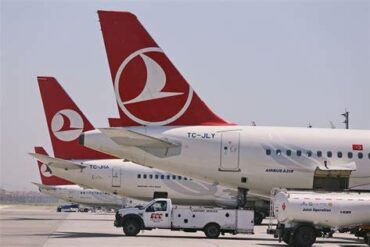
Even amidst the complexities of the IAG acquisition saga and its eventual termination, Air Europa has continued to focus on its operational development and network expansion. A notable recent announcement, made on December 18, 2024, revealed the airline’s plans to launch a new strategic service to Turkey. Commencing on May 12, 2025, Air Europa will inaugurate flights between its Madrid hub and Istanbul. This new route is scheduled to begin with an initial frequency of four weekly flights, with plans to subsequently increase this to five weekly services. These flights are slated to be operated using Air Europa’s modern Boeing 787-9 Dreamliner aircraft, underscoring the airline’s commitment to utilizing fuel-efficient, long-range aircraft for key international routes. This expansion into the Turkish market represents a significant step in Air Europa’s strategy to diversify its route network and tap into new growth opportunities, particularly connecting its extensive Latin American network via Madrid to this major Eurasian hub.
Extensive Network: Destinations and Hub Operations
Air Europa’s operational footprint is extensive, catering to a diverse range of travel needs. The airline is well-known for its tour services, efficiently connecting northern and western European cities with popular holiday resorts in Spain’s Canary Islands and Balearic Islands. Beyond its leisure-focused charter heritage, Air Europa operates a comprehensive network of domestic scheduled services across Spain, linking major cities and regions. A cornerstone of its operations is its long-haul scheduled services, which primarily focus on connecting Europe with key destinations in North America and South America, leveraging its strategic Madrid hub. The Adolfo Suárez Madrid–Barajas Airport serves as the undisputed nerve center for Air Europa’s global operations, facilitating seamless connections for passengers traveling across its network. This central hub is complemented by important focus city operations at Palma de Mallorca Airport, catering to the significant tourist traffic to the Balearic Islands, and Tenerife North Airport, serving the Canary Islands archipelago. This multi-faceted approach allows Air Europa to cater to both point-to-point travelers and those requiring onward connections, solidifying its role as a key player in Spanish and international aviation.
Strategic Alliances: Codeshare and Interline Partnerships
To enhance its global reach and provide passengers with a wider array of travel options, Air Europa maintains a robust network of codeshare agreements with numerous international airlines. As of January 2025, these partnerships allow Air Europa to market and sell seats on flights operated by its partner carriers, effectively extending its network without needing to operate its own aircraft on every route. Air Europa’s codeshare partners include:
- Aerolíneas Argentinas
- Aeroméxico
- Air France
- Air Serbia
- Azul Brazilian Airlines
- Canaryfly
- China Airlines
- China Eastern Airlines
- Copa Airlines
- Delta Air Lines
- Etihad Airways
- Ethiopian Airlines
- Flair Airlines
- Garuda Indonesia
- ITA Airways
- KLM
- Kenya Airways
- Korean Air
- Kuwait Airways
- Middle East Airlines
- Saudia
- Scandinavian Airlines
- TAROM
- Turkish Airlines
- Vietnam Airlines
- Virgin Atlantic
- XiamenAir
These agreements are vital for offering seamless travel experiences, including through-ticketing and baggage handling, across different airline networks. Beyond these codeshare arrangements, Air Europa also has interline agreements with carriers such as Air Transat, Iberojet, and Sky Airline. Interline agreements typically allow passengers to book itineraries that involve multiple airlines on a single ticket, further broadening the connectivity options available to Air Europa customers. These partnerships, particularly its membership in the SkyTeam alliance, are fundamental to Air Europa’s international strategy, enabling it to compete effectively on a global scale.
Modern Fleet: The Backbone of Air Europa’s Operations
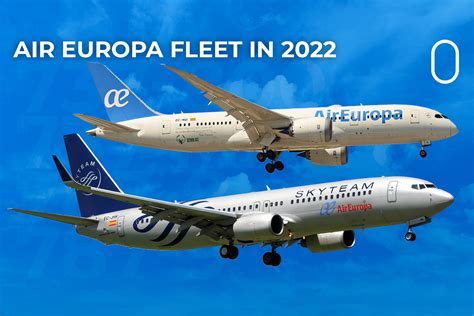
As of April 2025, Air Europa operates a modern and increasingly efficient mainline fleet composed exclusively of Boeing aircraft. This strategic decision to streamline its fleet around Boeing types allows for operational efficiencies in terms of maintenance, crew training, and spare parts inventory. The current fleet comprises the following aircraft:
-
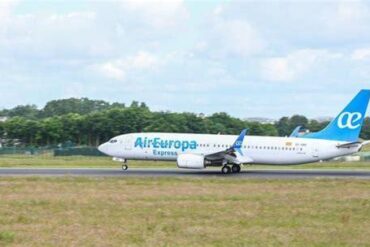
Boeing 737-800: Air Europa operates 17 of these narrow-body workhorses. Each is configured with 12 seats in Business Class and 168 seats in Economy Class, totaling 180 seats. This aircraft is a staple for short to medium-haul routes across Europe and to North Africa.
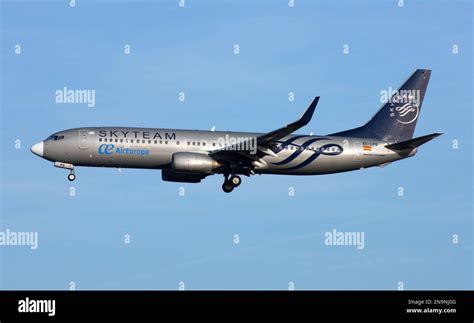
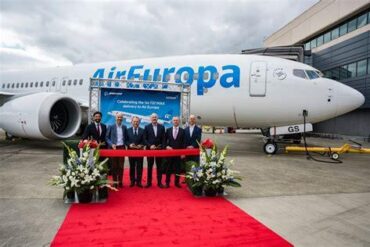
- Boeing 737 MAX 8: The airline has 1 of this new generation narrow-body aircraft currently in service, with a significant 29 more on order. These aircraft are configured with 189 seats in an all-Economy layout. Deliveries of the 737 MAX 8 commenced in May 2025, signaling a major step in Air Europa’s fleet modernization and sustainability efforts, offering improved fuel efficiency and passenger comfort.
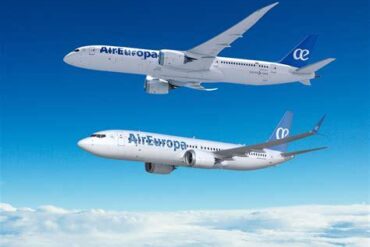
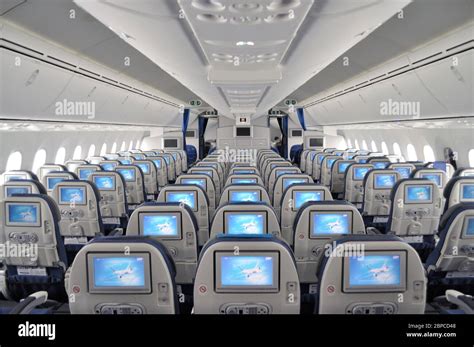
- Boeing 787-8 Dreamliner: Air Europa’s long-haul fleet includes 11 of the smaller variant of the Dreamliner. These aircraft are configured with 22 seats in Business Class and 274 in Economy, for a total of 296 passengers. The Boeing 787-8 is renowned for its fuel efficiency, range, and enhanced passenger experience features, serving key transatlantic routes.
-
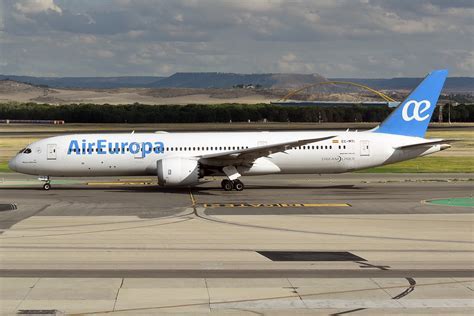
Boeing 787-9 Dreamliner: The larger variant, the Boeing 787-9, is also a crucial component of the long-haul fleet, with 15 currently in service and 3 more on order. These aircraft feature a two-class configuration with 30 Business Class seats and 303 Economy Class seats, accommodating a total of 333 passengers. The 787-9 offers greater capacity and range, ideal for high-demand long-haul destinations.
In total, Air Europa’s active mainline fleet consists of 44 aircraft, with a further 32 next-generation aircraft on order, primarily the Boeing 737 MAX 8 and additional Boeing 787-9s. This ongoing fleet renewal program underscores Air Europa’s commitment to operating modern, environmentally friendlier, and economically efficient aircraft.
A Look Back: Air Europa’s Historical Fleet
Over its nearly four decades of operation, Air Europa has utilized a diverse range of aircraft types to serve its evolving network and passenger needs. The airline’s historical fleet includes:
- Airbus A330-200: Operated from 2006 to 2021.
- Airbus A330-300: Flew for the airline from 2013 to 2021.
- Airbus A340-200: Briefly part of the fleet from 2005 to 2006.
- ATR 42: Utilized for regional routes from 1996 to 1997.
- Boeing 737-300: A foundational aircraft, in service from 1986 to 2004.
- Boeing 737-400: Operated from 1994 to 2006.
- Boeing 737-600: Flew with Air Europa from 2003 to 2004.
- Boeing 757-200: An early workhorse, part of the fleet from 1987 to 1998.
- Boeing 767-200: Operated from 1996 to 2001.
- Boeing 767-300ER: Served long-haul routes from 2000 until its retirement in 2012.
- British Aerospace ATP: Used for regional services from 1996 to 2001.
- Embraer ERJ-145: Briefly operated from 2012 to 2017, often by its regional subsidiary.
- Embraer 195: Part of the fleet from 2008 to 2017, these aircraft were later transferred to its subsidiary, Air Europa Express.
This evolution of its fleet reflects the airline’s growth, changes in market demand, and technological advancements in the aviation industry.
Safety and Operational Integrity: Accidents and Incidents
Air Europa maintains a strong focus on safety across its operations. As of January 2025, the airline has experienced one notable non-fatal incident in its recent history. On July 1, 2024, Air Europa Flight 045, a scheduled international service operating from Madrid–Barajas Airport (MAD) in Madrid, Spain, to Carrasco International Airport (MVD) in Montevideo, Uruguay, encountered severe turbulence. The aircraft involved was a Boeing 787-9 Dreamliner, registered as EC-MTI. The turbulence event occurred while the aircraft was cruising at flight level FL360 over the Atlantic Ocean, at approximately 04:50 UTC. Following the severe turbulence, the flight crew made the decision to divert to Greater Natal International Airport (NAT) in Natal, Brazil. The aircraft landed safely in Natal at 05:32 UTC. Of the 336 people on board (passengers and crew), 40 occupants sustained non-fatal injuries that necessitated hospitalizations. Among these, four injuries were classified as serious, affecting three passengers and one crew member. Additionally, the interior of the Boeing 787-9 aircraft sustained serious damage that required subsequent repairs. This incident highlights the unpredictable nature of clear-air turbulence and the importance of crew training in managing such events.
Navigating the Future: Air Europa’s Path Forward
Air Europa continues to be a pivotal airline in the Spanish and European aviation landscape, recognized for its extensive network connecting Europe with the Americas. Its membership in the SkyTeam alliance and its role within the Globalia tourism group provide a solid foundation for its operations. The recent collapse of the protracted IAG acquisition attempt marks a significant turning point, compelling Air Europa to chart its own independent course in a highly competitive market. The airline’s strategy will likely focus on leveraging its Madrid hub, modernizing its fleet with the continued introduction of Boeing 737 MAX and additional Boeing 787 Dreamliners, and selectively expanding its route network, as evidenced by the new Istanbul service. The Air Europa Suma frequent-flyer program will also remain a key tool for fostering customer loyalty. As it navigates the post-pandemic recovery and the dynamic European aviation market, Air Europa’s ability to adapt, innovate, and capitalize on its strengths will be crucial for its sustained success and growth in the years to come.