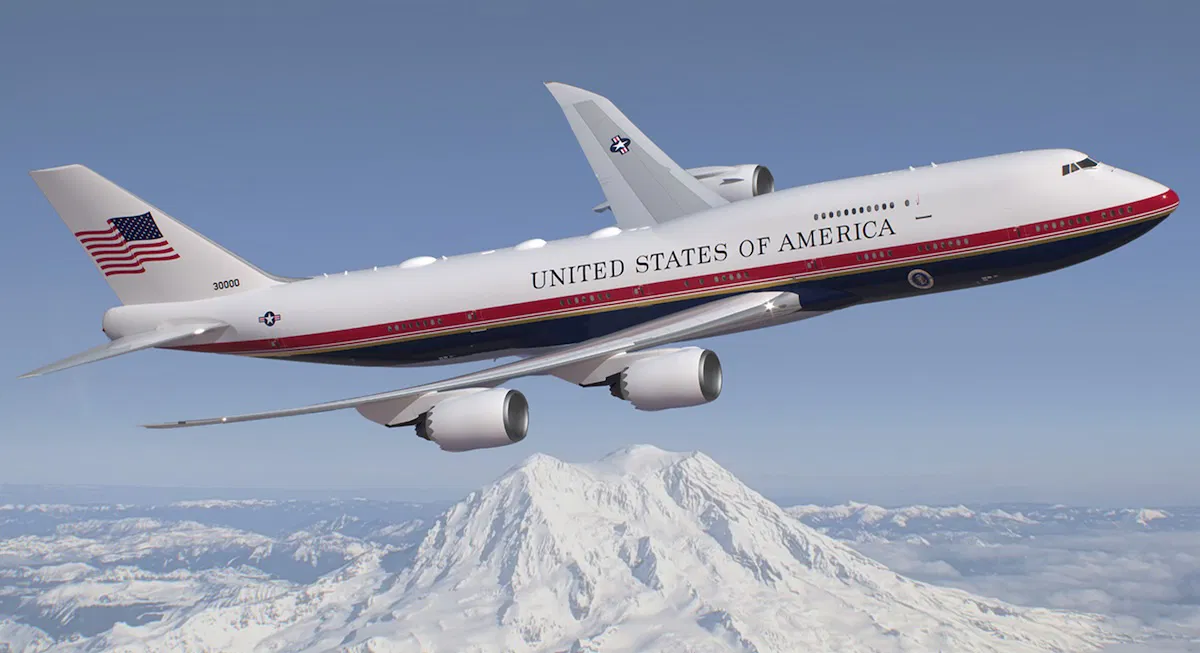
The aircraft known globally as Air Force One is more than a mode of transportation. It is a flying symbol of American executive power, a carefully calibrated blend of engineering precision, military capability, and visual diplomacy. Now, that symbol is poised for a dramatic aesthetic transformation. Under President Donald Trump’s renewed directive, key United States Air Force VIP aircraft — including the next-generation Boeing 747-8 designated to serve as Air Force One — will adopt a striking red, white, gold, and dark blue livery inspired by Trump’s personal aviation style.
For aviation observers and political insiders alike, the change marks a significant departure from the iconic white and baby blue color scheme that has defined presidential aircraft since the Kennedy administration. The visual update is not subtle. It is bold, saturated, and intentionally patriotic — with metallic gold accents that unmistakably echo Trump’s personal Boeing 757-200, once widely referred to as “Trump Force One.”
The most prominent aircraft to receive this redesign will be the new Boeing 747-8, temporarily stepping into presidential service before ultimately joining Trump’s Presidential Library collection. This aircraft, gifted by Qatar as an interim solution, bridges the gap until two purpose-built VC-25B jets — heavily modified Boeing 747-8 variants — finally enter service after years of delays and cost overruns.
A Presidential Aircraft Redefined
The updated livery abandons the restrained elegance of the Raymond Loewy–designed palette introduced during President John F. Kennedy’s era. That design, featuring soft blue cheatlines and understated typography, became one of the most recognizable aircraft paint schemes in the world. It projected calm authority and continuity.
Trump’s preferred redesign takes a different approach. The deeper navy underbelly, vibrant red striping, and gold detailing introduce a sharper visual contrast. The look is assertive and unmistakably theatrical. Supporters argue it reflects a more modern and energetic America, while critics note that such a dramatic aesthetic shift carries symbolic weight beyond mere paint.
Beyond symbolism, however, repainting a presidential aircraft is not a cosmetic afterthought. Aircraft livery decisions affect weight, thermal absorption, maintenance cycles, and regulatory compliance. The darker blue elements in the design previously raised technical questions during the Biden administration. A thermal study suggested that increased heat absorption could require additional FAA testing for certain components, adding complexity to certification processes.
Those concerns halted the redesign in 2023 when President Joe Biden opted to maintain a version of the traditional livery with modest modernization. The current revival of the patriotic-and-gold concept signals not just aesthetic preference but political reversal.
The Wider Fleet: C-32A Boeing 757 Aircraft Join the Shift
The transformation extends beyond the 747-8. Four of the Air Force’s eight C-32A aircraft — modified Boeing 757-200 jets used for transporting the vice president and senior White House officials — will also receive the updated scheme. These aircraft operate regularly under high visibility conditions, making their appearance an extension of presidential branding.
The first C-32A has already been repainted and is expected to return to operational service in the coming months. Rather than grounding aircraft solely for aesthetic upgrades, repainting is being integrated into scheduled maintenance cycles, minimizing operational disruption.
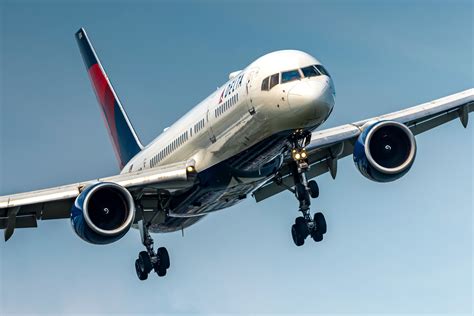
Historically, these aircraft have mirrored the Air Force One color language, reinforcing a consistent executive fleet identity. Introducing gold accents and stronger primary tones fundamentally alters that visual continuity. In aviation terms, fleet consistency communicates stability. Altering it is a deliberate act.
From 2019 Proposal to 2026 Reality
This redesign is not a spontaneous development. Trump first unveiled the concept in 2019 during his initial term, presenting a model featuring a dark blue underside, bold red stripe, and clean white fuselage. At the time, he described the future Air Force One as destined to be “top of the line” and visually representative of the nation’s strength.
The plan stalled after the change in administration. Yet with Trump’s return to influence over the program, the design has regained momentum. The interim Boeing 747-8 is expected to enter service as early as this summer, showcasing the new aesthetic in active presidential duty.
It is important to remember that Air Force One is not a single aircraft model but a radio callsign used whenever the President of the United States is aboard a U.S. Air Force plane. Still, the aircraft that most commonly carries that callsign — currently the VC-25A, based on the Boeing 747-200 — has maintained remarkable visual continuity for decades. Breaking that continuity is historically rare.
Symbolism in Steel and Paint
Presidential aircraft serve diplomatic, military, and symbolic roles simultaneously. When Air Force One lands in a foreign capital, its appearance communicates national identity before the President even steps onto the tarmac. Color schemes, therefore, function as soft power tools.
The infusion of gold is particularly notable. Gold in aviation liveries is uncommon due to cost and maintenance considerations, yet it signals prestige and opulence. Coupled with the strong primary colors of red, white, and blue, the new design leans into unmistakable patriotic branding.
From a purely visual standpoint, the updated livery will make the aircraft more distinctive against airport backdrops dominated by white commercial jets. Whether one views the change as modernization or disruption, it undeniably ensures visibility.
A Visual Reset for an Icon
The forthcoming transformation of Air Force One and select VIP transport aircraft marks one of the most significant aesthetic changes in the fleet’s modern history. The move replaces the soft restraint of mid-20th-century design with a sharper, more personalized statement aligned with Trump’s established visual identity.
As the first repainted aircraft prepare to re-enter service, the world will soon see whether this patriotic-and-gold palette becomes a lasting chapter in presidential aviation history — or another vivid footnote in the evolving story of America’s most famous aircraft.