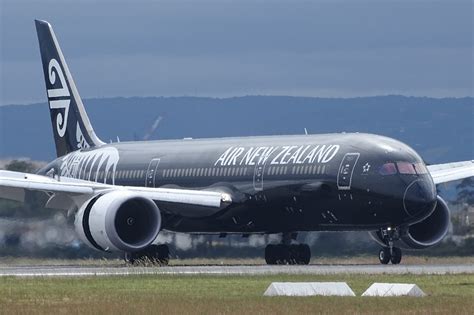
The global aviation industry runs on a deceptively fragile equation: fuel availability, geopolitical stability, and passenger demand must remain in delicate balance. When one element shifts dramatically, the entire system feels the shockwave. That reality is now unfolding as Air New Zealand announces the cancellation of more than 1,100 flights, a decision driven by a sharp surge in global jet fuel prices tied to escalating tensions in the Middle East.
The cuts represent roughly 5% of the airline’s scheduled services through early May, yet the human impact is far larger than the percentage suggests. Approximately 44,000 passengers will see their travel plans disrupted as the airline reshapes its network to absorb rising operational costs. For an airline known for long-haul connectivity across the Pacific, even modest reductions can ripple through regional travel markets.
Behind these cancellations lies a deeper story about how global conflicts can reshape airline economics almost overnight. Since February 28, escalating instability around key energy transit routes—particularly the strategically vital Hormuz Strait—has placed pressure on fuel supply chains. With shipments restricted and traders anticipating further disruption, jet fuel prices surged to $3.95 per gallon, the highest level in months before easing slightly.
Fuel Prices and the Fragile Economics of Air Travel
Aviation has always been uniquely exposed to energy markets. For most carriers, fuel represents the single largest operating expense, often accounting for around 30% of total costs. Unlike aircraft leases or labor contracts, fuel costs fluctuate constantly, reacting to geopolitical events, market speculation, and supply disruptions.
The latest spike has forced airlines worldwide to rethink schedules, capacity planning, and ticket pricing. In the case of Air New Zealand, executives determined that temporarily reducing flight frequencies was more sustainable than operating routes at a loss while fuel prices remain volatile.
The strategy reflects a classic airline dilemma: operate fewer flights at higher efficiency, or maintain schedules while absorbing rising costs. Many carriers choose the former when markets become unstable. Aircraft can be redeployed to higher-demand routes, while marginal flights—especially those with lower load factors—are temporarily withdrawn.
The ripple effect extends far beyond New Zealand. Airlines across Asia, Europe, and North America are already adjusting capacity forecasts for the coming months. When global networks tighten simultaneously, passengers often experience the consequences through higher fares and reduced availability.

A Global Aviation Cost Surge
The fuel crisis is not confined to one airline or region. Analysts tracking the broader aviation economy estimate that U.S. carriers alone may face an additional $11.6 billion in fuel expenses during 2026 if current projections hold. The revised forecast from government analysts places the average jet fuel price at $2.67 per gallon, representing a 37% increase compared with earlier estimates.
Major U.S. airlines—including United Airlines, Delta Air Lines, American Airlines, and Southwest Airlines—operate some of the largest fleets in the world. Their vast domestic networks and long-haul routes magnify the financial consequences of fuel price swings. Even a small per-gallon increase translates into billions of dollars in additional annual expenditure.
Airlines operate on notoriously thin margins, often measuring profits in single-digit percentages. When fuel costs climb rapidly, carriers must respond quickly. The typical playbook includes adjusting capacity, imposing fuel surcharges, or quietly raising ticket prices to offset rising expenses.
This dynamic explains why travelers worldwide may soon notice higher airfare. When fuel prices spike, the entire aviation ecosystem—from airlines to cargo carriers—begins recalibrating its financial models.
Air New Zealand’s Strategic Fuel Hedging
Despite the immediate disruption, Air New Zealand is not entirely exposed to the volatility of energy markets. The airline has long used a financial strategy known as fuel hedging, a contractual approach that allows carriers to lock in fuel prices in advance.
Recent reports indicate the airline hedged 83% of its projected fuel needs for the second half of 2026, along with 46% of its expected requirements for the first half of 2027. These agreements effectively place a ceiling on how much the airline must pay for fuel within those periods.
Fuel hedging works much like insurance against market chaos. Airlines negotiate contracts with suppliers guaranteeing a set quantity of fuel at a predetermined price. If market prices rise dramatically, the airline still pays the lower hedged price, protecting its operating costs.
The strategy is not without risk. If fuel prices drop below the contracted rate, the airline may end up paying more than competitors purchasing fuel at market price. Successful hedging therefore requires careful forecasting, financial modeling, and a fair amount of educated guesswork about future energy markets.
For Air New Zealand, the hedging program could provide significant relief later in 2026, when the airline begins drawing from these pre-negotiated fuel supplies.
A Crisis That Reveals Aviation’s Global Interdependence
What makes the current situation remarkable is how quickly a regional conflict can reshape global travel patterns. Aviation functions as an interconnected system; disruptions in one region propagate rapidly through fuel markets, airspace restrictions, and airline networks.
The Middle East’s strategic role in global energy distribution means any instability there reverberates through industries that rely heavily on fuel. Airlines, with their immense daily fuel consumption, are often among the first sectors forced to react.
For travelers, the immediate consequence may simply appear as cancelled flights or higher ticket prices. Yet beneath those surface changes lies a much larger economic mechanism—one where geopolitics, commodity markets, and airline strategy intersect.
Air New Zealand’s decision to cut over a thousand flights is therefore more than an isolated operational adjustment. It serves as an early signal of how global aviation responds when energy markets shift suddenly. As airlines worldwide monitor fuel prices and geopolitical developments, the coming months may reveal further schedule changes, pricing adjustments, and strategic pivots across the industry.