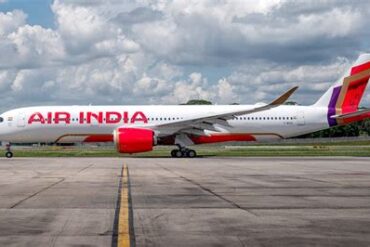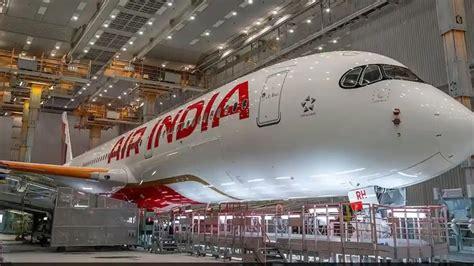
Air India has announced sweeping cuts across its international network for the 2026 summer season, suspending or reducing hundreds of flights as the airline grapples with intensifying safety scrutiny, rising operational costs, aircraft shortages and the lingering fallout from last year’s fatal Boeing 787 crash. The reductions represent one of the carrier’s most significant schedule pullbacks in recent years and highlight the growing pressure facing Tata Group’s ambitious effort to revive India’s former flag carrier.
The airline confirmed that multiple long-haul and regional services between June and August 2026 will either be suspended entirely or operated at sharply reduced frequencies. Air India said the move was necessary to improve operational reliability amid worsening geopolitical and financial conditions affecting its international operations.
The announcement comes at a particularly difficult moment for the airline. Air India has spent the last four years attempting to reposition itself as a premium global carrier following Tata Group’s takeover in 2022, investing heavily in fleet renewal, cabin upgrades and international expansion. However, that recovery strategy is now being tested by a combination of external disruptions and internal operational weaknesses.
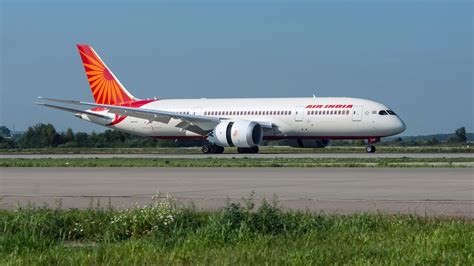
Air India Cuts International Routes Across North America, Europe and Asia
The summer reductions affect dozens of routes spanning North America, Europe, Australia and Asia. Several important long-haul services will disappear temporarily from the schedule, while others face substantial reductions in weekly frequencies.
Among the most notable changes are the suspension of Delhi–Chicago, Delhi–Newark, Mumbai–New York JFK and Delhi–Shanghai services. Flights from Chennai to Singapore and Mumbai to Dhaka will also be paused through August.
North American routes have been particularly affected. Delhi–San Francisco flights will drop from ten weekly services to seven, while Delhi–Toronto frequencies will be cut in half from ten to five weekly operations until August. Services to Vancouver are also being reduced.
European operations are facing broad cuts as well. Air India will halve its Delhi–Paris schedule from fourteen weekly flights to seven, while flights to Copenhagen, Vienna, Rome and Zurich will all see reduced frequencies.
The carrier’s Australia network is also shrinking significantly. Both Delhi–Sydney and Delhi–Melbourne routes will fall from daily service to just four weekly flights.
Across Southeast Asia and South Asia, reductions are equally severe. Singapore, Bangkok, Kuala Lumpur, Kathmandu, Colombo and Dhaka services are all being scaled back as the airline struggles to maintain aircraft availability and operational consistency.
Despite the reductions, Air India stated that it still plans to operate more than 1,200 international flights per month during the summer season, maintaining connectivity across five continents.
Middle East Airspace Restrictions Push Operating Costs Higher
A major factor behind the network reductions is the continuing disruption caused by restricted airspace over Iran and Pakistan. Airlines operating between India and Europe or North America have increasingly been forced to adopt longer flight paths to avoid unstable regions, dramatically increasing fuel burn and flight times.
For Air India, which relies heavily on ultra-long-haul operations linking India with North America and Europe, the impact has been particularly severe.
Longer routings reduce aircraft utilization because jets spend more time airborne on each rotation. That creates scheduling bottlenecks across the fleet and leaves airlines requiring additional aircraft simply to maintain existing timetables.
At the same time, global jet fuel prices have surged since tensions escalated in the Middle East earlier this year. Fuel remains one of the airline industry’s largest operating expenses, and Air India’s already fragile financial position has left it highly exposed to these increases.
The combination of extended flight durations and higher fuel costs has made several routes economically difficult to sustain during the peak summer season.
Boeing 787 Delays and Fleet Shortages Disrupt Recovery Plans
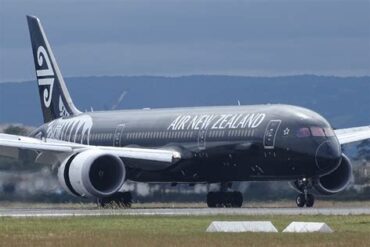
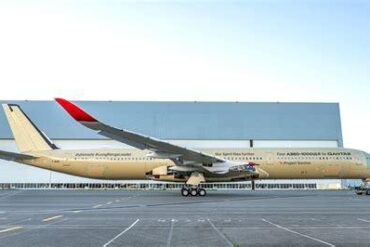
Aircraft shortages are further complicating Air India’s recovery strategy. The airline has been counting on new Boeing 787-9 deliveries and the arrival of Airbus A350-1000 aircraft to modernize its long-haul fleet and improve reliability.
However, delays affecting both manufacturers have reduced operational flexibility at a critical time.
Air India continues to depend heavily on its existing Boeing 787 fleet for international services. That dependence has become increasingly problematic as maintenance demands rise and aircraft availability tightens.
The airline has already faced criticism in recent months for deploying Boeing 787 aircraft with temporary cabin limitations, including blocked business-class seats and incomplete premium cabin features on some routes.
Operational resilience has deteriorated as a result. Aircraft shortages leave little room for recovery when disruptions occur, increasing the likelihood of delays, cancellations and cascading schedule problems.
The fleet pressure is particularly concerning given Air India’s broader transformation ambitions. Tata Group had hoped to position the airline as a serious competitor to Gulf carriers and major Asian airlines by aggressively expanding long-haul operations. Instead, the carrier now finds itself cutting back significant portions of its international network.
AI171 Crash Investigation Continues to Cast Shadow Over Airline
The ongoing investigation into the June 2025 crash of Air India Flight AI171 remains one of the biggest challenges facing the carrier.
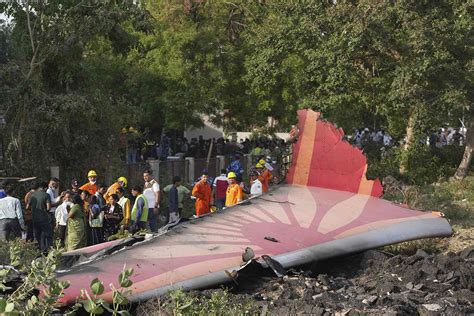
The Boeing 787-8 crashed shortly after take-off from Ahmedabad, killing 241 of the 242 people on board as well as 19 people on the ground. The accident became one of the deadliest aviation disasters involving an Indian airline in decades and triggered widespread scrutiny of Air India’s operational standards.
India’s Air Accident Investigation Bureau is expected to release its final report in June 2026.
Interim findings published earlier indicated that both fuel control switches moved to the cut-off position shortly after departure, causing a catastrophic loss of engine power. Investigators continue examining cockpit procedures, system safeguards and operational oversight.
The final report is expected to have major implications not only for Air India but also for Boeing and regulators monitoring Boeing 787 operations globally.
The crash significantly damaged passenger confidence and intensified scrutiny from aviation authorities. It also exposed broader concerns regarding Air India’s internal safety culture, maintenance oversight and operational discipline.
Leadership Turmoil and Mounting Financial Losses Add Pressure
Compounding the airline’s operational difficulties is growing instability within senior management.
Former CEO Campbell Wilson resigned earlier this year amid mounting financial losses and increasing criticism over the airline’s handling of operational disruptions. His departure created a leadership vacuum during one of the most challenging periods in Air India’s modern history.
The airline reportedly posted losses of approximately US$2.4 billion for the financial year ending March 2026, making it the largest loss-making entity within the Tata Group portfolio.
Following a recent board meeting, Air India warned staff and investors that “tough times ahead” were likely as additional cost-cutting and restructuring measures are introduced.
Singapore Airlines, which holds a 25.1 percent stake in Air India, has reportedly become increasingly involved in providing strategic guidance and operational support as the airline attempts to stabilize its business.
Industry analysts believe Tata Group now faces difficult decisions regarding the pace of Air India’s transformation strategy. While the airline continues investing in new aircraft and premium upgrades, worsening financial performance and operational instability threaten to undermine those long-term plans.
Regulators Intensify Oversight of Air India Safety Performance
Regulatory scrutiny surrounding Air India has intensified dramatically over the past eighteen months.
India’s aviation regulator previously identified 51 safety violations during an annual audit of the airline, including seven categorized at the highest severity level.
Authorities have also become increasingly concerned about technical reliability trends across the carrier’s fleet.
In January 2026 alone, Air India reportedly recorded 1.09 technical defects per 1,000 flights, a figure four times higher than the level reported in December 2024. The incidents included multiple technical faults requiring formal investigations.
Although many of the defects were relatively minor, the sharp increase reinforced concerns regarding maintenance standards, operational oversight and fleet reliability.
The growing number of investigations and regulatory findings has placed enormous pressure on management to demonstrate measurable improvements in safety compliance and operational discipline.
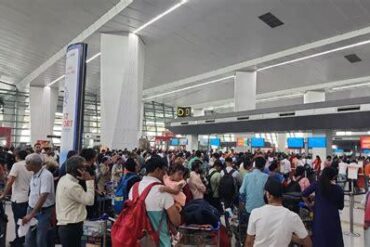
For passengers, the latest schedule cuts are likely to deepen uncertainty surrounding the airline’s reliability during the busy summer travel season.
For Air India itself, the reductions represent something even more serious: a clear sign that its ambitious global recovery strategy is colliding with operational realities that can no longer be ignored.
As the final AI171 crash report approaches, regulators tighten oversight and geopolitical disruptions continue affecting global aviation, Air India faces a defining period that could shape the airline’s future for years to come.