Airplane lights are far more than aesthetic embellishments in the sky; they form a critical part of an aircraft’s safety, visibility, and operational efficiency. While a passenger may see only a flicker of red, white, or green out the window, these aviation lighting systems serve crucial roles in communication, collision avoidance, navigation, and functional illumination. We explore in detail how these lights work, where they’re located, and what purpose they serve.
The Purpose of Airplane Lights
Aircraft lighting systems can broadly be categorized based on three key purposes:
-
To enhance the visibility of the aircraft to others.
-
To illuminate operational areas such as runways or wings.
-
To fulfill mission-specific roles such as inspections, branding, or military formation.
These lights aren’t merely cosmetic. They follow internationally mandated conventions and standards, ensuring consistency and predictability across global aviation. Despite this, not all lights are legally required, and some are purely optional enhancements.
Lights That Make the Aircraft More Visible
Navigation (Position) Lights
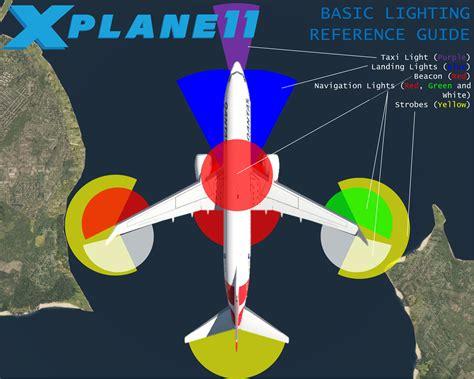
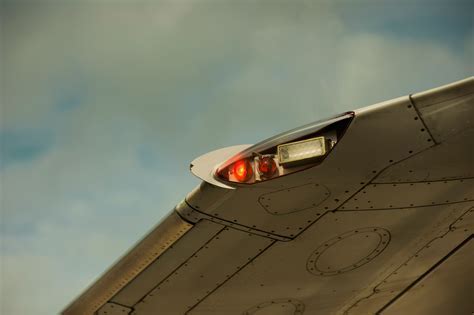
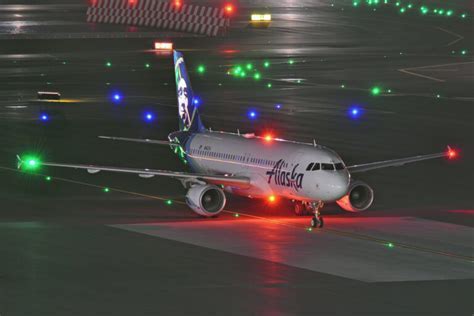
Navigation lights, often referred to as position lights, are indispensable for night operations. They are color-coded:
-
Red on the left wingtip
-
Green on the right wingtip
-
White on the tail or wingtips facing aft
These lights communicate an aircraft’s orientation to others. For instance, seeing red then green indicates an aircraft is coming directly toward you. Conversely, viewing only the red light signifies that the aircraft is moving leftward relative to your position.
This system has its origins in maritime navigation and was adopted in aviation for the same purpose—collision avoidance. Though mandated only during night operations, modern pilots often keep navigation lights on continuously for added situational awareness.
Beacon (Red Anti-Collision) Lights
Beacon lights are red, flashing lights mounted on the top and bottom of the fuselage. They serve as indicators that the aircraft is in an operational state. These are activated before engine start and deactivated only after complete engine shutdown.
Originally rotating incandescent lights, modern aircraft use LED technology, offering better brightness and reliability. These lights signal to ground crew and others nearby that the aircraft is “alive,” discouraging proximity during hazardous engine activity.
Strobe (White Anti-Collision) Lights
Strobe lights are high-intensity white flashes mounted typically on the wingtips and tail. Designed to draw attention, they are activated during takeoff, flight, and landing but are turned off during taxiing to avoid blinding nearby personnel.
They serve as collision-prevention systems, significantly improving visibility during conditions of low light or when flying among other aircraft. Their pulsing effect is particularly striking at night, often seen by observers as flashing patterns across the sky.
Lights That Illuminate Operational Areas
Taxi Lights
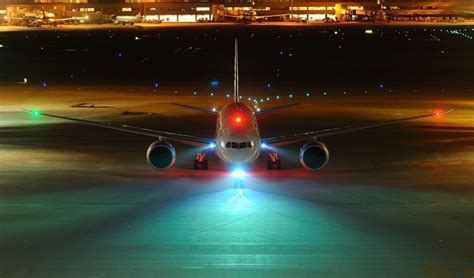
Taxi lights help pilots navigate the taxiways during low visibility conditions, such as night or fog. Typically mounted on the nose gear strut or beneath the fuselage, they illuminate the pavement directly in front of the aircraft.
On many aircraft, landing lights in a dimmed setting serve as taxi lights. These lights guide pilots between the runway and terminal gates, reducing the likelihood of runway incursions or ground collisions.
Landing Lights
Landing lights are the most powerful external lights on an aircraft. They are often located:
-
In the wing roots
-
On the nose gear strut
-
Beneath the fuselage
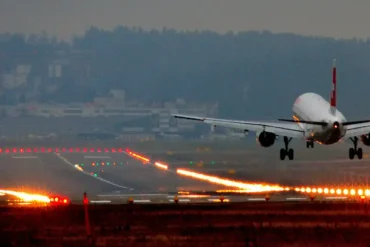
Aimed downward and forward, they light up the runway during takeoff and landing. Additionally, they enhance the aircraft’s visibility to others in the air. Some aircraft feature Alternating Landing Light Systems (ALLS) that pulse the lights to create a rhythmic, eye-catching signal.
General Aviation aircraft like the Cessna 172 also adopt ALLS-style functionality. Their LED systems can shift from dim to full pulsing based on airspeed, thus serving multiple roles such as recognition, taxi, and landing illumination.
Runway Turnoff Lights
Found on either side of the aircraft nose, runway turnoff lights offer broader lateral illumination. While not as intense as landing lights, they are critical when maneuvering off runways or executing sharp taxiway turns. Their strategic placement provides lateral vision, which traditional taxi lights often lack.
Wing Inspection Lights
Wing inspection lights are located on the fuselage and directed aft toward the wings. Their primary function is to help detect ice buildup or structural anomalies.
These lights serve both the flight crew in-flight and the maintenance crew on the ground, offering crucial visual feedback on the wing’s surface condition, especially during inclement weather.
Lights for Specialized Purposes
Searchlights
Primarily found on military or law enforcement aircraft, searchlights are directional lights used to illuminate terrain or objects on the ground. They can be swiveled or fixed, depending on mission requirements, and provide critical visibility in search and rescue, surveillance, or military operations.
Logo Lights
Logo lights are mounted on the horizontal stabilizer and shine upward to illuminate the airline’s branding on the tail. On older aircraft, they might be located on the wingtips.
Initially introduced for marketing, these lights enhance night-time aircraft identification and assist in apron operations. Though not legally mandated, their use improves aesthetics and operational awareness.
Formation Lights
Exclusive to military aircraft, formation lights help maintain precise spacing during group flight. These are subtle lights, often located near the fuselage or wing roots, and can sometimes operate in infrared, visible only through night vision goggles.
This allows aircraft to remain stealthy while still maintaining critical formation integrity, vital during tactical or refueling missions.
Conclusion
Every light on an aircraft—from the subtle glow of a wingtip to the dazzling strobe on takeoff—has a specific, calculated role. These lights improve safety, enhance situational awareness, enable efficient operations, and even contribute to branding and identification. While often overlooked by the casual observer, airplane lights are an indispensable part of aviation infrastructure, tightly interwoven with regulatory standards and technological innovation.
FAQ
Why do airplane lights flash differently?
Different airplane lights serve different purposes. Strobe lights flash white rapidly to enhance visibility and prevent mid-air collisions, while beacon lights flash red to signal the aircraft is in operation. The flashing patterns are designed to attract attention without overwhelming ground or air crews.
Can an aircraft fly if some lights are not working?
Yes, depending on the light. While navigation, beacon, and strobe lights are often legally required for certain operations, others like logo lights or wing inspection lights may not be mandatory. The decision depends on the aircraft’s Minimum Equipment List (MEL) and the flight’s conditions.
Are LED lights replacing traditional aircraft lighting?
Absolutely. LED technology is increasingly replacing older Xenon or incandescent systems due to its lower power consumption, longer lifespan, and higher brightness. Aircraft manufacturers like Boeing and Airbus have already adopted LED lighting across many of their fleets.