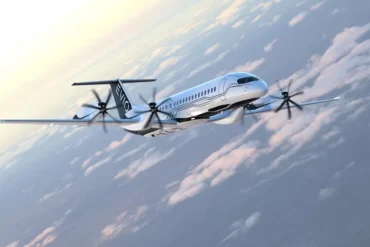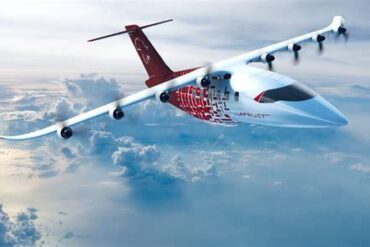
The aviation industry is entering one of its most significant technological transitions since the arrival of the jet age. While sustainable aviation fuels and hydrogen-powered concepts continue to attract attention, battery-electric aircraft are rapidly moving from experimental prototypes to practical commercial platforms. Among the most promising examples is BETA Technologies, whose all-electric aircraft demonstrates that an hour of flight can require as little as $18 worth of electricity, dramatically lowering operating costs while reducing emissions and noise.
As airlines, logistics companies, emergency responders, and military operators search for more economical transportation solutions, electric aviation is beginning to prove that short-distance flights may soon look very different from today’s conventional operations.
BETA Technologies Is Bringing Electric Flight Into Everyday Aviation
More than a century after the Wright brothers first achieved powered flight at Kill Devil Hills, North Carolina, aviation continues to reinvent itself. Instead of relying on combustion engines and aviation fuel, BETA Technologies has developed aircraft powered entirely by electric motors and rechargeable battery systems.
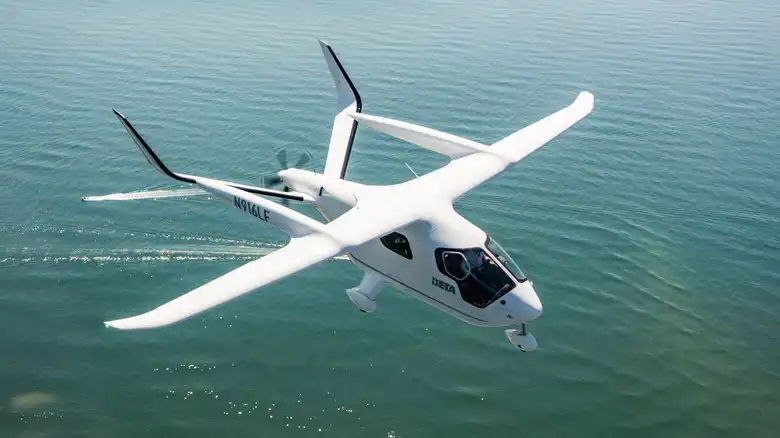
The company is currently developing two distinct aircraft. One operates like a traditional fixed-wing airplane using a conventional runway, while the second is an electric vertical takeoff and landing (eVTOL) aircraft capable of lifting off like a helicopter before transitioning into forward flight. Both designs target regional transportation where efficiency matters far more than extreme range.
Rather than replacing large commercial airliners, these aircraft are intended to serve shorter missions that currently depend on expensive helicopters or small piston-powered airplanes.

Flying for Just $18 Per Hour Changes the Economics of Aviation
Perhaps the most remarkable feature of BETA’s fixed-wing aircraft is its exceptionally low operating energy cost. According to the company, a full hour of flight requires approximately $18 in electricity, while its vertical takeoff model consumes roughly $28 worth of energy during the same period.
Those figures represent only the electrical energy required, but they illustrate how dramatically electric propulsion can reduce operating expenses compared with traditional aircraft that burn aviation gasoline or jet fuel. Lower energy consumption also translates into fewer emissions, significantly quieter operations, and reduced dependence on fossil fuels.
The aircraft cruises at approximately 176 mph and offers a range exceeding 300 miles on a single battery charge. Even more impressive is its charging efficiency, with batteries capable of reaching operational readiness in roughly one hour, allowing multiple daily missions with relatively short turnaround times.
Designed for Practical Missions Instead of Mass Transportation
Although the aircraft accommodates only five occupants, its intended missions make that capacity entirely practical. Regional cargo delivery, organ transportation, emergency medical evacuation, military logistics, utility inspections, and executive travel all benefit from aircraft that prioritize operating efficiency over passenger volume.
The quiet electric propulsion system also makes flights less disruptive for communities near airports, opening possibilities for increased regional connectivity without generating the noise commonly associated with helicopters or turboprop aircraft.

Safety and Reliability Remain Central to the Aircraft Design
Electric propulsion introduces engineering advantages beyond sustainability. The eVTOL model incorporates multiple independent electric motors, allowing continued flight even if one motor experiences a malfunction. Meanwhile, the fixed-wing aircraft uses a segmented electrical architecture that provides redundancy similar to multi-engine aircraft despite relying on a single propulsion unit.
This approach reflects a broader philosophy of designing electric aircraft that meet demanding aviation safety standards while maintaining simplified mechanical systems with fewer moving components than conventional engines.
Simpler propulsion systems may also reduce maintenance requirements, contributing additional long-term savings for commercial operators.
Commercial Orders Show Strong Industry Confidence
Unlike many aviation startups that struggle to move beyond demonstration flights, BETA Technologies has already secured substantial commercial interest. The company reports orders exceeding 800 aircraft, with customers and strategic partners including UPS, Air New Zealand, GE Aerospace, and the United States Air Force.
Its Vermont manufacturing facility is capable of producing approximately one aircraft per day, while pilot qualification programs have already trained dozens of commercial and military aviators along with maintenance personnel. Final certification testing scheduled during 2026 represents another major milestone toward commercial deployment.
Growing partnerships indicate that electric aircraft are no longer viewed simply as futuristic concepts but as practical transportation tools with genuine commercial demand.
Electric Aviation Is Accelerating Toward a Cleaner Future
BETA Technologies is only one participant in an increasingly competitive electric aviation market that also includes companies such as Pipistrel, Joby Aviation, Airbus, Boeing, and Ametek Inc. Together, these manufacturers are reshaping expectations for regional air travel.
While battery-electric aircraft are unlikely to replace long-haul jetliners anytime soon, they are exceptionally well suited for shorter routes where low operating costs, rapid charging, quieter operation, and simplified maintenance deliver meaningful advantages. Flying for an hour on just $18 of energy illustrates how electric propulsion could fundamentally change aviation economics, making regional flight cleaner, quieter, and considerably more affordable in the years ahead.