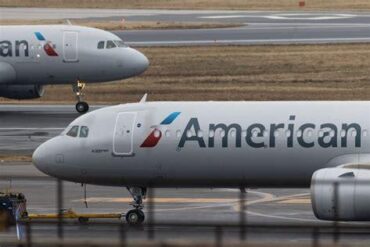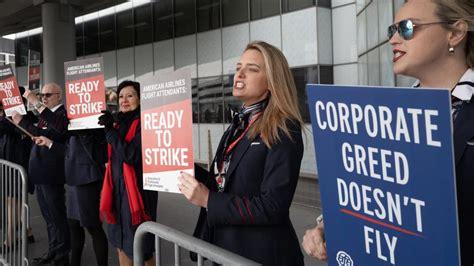
American Airlines’ flight attendants are not posturing, grandstanding, or playing politics. They are diagnosing a corporate failure in real time, from the inside, with data, experience, and credibility on their side. When the Association of Professional Flight Attendants (APFA) publicly demanded accountability from senior leadership after American reported a staggering 87% year-over-year drop in profits, it wasn’t a tantrum. It was a warning flare.
The airline eked out a $111 million profit for 2025, a number so thin it borders on symbolic for a company of American’s size. The resulting 0.3% profit-sharing payout landed with a thud across the workforce. In an industry where competitors are printing margins and reinvesting aggressively, American’s results confirmed what employees and customers have felt for years: the airline is drifting, and management appears either unwilling or unable to correct course.
This is not a single bad year. It is the accumulation of strategic missteps, cultural erosion, and a leadership vision that has failed to inspire confidence inside or outside the company.
A Union Letter That Pulled No Punches—and Didn’t Need To
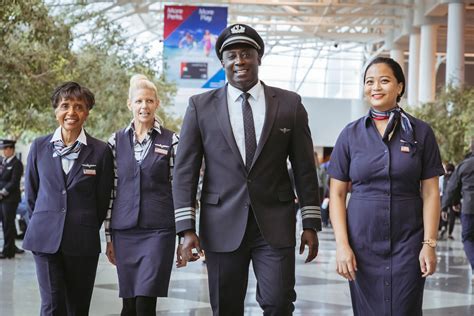
The APFA’s letter to management was unusually blunt, but its power came from precision, not rhetoric. Representing more than 25,000 flight attendants, the union laid out a clear thesis: American’s workforce is not the problem—leadership is. That distinction matters. Airlines live or die by operational execution, and frontline employees are the ones who absorb passenger frustration, apologize for delays, and manage the daily friction caused by underinvestment and poor planning.
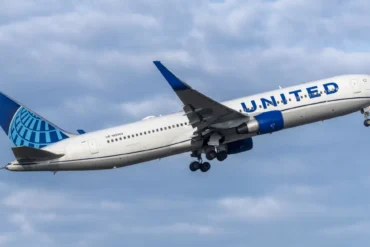
The union’s critique highlighted something Wall Street already knows but rarely phrases so starkly. American has become a structural underperformer. While Delta and United used the post-pandemic period to sharpen their brands, modernize cabins, and stabilize operations, American remained reactive. The result is a widening gap that cannot be closed through slogans about “premium” aspirations alone.
What made the letter resonate was its refusal to accept incrementalism. The union did not ask for another round of internal reviews or aspirational slide decks. It asked why the airline has no clearly articulated competitive identity, why the board has remained silent, and why employees are expected to carry the burden of decisions they did not make.
The Numbers Tell a Brutal Story American Can’t Spin
American’s financial performance would be concerning even without comparison. With comparison, it becomes damning. An 87% profit decline in a year when demand remained robust signals more than cyclical turbulence. It signals strategic fragility. Delta is openly targeting double-digit operating margins. United is investing heavily in fleet, lounges, and international growth. American, by contrast, is celebrating marginal profitability while slipping further down every major performance ranking.
The Wall Street Journal’s 2025 airline rankings placed American at or near the bottom across critical metrics. Dead last in canceled flights. Bottom-tier performance in on-time arrivals, mishandled baggage, and involuntary denied boardings. Overall ranking dropped from fifth place just two years earlier to last place. These are not abstract metrics. They translate directly into customer frustration, brand erosion, and employee burnout.
J.D. Power’s customer satisfaction data told the same story months earlier. Management was warned. The hoped-for rebound never materialized. Instead, performance worsened, reinforcing the perception that feedback—internal and external—is being acknowledged rhetorically but ignored operationally.
When Leadership Stops Listening, Employees Notice First
One of the most telling details in this saga is not financial at all. It is cultural. According to the union, labor-management meetings, town halls, and Q&A sessions were quietly eliminated. These are not cosmetic gestures. They are pressure valves. When leadership retreats from dialogue, it sends a clear signal that difficult questions are unwelcome.
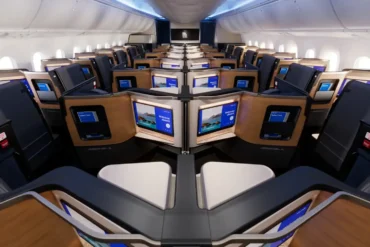
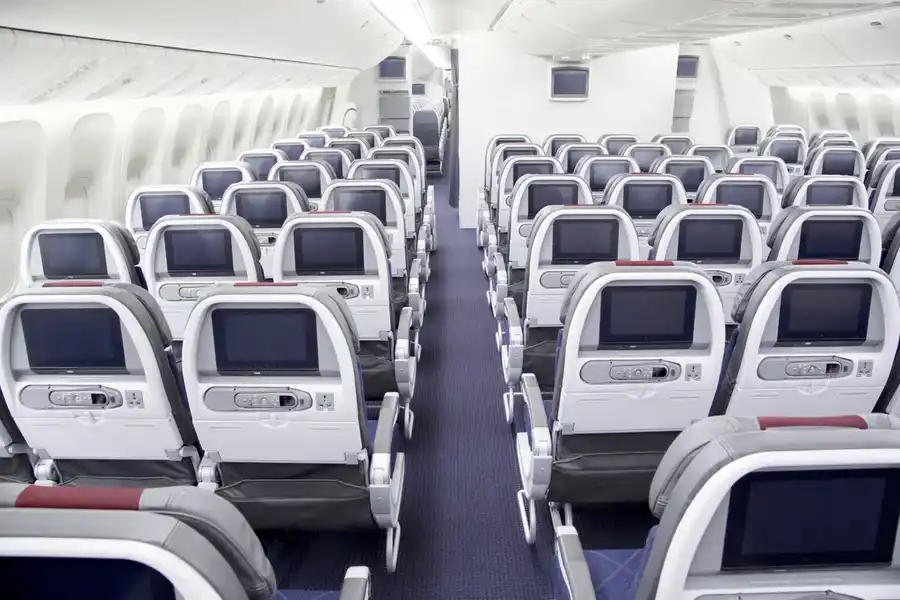
Flight attendants see the disconnect daily. They welcome long-overdue premium cabin upgrades, yet they are the ones apologizing to economy passengers sitting in outdated, cramped coach cabins that lag far behind competitors. They are the human buffer between marketing promises and operational reality. Over time, that role corrodes morale.
An airline cannot cut its way to excellence, and it cannot communicate its way out of structural underinvestment. Employees understand this instinctively. When management continues to frame the narrative around “accountability, reliability, and profitability” while failing to invest holistically in the product, the words begin to sound hollow.
The Illusion of a “Premium Global Airline”
CEO Robert Isom’s assertion that American “knows who it is” as a premium global airline landed poorly for a reason. Identity is not declared; it is earned. Premium airlines deliver consistency, clarity, and a differentiated experience across cabins and routes. American’s current product is uneven at best and incoherent at worst.
The oft-repeated emphasis on “premium, premium, premium” rings especially empty because it mirrors strategies already executed more effectively by Delta and United. Catching up is not a strategy. It is an admission of lag. Meanwhile, American’s network strengths are overly concentrated. Charlotte and Dallas-Fort Worth are powerful hubs, but a premium global identity cannot rest primarily on domestic dominance and a few fortress airports.
This mismatch between self-image and market reality is where leadership credibility erodes fastest. Employees are asked to believe in a vision that customers, investors, and rankings consistently contradict.
A CEO’s Core Job—and Where American Is Failing It
At its core, a CEO’s job is not financial engineering or earnings-call performance. It is alignment. Rallying employees around a shared, believable direction. American’s workforce is not apathetic; it is frustrated. The distinction matters. Frustration implies untapped energy. A motivated workforce is the single most powerful lever in any airline turnaround, but motivation requires trust.
That trust has been squandered over years of missed targets and shifting narratives. The problem is no longer whether current leadership has good intentions. It is whether it retains the authority and credibility to lead a turnaround. Increasingly, the answer appears to be no.
Rearranging internal executives or reshuffling long-entrenched leadership circles will not reset that trust. Symbolic change is insufficient when the underlying philosophy remains intact.
What Real Turnaround Leadership Would Look Like
Successful airline turnarounds share common traits. They are led by executives who prioritize labor relations, product coherence, and decisive execution. They invest early, communicate relentlessly, and accept short-term pain in service of long-term competitiveness.
The often-cited example of Air France-KLM under Ben Smith illustrates the point. Smith inherited complex labor dynamics and an aging fleet, yet moved quickly to modernize aircraft, simplify strategy, and rebuild employee engagement. The transformation was not instant, but it was credible. Employees could see the direction, even when outcomes took time.
American does not need a miracle worker. It needs a leader willing to articulate a clear identity, make uncomfortable choices, and rebuild trust with the workforce as a strategic priority rather than a public-relations exercise.
The Boardroom Problem No One Wants to Name
If the case for leadership change is so clear, why hasn’t it happened? The uncomfortable answer lies with the board. Corporate governance in U.S. aviation often rewards caution over courage. Boards are incentivized to avoid disruption, even when stagnation carries higher long-term risk.
Shareholders, employees, and customers all pay the price for this inertia. Boards are meant to act as stewards, not spectators. When performance consistently trails peers and internal confidence collapses, inaction becomes a decision in itself—and rarely the right one.
American’s board has thus far chosen continuity. The cost of that choice is becoming visible not just in earnings reports, but in brand perception and employee engagement.
Why the Flight Attendants Are Right—and Why It Matters
The APFA’s demand for management change is not radical. It is pragmatic. Flight attendants understand that no turnaround is possible without a workforce that believes leadership is competent, honest, and committed to a shared future. That belief has eroded.
This is not about blame-shifting. Employees are clear-eyed about the challenges of running a global airline. What they reject is the normalization of mediocrity. They are tired of apologizing for decisions made far above their pay grade while being told to celebrate marginal gains as strategic victories.
American’s problems will not be solved overnight. But they also will not be solved by insisting that the current trajectory is acceptable. At some point, realism demands change.
The Bottom Line: Change Is No Longer Optional
American Airlines stands at an inflection point. Barely profitable in a booming industry, trailing competitors across operational and customer metrics, and facing open dissent from one of its largest labor groups, the airline can no longer rely on patience as a strategy.
Flight attendants are right to demand new leadership because they see what happens when vision is absent: morale declines, customers drift away, and competitive gaps harden into structural disadvantages. A new CEO would not be a cure-all, but it would be a signal—a declaration that mediocrity is not the ceiling.
Airlines are built on trust: between management and employees, between brand and customer, between promise and delivery. That trust has been damaged at American. Repairing it will require more than another earnings call. It will require courage at the top, accountability in the boardroom, and a willingness to finally admit that the status quo has failed.
The longer that admission is delayed, the harder—and more expensive—the recovery will be.