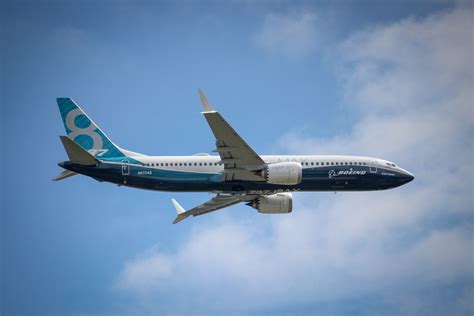
Boeing has confirmed a previously undisclosed order for up to 20 737 MAX 8 aircraft, identifying Air Cambodia as the customer behind the December commitment. The deal includes 10 firm orders and options for an additional 10, marking a pivotal fleet decision for Cambodia’s national carrier and a notable win for Boeing in Southeast Asia’s fast-evolving aviation market.
The announcement clarifies months of industry speculation around the unidentified buyer listed in Boeing’s order book. For Air Cambodia, this transaction represents its largest single-aisle aircraft order to date and signals a decisive strategic shift toward higher-capacity, longer-range narrowbody operations. For Boeing, it reinforces the 737 MAX 8’s position as a cornerstone aircraft for airlines seeking efficiency-driven growth without stepping into widebody complexity.
Air Cambodia, originally founded in 2009 as Cambodia Angkor Air through a partnership between the Cambodian government and Vietnam Airlines, has steadily expanded its regional footprint. The airline currently operates a mixed fleet of Airbus A320-family jets and ATR 72 turboprops, serving short- and medium-haul routes across Asia. Introducing the 737 MAX 8 adds a new performance tier to that portfolio, reshaping the carrier’s operational ceiling.
A Strategic Fleet Upgrade Anchored in Efficiency
Boeing positions the 737 MAX 8 as a transformational step for Air Cambodia’s economics. According to the manufacturer, the aircraft delivers around 20% lower fuel consumption compared with earlier-generation A320-family aircraft. That reduction translates directly into lower operating costs, improved route profitability, and a meaningful cut in carbon emissions—an increasingly critical factor for airlines navigating both regulatory pressure and passenger expectations.
The MAX 8’s range and seating capacity allow Air Cambodia to consolidate growth plans that previously required multiple aircraft types. Routes to Vietnam, Thailand, India, China, Japan, and Hong Kong can be served more efficiently, with greater flexibility in frequency planning and pricing. The aircraft’s performance profile also enables new nonstop city pairs, supporting the airline’s ambition to deepen connectivity between Cambodia and key North and Southeast Asian markets.
Leadership Signals a New Phase of Growth
Air Cambodia’s CEO, Dr. David Zhan, has framed the order as a catalyst for the airline’s next chapter. He emphasized the 737-8’s balance of range, capacity, and fuel efficiency, highlighting its role in enabling direct services to high-value markets while keeping fares competitive. Beyond network expansion, the investment carries domestic implications, including local job creation, pilot and engineer training, and broader skills development within Cambodia’s aviation sector.
This narrative aligns with a broader regional trend where flag carriers use modern narrowbodies to punch above their weight, bypassing traditional hubs and capturing point-to-point demand. The MAX 8, in this context, becomes less a plane and more an economic instrument.
A Diversified Order Book Beyond Boeing
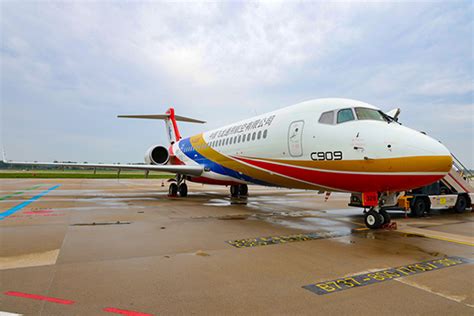
The Boeing deal does not exist in isolation. Air Cambodia is simultaneously pursuing fleet diversification through COMAC, having placed a similar order for the C909 regional jet in September 2025. That agreement reportedly includes 10 firm aircraft with options for 10 more, underscoring the airline’s intent to tailor capacity closely to route demand.
The C909, formerly known as the ARJ21, targets thinner regional sectors with seating for 78 to 97 passengers in a 2–3 layout. It occupies a different operational niche from the 737 MAX 8, complementing rather than competing with Boeing’s narrowbody. Industry data shows most C909s currently operate within China, with limited international deployment, making Air Cambodia’s interest notable from a geopolitical and fleet-strategy perspective.
Network Reality Meets Fleet Ambition
Schedule data illustrates why Air Cambodia’s fleet evolution matters. In February 2026, the airline is slated to operate 1,268 flights, split almost evenly between A320-family jets and ATR 72s. Yet seat capacity tells a different story: the A320 family accounts for over 68% of total seats, reflecting its central role on higher-density routes such as Ho Chi Minh City, the carrier’s most-served destination.
The arrival of the 737 MAX 8 will rebalance this equation. With greater capacity than the A320s it replaces and superior fuel performance, the aircraft enables Air Cambodia to scale up without bloating costs. For Boeing, the order reinforces confidence in the MAX program’s long-term relevance, particularly among airlines seeking measured, sustainable growth rather than headline-grabbing scale.
In a region where traffic demand, environmental scrutiny, and competitive pressure are all rising in tandem, this deal stands as a carefully calculated bet—one that reshapes Air Cambodia’s future while strengthening Boeing’s foothold in Southeast Asia’s next growth cycle.