The future of air combat training is about to change dramatically as Red 6 finalizes a contract with the U.S. Air Force to integrate its Airborne Tactical Augmented Reality System (ATARS) into the F-16 Fighting Falcon. This milestone represents not just a technological leap forward but a paradigm shift in how pilots will prepare for modern warfare, blending cutting-edge augmented reality with one of the world’s most widely used fighter aircraft.
The Vision Behind Red 6’s ATARS
At the core of this development lies ATARS, a helmet-mounted augmented reality system that projects life-like adversary and friendly aircraft directly onto a pilot’s visor. Unlike conventional simulators or live exercises that depend on costly training adversaries, ATARS allows pilots to engage in complex, dynamic battles against virtual threats while flying real aircraft. This creates a unique fusion of realism and cost-efficiency, enabling a training environment that mirrors combat intensity without the logistical and financial burdens of live exercises.
The system goes far beyond displaying enemy fighters. It is capable of projecting missiles, drones, and collaborative combat aircraft, giving pilots a chance to interact with scenarios they would face in real warfare. Red 6’s technology not only brings hostile forces into play but also allows the inclusion of loyal wingmen drones, perfectly aligned with the Air Force’s vision of manned-unmanned teaming.
Why the F-16 Was Chosen First
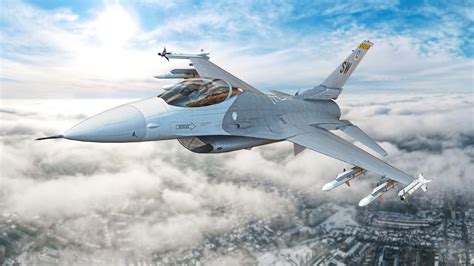
Red 6’s CEO, Daniel Robinson, explained that the F-16 was prioritized due to its status as one of the most exported and heavily relied-upon fighter jets worldwide. With nearly 3,000 still in service globally, the F-16 remains a backbone of numerous allied air forces, making it an ideal candidate for showcasing the transformative potential of ATARS.
Robinson called this contract a “big milestone,” emphasizing that the adoption of ATARS into a combat-proven fighter unlocks new levels of opportunity. He stressed that the technology is platform-agnostic, meaning it could be seamlessly applied to other military aircraft in the near future.

How ATARS Works Inside the Cockpit
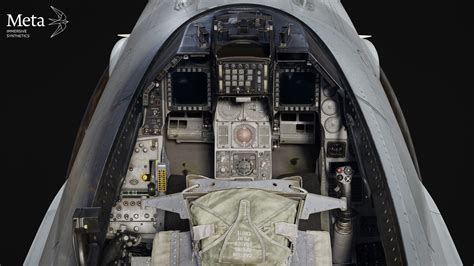
The ATARS system is described as minimally intrusive, relying on three key components:
- A helmet-mounted optical display
- Lightweight cabling systems
- A compact onboard computer
When integrated, the system produces three-dimensional, real-time renderings of simulated aircraft and weapons systems, all synchronized with the pilot’s head movements and aircraft maneuvers. This gives the illusion that enemy and friendly assets are occupying the same sky, turning every training sortie into a realistic combat engagement.
Solving the Training Bottleneck
Modern air forces face two major challenges in training pilots: cost and realism. Traditional “red air” adversary flights require using real pilots and aircraft to act as enemies, which is not only prohibitively expensive but also limits training frequency. Furthermore, it creates “negative training” for those playing the role of enemies, as they repeatedly perform in unrealistic patterns. On the other hand, ground-based simulators cannot replicate the cognitive load, G-forces, and situational awareness required in live aircraft.
ATARS bridges this gap by combining the immersive realism of live flight with the flexibility and scalability of simulation. Pilots can train more often, in more varied scenarios, and at a fraction of the cost. Robinson estimated that widespread adoption could save the U.S. Air Force roughly $10 billion over five years, primarily by reducing the reliance on costly red air flights.
Step-by-Step Integration with the F-16
The integration process will initially focus on two F-16s over the next 12 to 18 months. Engineers will ensure that ATARS seamlessly communicates with onboard avionics and flight systems. Once operational, the system will expand into networked multi-ship training, where multiple aircraft can engage in complex, coordinated missions against shared AR-generated threats.
This progression will allow pilots to train in everything from basic formation flying to large-force engagements, replicating the chaos and unpredictability of real-world battlefields. Ultimately, Red 6 aims for ATARS to become a program of record across the U.S. Air Force, ensuring long-term adoption and widespread deployment.
Expanding Beyond the F-16
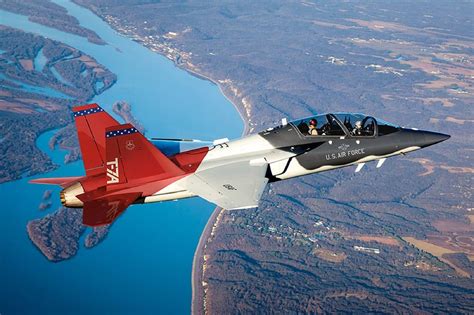
While the F-16 program is the current focus, Red 6 has already proven ATARS’ versatility. It has been tested on platforms such as the T-38 Talon, MC-130 transport aircraft, and the British Hawk T2 trainer. The company has also formed partnerships with Boeing for the T-7 Red Hawk trainer and SNC for the Navy’s future training aircraft.
Looking forward, Robinson envisions applications beyond aviation. With patents in visual ADS-B technology, Red 6 sees opportunities for both military and civilian use cases, ranging from ground vehicles to commercial aviation safety systems.
Impact on Pilot Shortages
Western air forces are grappling with a critical pilot shortage, a problem exacerbated by the high costs and long timelines of traditional training methods. ATARS offers a scalable solution, increasing pilot throughput by allowing more frequent and realistic training without the need for vast numbers of adversary aircraft or additional infrastructure. By reducing costs and improving efficiency, it directly addresses the downward spiral of limited resources and reduced pilot production.
Strategic Importance in Future Warfare
The introduction of ATARS aligns with broader U.S. military priorities, particularly the integration of Collaborative Combat Aircraft (CCA) programs, where autonomous drones operate alongside manned fighters. By allowing pilots to train in mixed manned-unmanned environments before they ever face combat, ATARS provides a crucial advantage in preparing aircrews for next-generation air warfare.
Moreover, ATARS offers unparalleled adaptability in simulating peer adversary tactics from countries like China and Russia, where high-end threats such as fifth-generation fighters and advanced missile systems must be prepared for without escalating costs or risks.
Industry Outlook and Future Prospects
Red 6’s success with the F-16 integration is not just a technological breakthrough but also a signal to the defense industry. By proving its capability in an operational fighter jet, the company positions itself as a key player in the future of military training ecosystems. If scaled across the U.S. Air Force and potentially NATO allies, ATARS could redefine the global standard for combat readiness.
Robinson hinted at further innovations in the pipeline, urging observers to “watch this space.” With potential crossover applications in commercial aviation, law enforcement, and even civilian pilot training, the reach of ATARS could extend well beyond defense.
Conclusion
The decision to integrate Red 6’s augmented reality technology into the F-16 marks a pivotal step in revolutionizing military pilot training. By merging live flight with advanced augmented reality, ATARS offers a solution that is cost-effective, scalable, and strategically vital. For the U.S. Air Force and allied nations, this is more than a technological enhancement—it is a safeguard for maintaining air superiority in an era of rapidly evolving threats.
As the project unfolds over the next 18 months, the world will be watching closely to see if Red 6’s bold vision becomes the new standard for combat training in the 21st century.