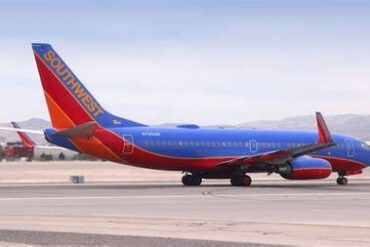
Baltimore/Washington International Thurgood Marshall Airport is entering a decisive new phase, one defined by scale, efficiency, and strategic intent. The formal opening of BWI’s $520 million Concourse A/B Connector and Baggage Handling System Project is more than an infrastructure milestone. It is a clear signal that Baltimore is preparing for sustained airline growth, with Southwest Airlines positioned as the primary beneficiary.
For BWI, this project represents the largest capital investment in the airport’s history, blending 142,000 square feet of new construction with 78,000 square feet of renovated space. For Southwest, it removes long-standing operational constraints at its most important East Coast base, unlocking new capacity at precisely the moment the airline is redefining its network ambitions.
The expansion arrives after years of careful planning. Initial design work began in 2017, construction followed in early 2022, and the final delivery now reshapes how passengers and aircraft flow through the airport. Funding was assembled through airport revenue bonds, federal contributions, and the Maryland Transportation Trust Fund, ensuring long-term financial stability without compromising operational independence.
A Connector Designed for Throughput, Not Just Aesthetics
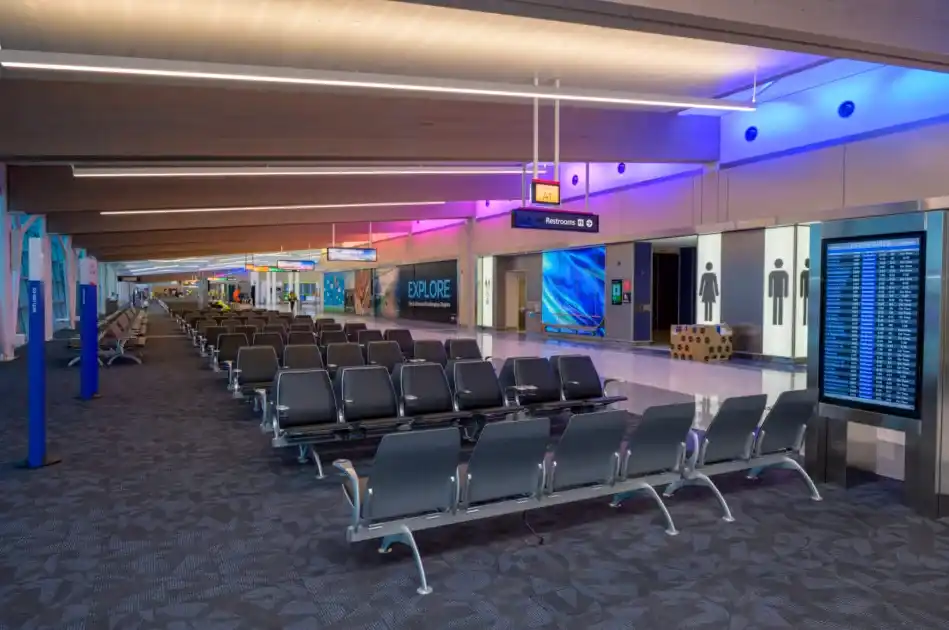
At the physical heart of the project is a two-story connector linking Concourses A and B, an upgrade that resolves one of BWI’s most persistent passenger bottlenecks. This is not architectural vanity. The connector was engineered to shorten walking distances, improve sightlines, and streamline connections between gates heavily used by Southwest.
Five Southwest-operated gates have been relocated and comprehensively modernized. Adjustable accent lighting, glass boarding bridges, and redesigned seating areas reflect a shift toward higher-yield passengers who expect comfort without sacrificing efficiency. New retail and dining zones, along with expanded restrooms and flexible concession spaces, round out an environment built to absorb future traffic growth without disruptive retrofits.
A Baggage System That Changes the Math
If the new connector improves passenger flow, the next-generation baggage handling system transforms operational performance behind the scenes. Capacity has jumped from 2,100 to 3,500 bags per hour, a 66% increase that directly impacts aircraft turnaround times and on-time performance.
For an airline like Southwest, where rapid gate utilization is central to the business model, this upgrade is strategically critical. Faster baggage processing reduces ground delays, improves connection reliability, and enables tighter scheduling. Over a full operating day, those minutes compound into tangible cost savings and measurable customer satisfaction gains.
Maryland Governor Wes Moore, who formally opened the facility, framed the expansion as a statement of intent. Modernizing BWI, he noted, is about positioning Maryland for long-term competitiveness, not short-term headlines. The infrastructure now matches that ambition.
Why BWI Matters So Much to Southwest
BWI is Southwest’s largest East Coast airport and its third-largest overall. The airline accounts for more than 70% of all passengers passing through the airport, carrying over 18 million travelers annually across more than 80 destinations. No other carrier comes close to exerting comparable influence at BWI.
With additional gate capacity now online, Southwest has already begun adding flights. In 2025, the airline announced nine new routes from Baltimore, alongside incremental capacity increases and the opening of a new maintenance facility. International services to St. Maarten and St. Thomas are scheduled to launch this year, reinforcing BWI’s role as a Caribbean gateway.

A Southwest Lounge Could Be the Next Signal
Southwest’s evolving product strategy adds another layer of intrigue. CEO Bob Jordan has confirmed plans to develop a network of airport lounges, a significant departure from the carrier’s historically minimalist ground experience. With lounge approval already secured in Honolulu, BWI stands out as a logical next candidate.
High passenger volumes, extended dwell times, and a loyal customer base make Baltimore an ideal testing ground. A Southwest lounge at BWI would quietly acknowledge that the airline is targeting a broader spectrum of travelers, including those who value comfort, productivity, and brand consistency on the ground.
Baltimore’s Strategic Position in a Shifting Network
BWI enters its 75th year with renewed confidence. While Washington Dulles International Airport continues to dominate long-haul international traffic in the region, Baltimore’s strength lies in domestic scale and operational simplicity. The new expansion narrows that gap.
As Southwest explores long-haul international flying later this decade, Baltimore emerges as a credible East Coast launch point. While current international operations remain focused on the Caribbean, Central America, and Mexico, the airline has openly discussed ambitions spanning Europe, Africa, and Asia. Infrastructure, not aspiration, has been the limiting factor until now.
The BWI expansion does not guarantee new routes or lounges, but it removes the friction that once held them back. For Southwest, the runway for growth in Baltimore is no longer theoretical. It is built, powered, and ready.