Eve Air Mobility is not in a race. Launched in 2020 as a spin-off from Brazilian aerospace giant Embraer, the company entered the advanced air mobility (AAM) sector significantly later than its better-known competitors. While Archer Aviation, Joby Aviation, Beta Technologies, and Wisk Aero have made headlines for conducting manned eVTOL flights, Eve has charted a different course — slower, more deliberate, but arguably more sustainable. That methodical pace is beginning to show signs of payoff.
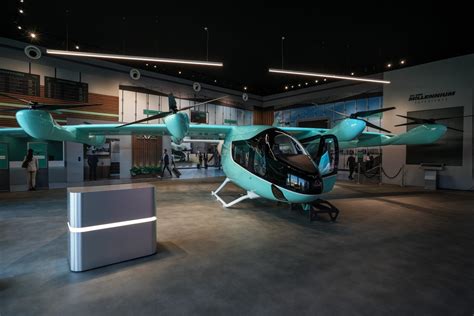
At the 2025 Paris Air Show, Eve displayed a full-scale mockup of its flagship electric vertical takeoff and landing (eVTOL) air taxi, drawing attention from investors, potential operators, and the public alike. But while the hardware was impressive, the true story lies behind the scenes — in the calculated choices and strategic patience that define Eve’s developmental roadmap.
Rooted in Embraer’s Legacy: A Strategic Asset
Unlike many startups attempting to reinvent aviation from scratch, Eve Air Mobility benefits from the deep technical expertise, infrastructure, and certification pathways of its parent company. Embraer has a successful history of developing commercial and military aircraft, and Eve is using this lineage as a cornerstone of its developmental philosophy.
One example is Eve’s decision to adopt fly-by-wire control systems proven on Embraer’s E2 jets and KC-390 military aircraft. This isn’t just technological recycling — it’s a strategy to reduce developmental risk by relying on systems that already meet civil and military certification standards. According to Eve’s CTO Luiz Valentini, “We believe it’s more important to focus on vertical flight, since the cruise portion is already matured through Embraer’s proven platforms.”
Not First to Fly, But First to Deliver Maturity
While Eve’s competitors have already conducted several eVTOL test flights — and in Joby’s case, piloted demonstrations — Eve is taking what it calls a “maturity-first” approach. The company is developing its aircraft in clearly defined, rigorous phases modeled after Embraer’s historical design milestones. Each phase is locked until the company is satisfied with its engineering and operational robustness.
This approach has drawn skepticism from observers eager to see hardware in the sky. But Valentini insists the time is being used to embed real-world operator feedback into the design — something competitors often only address post-certification.
“We are engaging with customers during development, not after,” Valentini emphasized. That includes the 2,800+ orders Eve has already secured — though most are nonbinding letters of intent (LOIs), they provide a crucial feedback loop for understanding use cases, operational environments, and market expectations.
A Breakthrough at the Paris Air Show
Momentum appears to be shifting in Eve’s favor. During the 2025 Paris Air Show, Eve secured two significant commercial agreements. The first, announced midweek, came from Future Flight Global, which signed an LOI for up to 54 eVTOL aircraft, targeting operations in both Brazil and the United States.
Earlier in the week, the real breakthrough came: a binding order for 50 aircraft from Brazil-based Revo and its parent company Helicopters International (OHI). This is not just a symbolic milestone. It includes service agreements for entry into service (EIS) and aftermarket support through Eve’s proprietary TechCare platform. According to the company, the agreement marks Eve’s transition “from development to execution.”

Revo will become Eve’s launch customer in São Paulo, one of the world’s largest urban helicopter markets. It currently offers scheduled helicopter service, integrated with car and baggage logistics — a model that aligns perfectly with Eve’s multimodal vision of urban air mobility.
Certification Path: ANAC First, FAA Next
The certification strategy is another area where Eve diverges from most U.S.-based rivals. Eve plans to achieve type certification first through Brazil’s ANAC (Agência Nacional de Aviação Civil), before seeking validation from the U.S. Federal Aviation Administration (FAA). This two-pronged strategy could allow Eve to enter the Latin American market earlier, while paving the way for a future U.S. rollout.
Interestingly, Valentini noted that ANAC’s regulatory framework includes provisions similar to the FAA’s powered-lift SFAR (Special Federal Aviation Regulation), which governs pilot training and operational requirements for eVTOLs. Eve is using the parallel nature of both agencies’ rulebooks to harmonize design and training standards.
“There are some important differences… like how we handle energy reserves or pilot training specifics,” Valentini said. “But taking this time allows the authorities to finalize their frameworks — and for us to integrate those into our aircraft before it’s certified.”
Urban Missions with a Global Outlook
Although Eve is targeting a wide range of operators — from regional shuttles to sightseeing tours — urban missions remain the core focus. The aircraft is designed with a range of up to 100 kilometers, allowing it to cover 20-30 kilometer airport-to-downtown routes while still maintaining operational buffer.
This urban focus isn’t just theoretical. Cities like New York, known for stringent noise sensitivity, are being considered as eventual targets. Eve’s electric propulsion architecture and rotor configuration aim to drastically reduce decibel levels compared to helicopters — a crucial differentiator for community acceptance and regulatory approval.
Beyond U.S. and Brazilian urban centers, Eve sees strong potential in tourism-heavy markets, where aerial sightseeing by helicopter is already popular. Its eVTOL could serve these missions more quietly, sustainably, and affordably.
Prototype Testing Begins — Quietly but Meaningfully
While Eve has yet to conduct a public manned flight, its behind-the-scenes testing campaign is well underway. The company has conducted wind tunnel tests, simulating both cruise and transition phases by manipulating rotor positions and airflow patterns. Additionally, ground-based testing using truck-mounted rigs allows engineers to replicate dynamic rotor behavior during flight-like conditions.
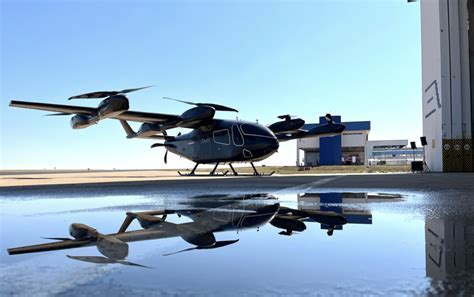
These rigs simulate real-world vibrations, aerodynamic loads, and noise signatures — all crucial for validating the airframe before progressing to conforming prototypes.
Later this summer, Eve plans to conduct its first engineering prototype flight. This model will be remotely piloted, equipped with simplified systems, but aerodynamically representative of the final product. The goal? Gather real-time flight dynamics data to refine control algorithms, optimize performance, and ensure passenger comfort.
A Timeline That Balances Innovation and Realism
With test flights scheduled for mid-2025 and first deliveries targeted for late 2027, Eve’s timeline may seem conservative. But in the context of aerospace development — and especially AAM — this timeline is pragmatic.
Eve is building not just an aircraft, but an ecosystem. From training to operations, support services to regulation, the company is laying the foundation for a scalable, certifiable, and commercially viable eVTOL platform. While competitors may grab early headlines with flashy test flights, Eve is playing a long game — and betting that maturity will win over momentum.
The Bottom Line: A Calculated Ascent
In an industry captivated by speed, Eve Air Mobility’s patient strategy stands out. Supported by the engineering depth of Embraer and bolstered by early commercial traction, Eve is shaping up to be more than just a slow mover — it could very well be a smart mover. With one foot in traditional aerospace and another in futuristic air mobility, it is straddling both worlds with care.
As regulatory frameworks mature, public acceptance grows, and infrastructure adapts, the AAM market will reward companies that are not only first to fly, but first to deliver safe, certified, and customer-ready aircraft. Eve seems intent on being exactly that.