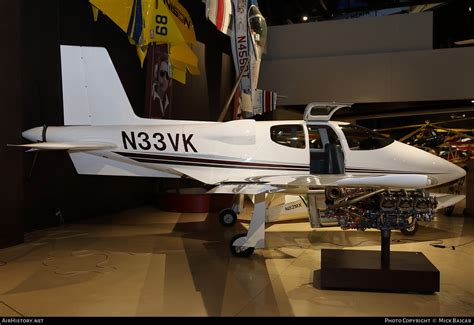
Founded in 1984 by brothers Alan and Dale Klapmeier, Cirrus Aircraft emerged from a humble barn in Baraboo, Wisconsin with a vision to transform general aviation. The company’s first endeavor, the VK-30 homebuilt aircraft, was a sleek composite pusher-prop design introduced at EAA Oshkosh in 1987. Its maiden flight in February 1988 marked the beginning of Cirrus’ ambitious journey.
By the mid-1990s, the company relocated to Duluth, Minnesota, a strategic move that laid the foundation for large-scale manufacturing. The SR20, which first flew in 1995, became Cirrus’ first certified aircraft by October 1998. With its modern design, digital avionics, and full-airframe parachute, it redefined expectations in the light aircraft category.
SR Series: Setting New Standards in Light Aircraft Innovation
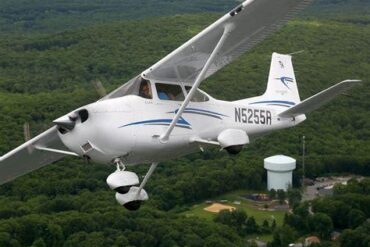
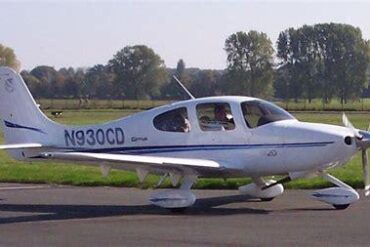
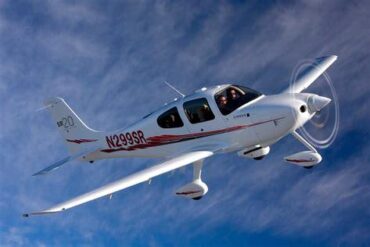
The SR series—comprising the SR20, SR22, and SR22T—has established Cirrus as the world’s leading piston-powered aircraft manufacturer. The SR22, certified in 2000, rapidly became the best-selling general aviation aircraft globally by 2004. In 2010, the SR22T was introduced, featuring a turbocharged Continental TSIO-550-K engine capable of maintaining performance up to 25,000 feet.
All SR aircraft share a range of groundbreaking innovations:
- Composite construction for strength and weight efficiency
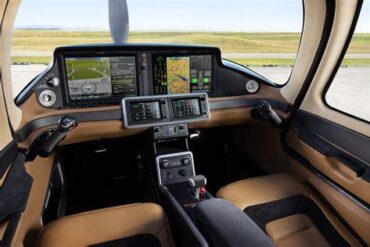
- The Cirrus Perspective avionics suite by Garmin
- Dual electrical systems with redundant batteries and alternators
- Side-yoke flight controls, streamlining cockpit ergonomics
- Single power lever with automatic propeller RPM adjustment
- CAPS (Cirrus Airframe Parachute System) as standard on all models
These features have made the SR series popular with private owners, universities, flight schools, and air taxi operators. As of July 2024, Cirrus has delivered over 10,000 SR-series aircraft, representing a commanding share of the global piston market.
Vision SF50: The Personal Jet Revolution
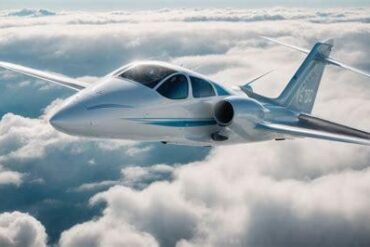
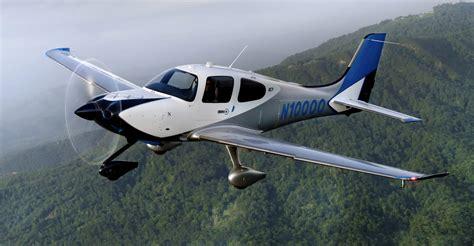
Cirrus broke new ground again in 2016 with the introduction of the Vision SF50, a single-engine very light jet (VLJ) marketed as a “personal jet.” Unlike traditional business jets, the Vision Jet is designed for owner-pilots, offering jet performance with simplified systems and lower operating costs.
Key highlights of the Vision SF50:
- Powered by a Williams FJ33-5A turbofan engine
- Seats 5 to 7 passengers, depending on configuration
- Cruise speed: ~311 knots; range: ~1,200 nautical miles
- Equipped with CAPS—the first and only certified jet with a whole-airframe parachute
- Integrated Safe Return Autoland, certified in 2020
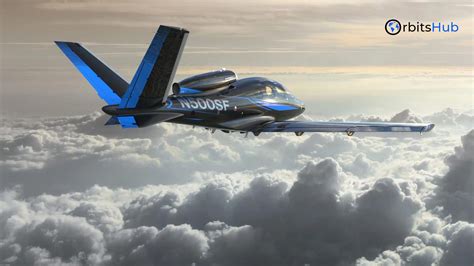
The aircraft earned the Collier Trophy in 2017, marking its impact as a groundbreaking platform. With over 600 units delivered by 2024, the SF50 is the best-selling general aviation jet worldwide.
Cirrus Aircraft Safety Innovations
Cirrus’ reputation for innovation is perhaps best exemplified by its commitment to safety-first design. The development of the Cirrus Airframe Parachute System (CAPS) was a pivotal advancement. Introduced on the SR20, it allows the entire aircraft to descend safely in emergencies, credited with saving over 250 lives to date.
In 2019, Cirrus introduced the Safe Return Autoland system, developed by Garmin and offered on the Vision Jet. With the push of a button, the aircraft can autonomously identify an airport, navigate, descend, and land safely without pilot intervention. In May 2025, Cirrus extended this technology to the SR series, making it the first piston aircraft equipped with emergency autoland capability.
Global Growth and Manufacturing Expansion
Over the past two decades, Cirrus has expanded aggressively across North America and Europe. Its headquarters remain in Duluth, Minnesota, supported by major facilities in:
- Grand Forks, North Dakota – composite manufacturing center
- Knoxville, Tennessee – Vision Center for customer experience, training, and aircraft delivery
- McKinney, Texas – satellite service and training campus
- Chandler and Scottsdale, Arizona – engineering and training hubs
- Orlando and Kissimmee, Florida – additional training and service support
- Valenciennes, France and Rotterdam, Netherlands – European sales and support offices
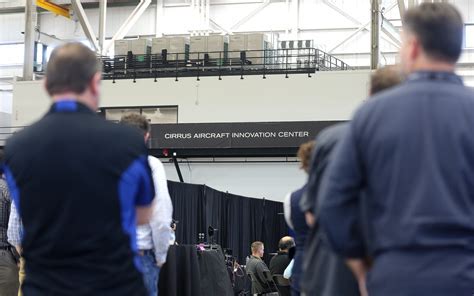
In 2023, Cirrus invested US$20 million to establish its flagship Innovation Center at Duluth International Airport. The company has also expanded its Grand Forks facility by another 30,000 square feet to support growing demand.
By 2024, Cirrus reached a milestone: 731 aircraft delivered—its highest annual output ever—bringing in over US$1.2 billion in revenue.
Ownership, IPO, and Global Investment
Initially family-run, Cirrus underwent significant ownership transitions:
- In 2001, a majority stake was sold to Arcapita, a Bahrain-based investment group
- In 2011, China Aviation Industry General Aircraft (CAIGA), a subsidiary of AVIC, acquired the company
- In 2024, Cirrus became minority publicly owned through an IPO on the Hong Kong Stock Exchange, raising approximately US$180 million
This international backing has provided Cirrus with sustained capital to innovate, expand facilities, and continue product development, including work on a proposed SR10 trainer aircraft.
Environmental Leadership and Sustainable Fuels
As aviation faces increasing pressure to reduce emissions, Cirrus has proactively participated in sustainable efforts:
- Conducted early testing with G100UL unleaded aviation fuel in the SR22 and SR22T
- Adopted Sustainable Aviation Fuel (SAF) in the Vision Jet’s operations
- Supported global initiatives to phase out leaded avgas and transition toward cleaner alternatives
These actions demonstrate Cirrus’ leadership in creating not only high-performance aircraft but also an environmentally responsible aviation future.
Executive Leadership and Cultural Shift
Cirrus has seen strategic leadership changes throughout its history. Founders Alan and Dale Klapmeier led the company until 2009, with Dale continuing until 2019. In 2019, Zean Nielsen, a former executive from Tesla and Bang & Olufsen, became CEO, marking a new era focused on premium customer experiences, advanced digital services, and operational excellence.
The management team includes:
- Patrick Waddick – President, Innovation & Operations
- Todd Simmons – President, Customer Experience
- George Letten – EVP & CFO
- Ken Harness – SVP, Product Development
- Ben Kowalski – SVP, Sales & Marketing
Under this leadership, Cirrus has expanded its identity from aircraft manufacturer to aviation lifestyle brand, integrating flight training, aircraft management, insurance, and digital platforms.
The Road Ahead: Pushing the Boundaries of General Aviation
Cirrus Aircraft’s trajectory from experimental homebuilts to industry-dominating certified aircraft is a testament to the company’s commitment to design, safety, innovation, and customer experience. It continues to evolve as a premium brand synonymous with modern aviation ownership.
With new models on the horizon, robust demand, a connected digital ecosystem, and facilities designed for future scalability, Cirrus is not just meeting the demands of today’s pilots—it is defining the future of personal aviation.
As of 2025, Cirrus holds the position as the largest producer of general aviation aircraft and the third-largest aviation manufacturer globally, a distinction earned through relentless innovation and customer-centric focus. For those who seek excellence in the skies, Cirrus continues to lead the way—bold, pioneering, and unstoppable.