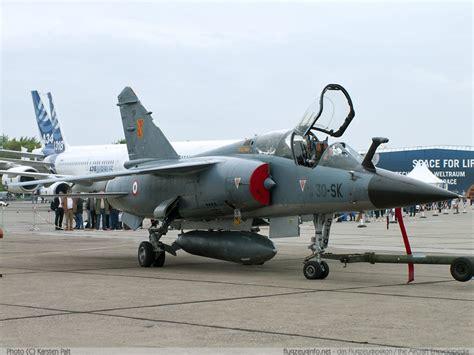
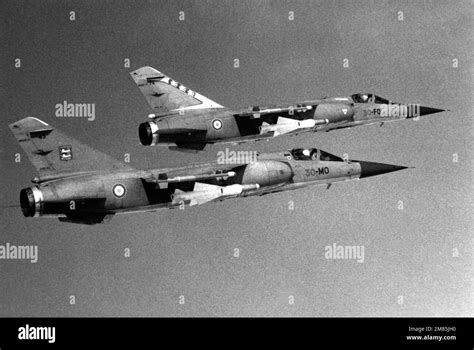
The Dassault Mirage F1 stands as one of the most iconic French fighter jets of the Cold War era, known for its versatility, advanced aerodynamics, and powerful performance. Developed by Dassault Aviation, it was designed to replace the aging Mirage III series, incorporating significant advancements in design, aerodynamics, and avionics. The Mirage F1 made its first flight on December 23, 1966, and officially entered service with the French Air Force in 1970, becoming a mainstay of Western air power for decades.
Development and Design Innovations
The Mirage F1 represented a radical departure from its predecessors, moving away from the tailless delta wing layout of the Mirage III in favor of a swept wing design with a conventional tailplane. This shift significantly improved the aircraft’s low-speed handling, short-field performance, and agility. Key innovations included:
- High-Lift Wing Design: The F1 featured a high-mounted, swept-back wing with a 40-degree leading-edge sweep, coupled with all-moving tailplanes. This configuration reduced takeoff distances by 30% and landing speeds by 25%, providing superior handling in close combat and during ground-attack missions.
- Advanced Flight Control Surfaces: The wings incorporated leading-edge maneuvering flaps and double-slotted trailing-edge flaps, significantly enhancing low-speed maneuverability and stability during ground attack operations.
- Robust Airframe Construction: While retaining the Mirage III’s basic fuselage shape, the Mirage F1 employed high-strength steel and titanium alloy reinforcements, particularly in the wing root and engine mounts, allowing it to withstand the rigors of semi-prepared airfields and high-stress combat maneuvers.
- Optimized Undercarriage: A reinforced double-wheel main landing gear enabled operations from rough, forward-operating bases, emphasizing versatility and rapid deployment capabilities.
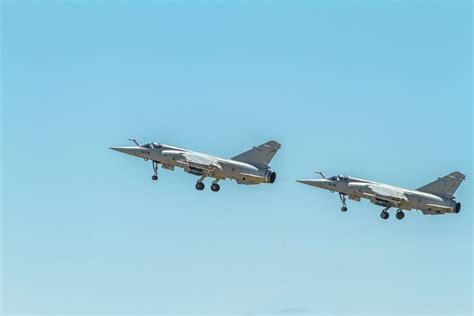
Powerplant and Performance
At the heart of the Mirage F1’s impressive performance is the Snecma Atar 9K-50 turbojet engine, a robust powerplant delivering up to 70.6 kN of thrust with afterburner. This engine allowed the F1 to reach speeds of Mach 2.2 at high altitude, matching or exceeding many contemporary fighter designs in speed and acceleration. Key specifications include:
- Engine Type: Snecma Atar 9K-50
- Afterburner Thrust: 70.6 kN
- Maximum Speed: Mach 2.2 (at altitude)
- Combat Radius: 425 km (high-low-high profile)
Armament and Avionics
The Mirage F1 was a true multirole fighter, capable of air superiority, ground attack, and tactical reconnaissance. Its primary armament included:
- Air-to-Air Loadout:
- Two 30mm DEFA 553 autocannons (270 rounds each)
- Wingtip-mounted Matra Magic infrared-guided short-range missiles
- Underwing pylons for R530 or Super 530 radar-guided medium-range missiles
- Ground Attack Options:
- Up to 4,000 kg of mixed ordnance, including iron bombs, laser-guided munitions, rocket pods, and anti-ship missiles like the AM39 Exocet
- Avionics and Sensors:
- Thomson-CSF Cyrano IV radar, providing look-down/shoot-down capability and ground target tracking
- Optional aerial refueling probes for extended range operations
Operational History and Combat Service
The Mirage F1 saw extensive combat use across multiple conflicts, proving its versatility and robustness in diverse operational scenarios. Notable deployments include:
- French Air Force: Introduced in 1973, it served as an air defense interceptor and ground-attack platform, notably supporting counterinsurgency operations in Mali in 2013, where it demonstrated its utility in low-intensity conflicts.
- Iran-Iraq War (1980-1988): Iraqi Mirage F1s played a critical role, launching Exocet missiles against shipping in the Persian Gulf, including the infamous 1987 attack on the USS Stark, resulting in 37 U.S. Navy personnel fatalities.
- Gulf War (1990-1991): The Mirage F1s of the Iraqi Air Force struggled against superior Western air power, suffering heavy losses to U.S. F-15s and coalition aircraft.
- Libyan Civil War (2011): Notably, two Libyan Air Force Mirage F1s defected to Malta as the uprising against Muammar Gaddafi escalated.
Global Export Success and Variants
With over 720 units produced, the Mirage F1 became a commercial success, exported to 14 countries, including Iraq, Spain, South Africa, and Iran. Key variants include:
- Mirage F1C – Single-seat interceptor
- Mirage F1B – Two-seat trainer with full combat capability
- Mirage F1CR – Tactical reconnaissance variant
- Mirage F1CT – Upgraded strike variant for enhanced ground attack roles
Technical Specifications
| Parameter | Data |
|---|---|
| Length | 15.30 m |
| Wingspan | 8.40 m |
| Maximum Takeoff Weight | 16,200 kg |
| Service Ceiling | 20,000 m |
| Combat Radius | 425 km (ground attack) / 1,300 km (interception) |
| Armament Load | 4,000 kg |
| Engine Thrust | 70.6 kN (afterburner) |
| Maximum Speed | Mach 2.2 (at altitude) |
Legacy and Impact
The Mirage F1’s enduring legacy lies in its blend of agility, firepower, and multirole capability, making it a valuable asset for numerous air forces well into the 21st century. Despite being replaced by newer, fourth-generation fighters, its operational flexibility and cost-effectiveness ensured it remained a critical component of many air forces’ arsenals for decades. The Mirage F1’s service record and robust design cement its place as a classic of Cold War-era fighter aviation.