Choosing the right professional drone, especially one equipped with advanced thermal imaging capabilities, is a significant decision involving substantial investment and a careful consideration of features against specific operational needs. The DJI Mavic 3 Thermal (M3T) established itself as a powerful, compact solution for a variety of enterprise applications. However, with the introduction of the DJI Matrice 30T (often referred to by users as the M4T, a nomenclature we will adopt for clarity in this comparison), professionals are faced with a compelling question: is the newer, more robust Matrice model worth the considerable step up in price and capability? This in-depth analysis will dissect these two formidable platforms, comparing their imaging prowess, flight performance, intelligent features, and overall value proposition, particularly for demanding tasks such as infrastructure inspection and search and rescue operations.
For professionals looking to enter the thermal drone market or upgrade from older systems, the choice between the M3T and the M4T (Matrice 30T) can be perplexing. The M3T, known for its portability and impressive sensor package inherited from the Mavic 3 series, offers a compelling entry point into high-resolution thermal work. Conversely, the M4T represents a leap into DJI’s more rugged and feature-rich Matrice line, promising enhanced durability, superior zoom, and a more integrated enterprise ecosystem. This article aims to provide a granular comparison, moving beyond mere specification sheets to explore the practical implications of each drone’s design and capabilities, helping you determine which platform aligns best with your operational demands and budget.
The Contenders: Unpacking the DJI Mavic 3 Thermal (M3T) and Matrice 30T (M4T)
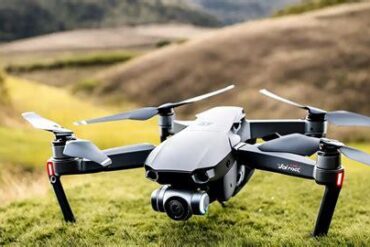
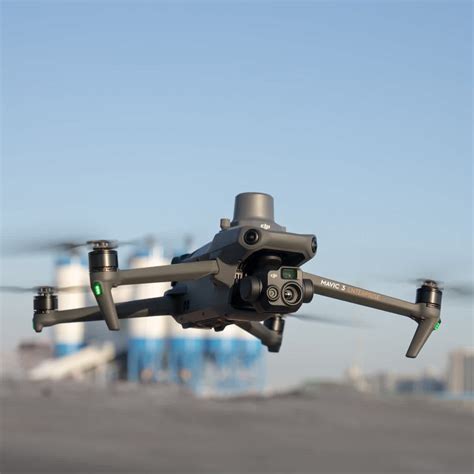
The DJI Mavic 3 Thermal, or M3T, quickly garnered acclaim for packing a remarkable sensor suite into the familiar, highly portable Mavic airframe. It was designed for agility and rapid deployment, making it an attractive option for professionals who need to move quickly and operate in diverse environments. Its thermal camera, wide-angle visual camera, and zoom camera offer a versatile imaging solution for a wide range of applications, from public safety to detailed inspections. The M3T leverages the advancements of the Mavic 3 platform, including extended flight times and sophisticated obstacle avoidance, making it a significant step up from previous generations like the Mavic 2 Enterprise Advanced.
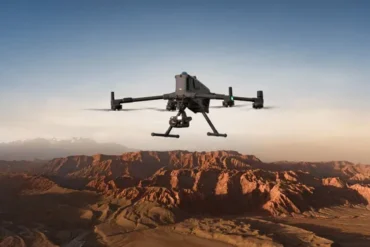
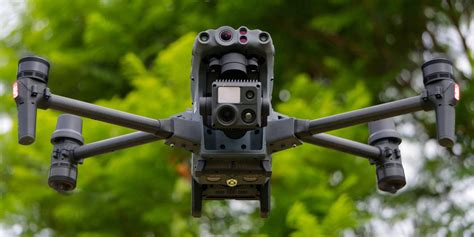
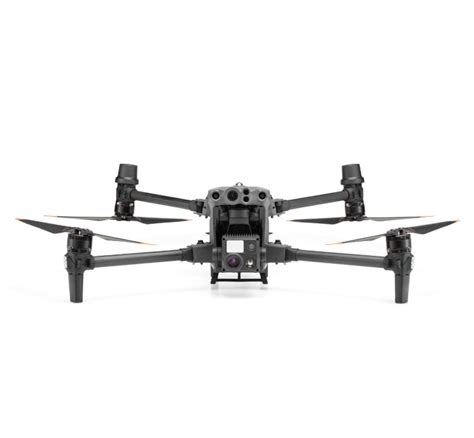
Enter the DJI Matrice 30T (M4T), a drone that, while sharing some sensor specifications with the M3T, belongs to a different class of unmanned aerial systems. The Matrice series is DJI’s flagship for commercial and industrial applications, emphasizing resilience, advanced integration, and superior performance in challenging conditions. The M4T is a more compact Matrice than its larger M300 RTK sibling but inherits its rugged DNA, boasting an impressive IP55 rating for weather resistance. It integrates a similar thermal sensor to the M3T but pairs it with a significantly more powerful zoom camera, a laser rangefinder, and a more robust airframe designed for reliability and endurance in demanding scenarios. The M4T is not merely an incremental upgrade; it represents a different operational philosophy, geared towards more intensive and complex missions.
Thermal Imaging Capabilities: A Tale of Two Sensors
At the heart of both the M3T and M4T is a high-resolution 640 x 512 pixel thermal radiometric sensor, operating at a smooth 30Hz refresh rate. This specification is crucial for capturing detailed thermal data, allowing for accurate temperature measurements and the identification of subtle thermal anomalies. For applications like roof inspections, detecting moisture ingress, or identifying faulty solar panel cells, this resolution is generally considered the professional standard. Both drones provide radiometric capabilities, meaning each pixel in the thermal image contains temperature data, which can be analyzed post-flight using specialized software like DJI Thermal Analysis Tool or third-party solutions. The M3T’s thermal camera has a Display Field of View (DFOV) of 61° and an equivalent focal length of 40mm with an F1.0 aperture, offering a broad perspective for initial scans. Its thermal accuracy is typically ±2°C or ±2% (whichever is greater).
The M4T utilizes a thermal sensor with the same 640 x 512 resolution and 30Hz refresh rate. Its DFOV is also 61°, with a 40mm equivalent focal length and F1.0 aperture, ensuring a comparable field of view for thermal scanning. The stated thermal accuracy remains consistent at ±2°C or ±2%. While the core thermal sensor specifications appear identical, users have reported that the M4T’s thermal imagery can appear crisper or offer slightly better clarity in certain conditions. This could be attributed to differences in image processing algorithms, lens quality, or the overall integration within the more advanced M4T gimbal system. For critical search and rescue operations, especially at night or in obscured environments, even minor improvements in thermal sensitivity or image processing can make a significant difference in detecting a heat signature. Both drones support various thermal palettes and isotherms, allowing operators to customize the display for optimal target identification.
Zoom Functionality: Where the M4T Truly Flexes its Muscles
While thermal capabilities are paramount, the visual zoom cameras on these drones are critical for detailed inspection and positive identification from a safe standoff distance. The DJI M3T features a ½-inch CMOS zoom camera with 12MP effective pixels. This camera offers an impressive 56x hybrid zoom, which combines optical zoom with digital cropping to achieve its maximum magnification. While useful for getting a closer look, image quality naturally degrades at the higher end of the hybrid zoom range. For tasks like reading serial numbers or inspecting small defects on a structure, the M3T provides adequate capability, but operators need to be mindful of the limitations of its hybrid zoom.
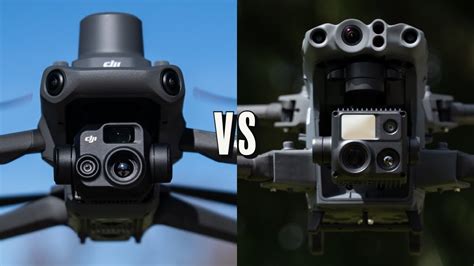
This is where the DJI Matrice 30T (M4T) establishes a clear advantage. It is equipped with a ½-inch CMOS 12MP zoom camera, but its optical system is far more potent, offering a 5x-16x optical zoom and a staggering 200x maximum hybrid zoom. The significant increase in optical zoom range means that the M4T can achieve much clearer, higher-fidelity magnified images at greater distances than the M3T. For inspecting distant wind turbines, power lines, or conducting surveillance in SAR scenarios without disturbing the area or compromising safety, the M4T’s superior zoom is a game-changer. This extended reach allows for more comprehensive data collection from a single vantage point, potentially reducing flight time and improving operational efficiency. The inclusion of a Laser Rangefinder on the M4T, with a measurement range of up to 1,200 meters, further complements its zoom capabilities by providing precise distance and coordinate information for pinpointed targets, a feature absent on the M3T.
Wide-Angle Visual Camera Performance
Beyond zoom, the primary wide-angle visual cameras are essential for general situational awareness, mapping, and creating contextual imagery alongside thermal data. The M3T boasts a formidable 4/3 CMOS 20MP wide-angle camera (shared with the standard Mavic 3), which is renowned for its excellent image quality, dynamic range, and low-light performance. This sensor, with its mechanical shutter (in the M3E/M3T variant), is also highly capable for photogrammetry tasks, though the M3E is typically preferred for dedicated surveying. For general inspection work and SAR, this wide camera provides crisp, detailed visuals.
The M4T features a ½-inch CMOS 48MP wide-angle camera. While the sensor size is smaller than the M3T’s wide camera (½-inch vs 4/3-inch), the higher megapixel count allows for significant detail capture. In practice, the M3T’s larger sensor and pixels might offer advantages in dynamic range and low-light performance for the wide camera specifically. However, the M4T’s overall sensor package is designed to work in concert, with the powerful zoom often taking precedence for detailed inspection tasks. Both drones offer excellent 4K video recording capabilities, essential for documenting inspections or providing real-time visual feedback during operations.
AI, Intelligent Flight Modes, and Operational Smarts
Intelligent features can significantly enhance operational efficiency and safety. The DJI M3T comes equipped with DJI’s advanced APAS 5.0 (Advanced Pilot Assistance Systems) for omnidirectional obstacle sensing and avoidance, allowing for more confident flight in complex environments. It supports standard intelligent flight modes like Point of Interest and Waypoint flights through DJI Pilot 2. While it has AI capabilities, these are generally focused on flight safety and basic object tracking rather than advanced analytical functions directly integrated with the thermal sensor for automated detection.
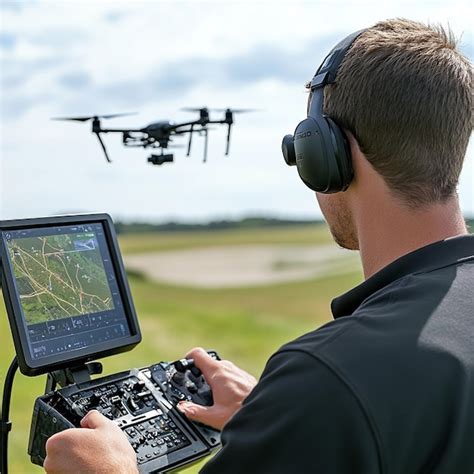
The DJI Matrice 30T (M4T) steps up the intelligence quotient. It features DJI’s O3 Enterprise transmission system, offering robust connectivity, and also boasts omnidirectional obstacle sensing. Crucially, the M4T introduces more sophisticated AI-driven features like Smart Pin & Track, which allows operators to mark and track objects of interest, with the drone’s gimbal and flight path adjusting to maintain focus. Live Annotations enable real-time marking on the video feed, which can be shared with team members. While some users have inquired if the advanced AI tracking works seamlessly with the thermal camera, it’s important to note that many high-level AI recognition and tracking algorithms primarily leverage the higher-resolution visual spectrum data. However, the M4T’s FlightHub 2 integration allows for powerful cloud-based mission management and live operations, including synchronized annotation and data sharing, which is a significant boon for coordinated team efforts in SAR or large-scale inspections. The M4T’s AI capabilities are generally more tailored to enterprise workflows and collaborative operations.
Flight Performance, Durability, and Deployment
Flight characteristics and resilience are critical differentiators. The M3T, with its Mavic DNA, is designed for portability and quick deployment. It typically offers a maximum flight time of around 42-45 minutes under ideal conditions. Its wind resistance is respectable for its size, but it’s not designed for the harshest weather conditions. Its compact, foldable design makes it easy to transport and launch from virtually anywhere.
The DJI Matrice 30T (M4T) is built for more demanding environments. It boasts an IP55 ingress protection rating, meaning it can withstand dust and low-pressure water jets from any direction, making it suitable for operation in light rain and dusty conditions where the M3T might struggle. Its operational temperature range is also wider, from -20°C to 50°C. The M4T has a slightly shorter maximum flight time of around 41 minutes but features a more robust airframe and superior wind resistance (up to 15 m/s). While still relatively compact for a Matrice, it is larger and heavier than the M3T and requires a dedicated hard case for transport. Its deployment is rapid, thanks to a clever folding mechanism, but it’s inherently a more substantial piece of equipment.
Controller, Software, and Ecosystem
The controller and software interface significantly impact the user experience. The M3T is typically bundled with the DJI RC Pro Enterprise, a capable controller with a bright built-in screen running the DJI Pilot 2 application. This setup is familiar to many DJI users and offers a robust, professional-grade interface.
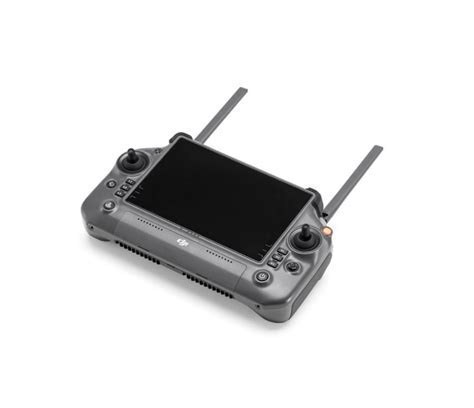
The M4T introduces the new DJI RC Plus controller. This is a significant upgrade, featuring a larger, brighter 7-inch screen, more customizable buttons, an IP54 rating for weather resistance (matching the drone’s enhanced durability), and internal/external battery options for extended operation. The RC Plus is designed for demanding enterprise use and provides a more ergonomic and powerful control interface. Both drones utilize the DJI Pilot 2 application, ensuring a consistent software experience for mission planning, flight control, and data management. However, the M4T’s integration with FlightHub 2 for cloud-based operations is more deeply embedded, reflecting its enterprise focus.
Battery Systems: A Crucial Logistical Consideration
Battery management is a key aspect of drone operations. The M3T uses the standard DJI Mavic 3 Intelligent Flight Batteries. These are relatively common, and users who already operate other Mavic 3 series drones (like the M3E or M3 Cine) can benefit from battery interchangeability. This can simplify logistics and reduce the overall investment in batteries if operating a mixed fleet. Charging is typically done via a standard charging hub.
The DJI Matrice 30T (M4T) utilizes a different battery system: the TB30 Intelligent Flight Batteries. These are designed for the Matrice 30 series and offer features like self-heating for cold weather operations. A pair of TB30 batteries is required for flight. The M4T is often sold with the BS30 Battery Station, a sophisticated charging case that can charge multiple sets of TB30 batteries and RC Plus batteries simultaneously. Importantly, the TB30 batteries are hot-swappable (if landed, not in flight for the M30T), allowing for rapid turnaround times between flights if multiple battery sets are available. This is a significant advantage for continuous operations, such as extended SAR missions or large-scale inspections. However, these TB30 batteries are specific to the M30 series and are not interchangeable with Mavic 3 batteries, representing a separate investment and logistical consideration.
The Price Equation: Is the M4T’s Premium Justified?
This brings us to the critical question of cost. A new DJI M3T typically retails for around £4,000-£4,500, while a second-hand unit might be found for approximately £3,300, as noted in user discussions. The DJI Matrice 30T (M4T) is a more significant investment, with prices generally starting around £9,000-£10,000 for a standard package including the BS30 battery station, though some bundles might be found closer to the £5,300-£6,000 range if promotions or specific packages are considered, but this seems low for a new M30T with accessories. For this analysis, let’s assume a significant price delta, often nearly double, when comparing new-for-new or similarly equipped packages. This price difference is substantial and necessitates a careful evaluation of the M4T’s added benefits against the user’s specific needs and budget.
If budget is a primary constraint, or if the operational environment is generally benign and extreme zoom or weather resistance isn’t paramount, the M3T offers exceptional value. It delivers professional-grade thermal imaging and versatile visual cameras in a portable package. However, for organizations or individuals requiring the utmost in durability, superior zoom capabilities for standoff inspections, enhanced AI features for collaborative work, and a more robust overall system designed for frequent, demanding use, the M4T’s premium could be justified. The M4T is also a newer platform, likely to benefit from a longer support lifecycle and potentially more future feature enhancements.
Application-Specific Suitability: Roof/Solar Inspections and Search & Rescue
For roof and solar panel inspections, both drones are highly capable. The M3T’s 640×512 thermal sensor is excellent for identifying heat loss, moisture issues, or defective solar cells. Its portability allows for easy access to various sites. The M4T offers the same thermal resolution but its significantly better zoom camera can be advantageous for inspecting larger commercial roofs or solar farms from a greater distance, potentially identifying structural issues or wildlife interference without needing to fly as close. The M4T’s IP55 rating also means less downtime due to light rain, which can be a factor in regions with unpredictable weather.
In Search and Rescue (SAR) scenarios, the M4T’s advantages become more pronounced. While the M3T is a capable SAR tool, especially for rapid deployment in accessible areas, the M4T’s superior zoom allows for quicker identification of potential subjects from a safer altitude or distance, crucial in hazardous terrain. Its enhanced weather resistance and more robust flight performance provide greater operational confidence in challenging conditions. The hot-swappable batteries and BS30 charging station enable more continuous flight operations, which can be critical when time is of the essence. Furthermore, the M4T’s laser rangefinder and advanced AI features like Smart Pin & Track can significantly aid in coordinating rescue efforts and maintaining situational awareness on a subject. The potential for slightly better thermal image processing on the M4T could also offer an edge in detecting faint heat signatures.
Expert Perspectives and Real-World Considerations
Feedback from experienced users often highlights that if one already owns an M3T and it meets current operational needs, the upgrade to an M4T might not be an immediate necessity unless specific new capabilities (like extreme zoom or IP rating) are required. The jump in performance, while noticeable, may not always justify the significant cost differential for every user. However, for those purchasing a new thermal drone for demanding professional use, particularly if budget allows and the advanced features of the M4T align with mission profiles, the M4T is often recommended for its future-proofing, enhanced durability, and superior overall capabilities. The decision often hinges on whether the incremental benefits of the M4T translate into tangible improvements in efficiency, safety, or data quality for the specific tasks at hand.
Making Your Choice: M3T or M4T?
Ultimately, the choice between the DJI M3T and the DJI Matrice 30T (M4T) depends on a nuanced assessment of your specific requirements, operational context, and budget.
Choose the DJI Mavic 3 Thermal (M3T) if:
- Portability and rapid deployment are top priorities.
- Your budget is a significant constraint, or you’re seeking the best value for a professional-grade thermal sensor.
- You already have an ecosystem of Mavic 3 batteries.
- Your operations are generally conducted in moderate weather conditions.
- Your primary need is high-quality thermal and wide-angle visual data without extreme zoom requirements.
Choose the DJI Matrice 30T (M4T) if:
- Extreme zoom capabilities and a laser rangefinder are critical for your inspection or surveillance tasks.
- Robust weather resistance (IP55) and operation in challenging conditions are frequently required.
- You need a platform with hot-swappable batteries and a dedicated charging station for continuous operations.
- Advanced AI features, FlightHub 2 integration, and the DJI RC Plus controller offer significant workflow benefits.
- You are investing for the long term and prioritize durability, a longer product lifecycle, and the most advanced features in a relatively compact enterprise drone.
- Your SAR or inspection missions demand the highest level of performance and reliability.
Conclusion: Investing in the Right Thermal Vision
Both the DJI Mavic 3 Thermal and the DJI Matrice 30T are exceptional thermal drone platforms, each excelling in different areas. The M3T offers an incredible fusion of portability and power, making professional thermal imaging more accessible than ever. It remains a highly relevant and capable tool for a vast array of applications. The M4T, on the other hand, represents the next echelon of integrated enterprise drone solutions from DJI, delivering enhanced ruggedness, unparalleled zoom, and a suite of features designed for the most demanding missions and professional users.
Carefully consider your typical operational scenarios, the level of detail required in your data, the environmental conditions you’ll face, and your budget. If the advanced capabilities of the M4T directly address critical pain points in your workflow or open up new service opportunities, then the higher investment can be readily justified. If your needs are well-met by the M3T’s already impressive feature set, it remains an outstanding choice that delivers significant professional value. The key is to align your investment with genuine operational needs, ensuring that the chosen drone becomes a powerful enabler for your work.