Understanding the Vision Requirements for Aspiring Pilots
One of the most common misconceptions in aviation is that perfect eyesight is an absolute prerequisite for becoming a professional pilot. While eyesight is undeniably important in the aviation field, the notion that only those with flawless natural vision can pursue this career is outdated. In truth, the standards set by aviation authorities like the UK Civil Aviation Authority (CAA) and the Federal Aviation Administration (FAA) recognize the role of corrective measures such as glasses or contact lenses.
Aspiring pilots, particularly those targeting commercial careers with airlines such as easyJet or British Airways, must meet specific medical criteria. However, these criteria focus more on visual performance with correction than on unaided vision.
Correctable Vision vs. Perfect Vision
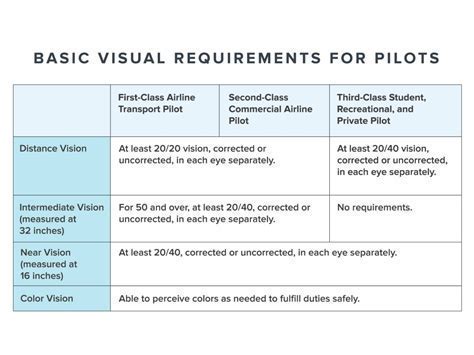
The fundamental requirement for a professional pilot is to have visual acuity that can be corrected to 6/6 (20/20) in each eye. This means that individuals who are short-sighted (myopic), long-sighted (hyperopic), or who have astigmatism, can still qualify—as long as their corrected vision meets the required standard.
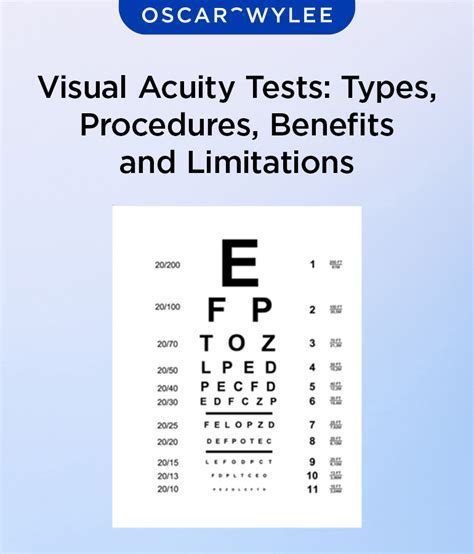
In the specific case of someone with a prescription of -0.75 in both eyes and mild astigmatism, this typically falls well within acceptable limits, provided their corrected vision meets the criteria. This is true for both private and commercial pilots under the CAA’s Class 1 Medical Certificate, the mandatory requirement for commercial aviation in the UK.
The UK Class 1 Medical Certificate: A Deeper Look
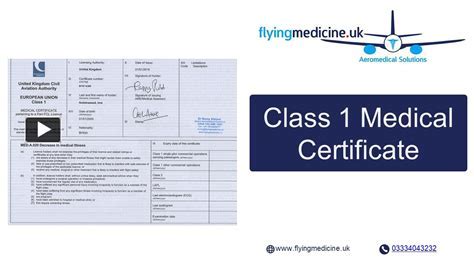
To fly for major UK carriers like British Airways or easyJet, pilots must obtain and maintain a Class 1 Medical Certificate issued by the UK Civil Aviation Authority (CAA). The vision standards under this certificate include:
-
Distance Vision: Must be 6/9 or better in each eye separately, and 6/6 or better binocularly, with or without correction.
-
Refractive Error Limits: Typically up to ±5.00 diopters of spherical error, and ±2.00 diopters of astigmatism, though exceptions may be considered with ophthalmological assessment.
-
Corrective Lenses: Allowed, provided that vision with correction meets standards.
-
Color Vision: Normal color perception is necessary, usually assessed with Ishihara plates.
It is important to understand that the medical standard does not demand unaided perfection. Rather, it requires that your functional vision, once corrected, meets the operational thresholds for safety and performance.
International Comparisons: FAA and EASA Regulations
Globally, standards may differ slightly, but the core philosophy remains consistent: correctable vision is what matters. In the United States, for instance, the FAA requires 20/20 corrected vision in each eye for a First Class Medical Certificate, which is essential for airline captains.
Similarly, under EASA (European Union Aviation Safety Agency) regulations:
-
Distant visual acuity should be 6/9 in each eye and 6/6 binocularly.
-
Maximum refractive error: ±5.00 diopters.
-
Pilots with greater refractive errors may still be assessed on a case-by-case basis.
What About Eye Conditions Like Astigmatism and Myopia?
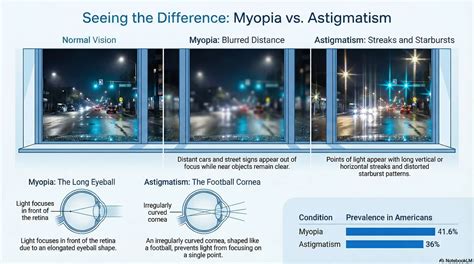
Astigmatism, which causes distorted or blurred vision due to irregular curvature of the eye’s lens or cornea, is not automatically disqualifying. In fact, low to moderate levels of astigmatism can be effectively corrected with glasses or toric contact lenses.
Myopia, or short-sightedness, is extremely common among pilots. A prescription of -0.75 indicates mild myopia and is well within the acceptable range of all major aviation medical bodies. The greater concern arises if myopia progresses significantly, especially beyond -5.00 diopters, in which case additional ophthalmological evaluation is often required.
Can Vision Deterioration Disqualify You in the Future?
While aviation authorities understand that vision can naturally worsen over time, especially in early adulthood, pilots are still subject to regular medical renewals. In the UK:
-
Class 1 medicals must be renewed annually up to age 60, then every 6 months thereafter.
-
Each renewal includes a vision check.
-
Any significant deterioration must be corrected to maintain compliance.
Should your eyesight fall outside the permitted range of correction, this may affect your certification, but options such as ophthalmic surgery (e.g., LASIK) can sometimes be considered—subject to strict post-surgery recovery and stability periods.
LASIK and Refractive Surgery for Pilots
Corrective eye surgery such as LASIK, LASEK, or PRK is permitted under most aviation authorities, but stringent criteria apply:
-
Surgery must be declared and fully documented.
-
There must be a stable post-operative period, often ranging from 3–6 months.
-
The pilot must meet vision standards without complications such as glare, halos, or dry eyes.
Pilots considering this route should consult with a CAA-approved Aeromedical Examiner (AME) before proceeding. Not all surgical outcomes are deemed compatible with Class 1 certification.
The Difference Between Military and Civil Aviation Requirements
An important distinction exists between military and civilian aviation standards. While civilian requirements are focused on correctable vision, military branches, such as the RAF (Royal Air Force), have far stricter unaided vision standards.
In fact, most air forces around the world require candidates to have close to perfect natural vision at the time of application. For instance:
-
The RAF does not accept candidates who have undergone refractive surgery.
-
Unaided vision must often be 6/6 or very close, especially for fast-jet roles.
Hence, while a candidate with corrected -0.75 myopia is suitable for easyJet or BA, the same person may be automatically disqualified from military pilot training.
Summary: You Don’t Need Perfect Vision—Just Correctable Vision
Ultimately, the answer to the question “Do you need perfect vision to be a pilot?” is no. For the vast majority of civil aviation careers, including those with major airlines like British Airways and easyJet, correctable vision is entirely acceptable. Provided your eyesight, with correction, meets the necessary thresholds, and no underlying pathological conditions exist, you can qualify and maintain a Class 1 Medical Certificate.
Maintaining good ocular health, undergoing regular examinations, and proactively managing any changes are essential practices throughout a pilot’s career. But perfect unaided vision is not—and has never been—a universal requirement.
Frequently Asked Questions
Can I wear glasses and still become a commercial airline pilot?
Yes. Glasses and contact lenses are permitted, provided that your corrected vision meets the standards outlined in the Class 1 Medical Certificate. Most airline pilots fly with some form of vision correction.
Is there a limit to how poor my eyesight can be with correction?
Yes, aviation authorities typically impose a maximum refractive error, such as ±5.00 diopters of spherical error. Higher levels may require additional ophthalmological evaluations to ensure safe operational vision.
Can I get LASIK and still become a pilot?
Yes, with conditions. Pilots may undergo refractive surgery like LASIK, but must have documented recovery, stable results, and no adverse visual side effects. Approval from a CAA-approved AME is essential before being recertified.