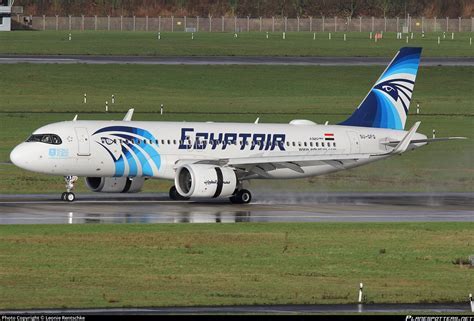
On May 19, 2016, EgyptAir Flight MS804, en route from Paris Charles de Gaulle Airport to Cairo International Airport, vanished from radar over the Mediterranean Sea, leaving behind a devastating mystery. Nearly a decade later, a British inquest has concluded that an oxygen leak in the cockpit was the likely cause of the catastrophic mid-air fire that rendered the aircraft uncontrollable, leading to the deaths of all 66 people on board.
The tragedy, which claimed the life of Welsh geologist Richard Osman, along with 58 other passengers, two flight crew members, and five cabin attendants, has now been linked to a preventable mechanical failure involving the first officer’s oxygen supply system.
Oxygen Leak Ignites Tragedy in the Skies
According to the final Prevention of Future Deaths report released by the U.K. Courts and Tribunals Judiciary, the fire was likely initiated by an ignition source of unknown origin, possibly near the oxygen mask system on the flight deck. Coroner Mark Layton, who oversaw the inquest concluded in May 2025, stated that the oxygen leak either caused or fed the fire, creating a deadly chain of events that rendered the cockpit environment uninhabitable.
As the Airbus A320 traversed the Eastern Mediterranean, the fire erupted, incapacitating the flight crew and disabling essential controls. The aircraft plummeted into the sea at high velocity, leaving no survivors and minimal wreckage, most of which was later recovered by search teams operating in deep-sea recovery zones.
Court Rejects Sabotage Theory, Confirms Mechanical Cause
The Egyptian Civil Aviation Ministry had previously floated the theory of a deliberate onboard explosion, possibly linked to terrorism. However, this was firmly dismissed by the British coroner. Layton sided with British aviation experts, asserting that the evidence pointed conclusively to a technical failure involving the first officer’s oxygen system, and not sabotage or foul play.
This ruling came after years of delays in the inquest process, largely due to international cooperation issues and the need for complete access to flight data, voice recordings, and forensic examinations from the crash site.
A Father’s Final Flight: Remembering Richard Osman
Among the passengers was Richard Osman, a 40-year-old geologist originally from Carmarthen, Wales. At the time of the incident, Osman was working in Jersey, the largest of the Channel Islands, and had been traveling on business. He left behind a wife, Aurelie Vandeputte, and two young daughters.
His widow offered emotional testimony during the inquest, describing her husband as “loved and appreciated by all who knew him.” The coroner extended his “heartfelt condolences” to Osman’s family and praised their “patience and understanding” over the many years it took to reach this verdict.
Fire in the Cockpit: A Safety Failure Revisited
The implications of the MS804 crash extend far beyond this single tragedy. The coroner emphasized a series of urgent recommendations aimed at preventing similar disasters in the future. Among the key proposals:
- Immediate disconnection of cockpit oxygen systems when fire is suspected.
- Enhanced protective gear for flight crew, including flame-retardant oxygen masks.
- Upgraded Halon fire extinguishers, or replacement with more effective alternatives.
- Ban on smoking and flammable materials in the cockpit area.
The report raised concerns about regulatory gaps, calling for aviation authorities to re-examine fire detection and suppression protocols on flight decks. These recommendations could influence upcoming revisions to ICAO (International Civil Aviation Organization) safety standards and EASA (European Union Aviation Safety Agency) aircraft certification policies.
Dissecting the Aircraft: The Airbus A320’s Oxygen System
The Airbus A320 has long been considered a workhorse of short-to-medium haul routes, boasting an impressive safety record. However, its cockpit oxygen systems, designed to protect crew in cases of depressurization or smoke, may carry latent fire hazards if improperly maintained.
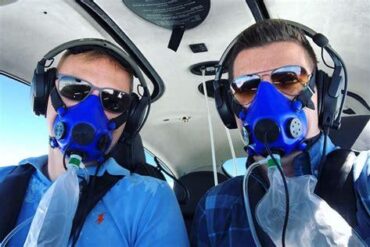
Each crew member’s oxygen mask is connected to an independent oxygen cylinder, regulated via complex valves and lines. Experts believe the first officer’s oxygen system may have suffered a valve malfunction or slow leak, leading to an oxygen-rich environment that can dramatically accelerate combustion if exposed to heat or sparks.
The fire may have originated in a console or control panel area where electrical components, paper manuals, or personal items could have served as ignition sources. Once flames spread in the confined space of the flight deck, escape or extinguishment became nearly impossible.
Investigative Hurdles: A Delayed Path to Truth
Why did it take nine years to reach this conclusion? Much of the delay stems from limited cooperation between Egyptian authorities and international aviation bodies. Despite early recovery of the flight data recorder (FDR) and cockpit voice recorder (CVR), full transparency was elusive. Egypt’s insistence on framing the crash as a terrorist act further delayed consensus among global investigators.
It wasn’t until French and British experts gained access to data, wreckage samples, and metallurgical analyses that the mechanical cause theory gained traction. The coroner’s court in the U.K. then spearheaded the comprehensive inquest, ultimately drawing conclusions rooted in physical evidence, not political speculation.
Global Impact: Redefining Aviation Fire Protocols
The implications of the EgyptAir MS804 crash ripple across the global aviation industry. The incident underscores the lethality of cockpit fires, which, while rare, are among the most perilous emergencies a flight crew can encounter. Once fire breaches the avionics bay or oxygen-fed compartments, seconds can separate survival from disaster.
Major carriers and aircraft manufacturers are already reviewing their cockpit fire response checklists, training modules, and hardware designs. In particular, discussions are underway to:
- Integrate automated oxygen shutoff systems when cockpit temperatures spike.
- Install high-sensitivity smoke detection tailored to the cockpit environment.
- Introduce fire-resistant cabling and control panel insulation in legacy fleets.
These developments could reshape the next generation of cockpit safety standards, ensuring that lessons from Flight MS804 are not forgotten.
Legacy and Closure: A Nation Mourns, A System Evolves
The EgyptAir MS804 crash will be remembered as one of the most chilling examples of latent system vulnerability converging with human tragedy. For the families who waited nearly a decade for answers, the British inquest has provided some semblance of closure, though it cannot undo the profound loss.
As aviation regulators digest the findings, the crash of MS804 now serves as a case study in fire dynamics, crew survivability, and the critical role of international transparency in air disaster investigations.
While the court’s findings may never soothe the emotional wounds of those who lost loved ones, they do offer a path forward—one where engineering vigilance, maintenance rigor, and procedural reform can prevent such devastation from recurring.
The skies may never be entirely free from risk, but with every tragedy investigated and understood, air travel becomes incrementally safer for all.