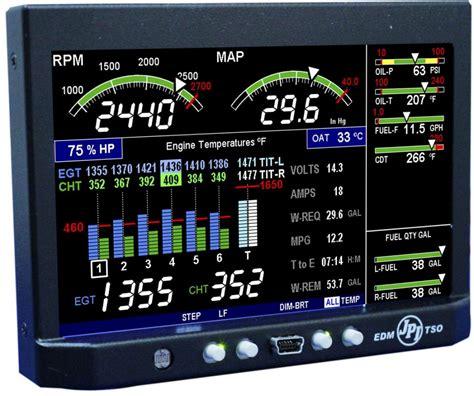
An Engine Monitoring Unit (EMU) is a digital tool that displays key information about an aircraft’s engine. This includes important metrics like RPM, oil temperature, oil pressure, battery voltage, fuel pressure, fuel flow, fuel quantity, exhaust gas temperature, and turbine inlet temperature. In today’s glass-cockpit airplanes, EMUs have largely replaced older systems with separate analog gauges for each engine metric. This design simplifies the pilot’s job by consolidating data into a single unit, making it easier to scan for vital information.
Often called engine analyzers, some EMUs use color-coded displays to help pilots quickly spot issues. For instance, normal operating ranges are shown in green, caution ranges in yellow, and out-of-limit conditions in red. Additionally, many units come with audible alerts to enhance safety. Depending on the specific model, features may also include bar graph displays that assist in adjusting fuel mixture for piston-engine aircraft. Other useful readings can extend beyond engine performance, covering aspects like cabin pressure, carbon monoxide levels, and G-forces.
More advanced EMUs offer menu functions that allow pilots to choose specialized displays. These can provide data on fuel management, flight parameters, and both normal and emergency checklists. Typically, these monitoring systems are found in smaller aircraft. In contrast, larger transport-category jets often use a more sophisticated system known as Engine Indicating and Crew Alerting System (EICAS). EICAS incorporates all the features of EMUs but adds the ability to display plain-text alerts. These messages are color-coded based on their urgency and direct the crew to a Quick Reference Handbook (QRH) for corrective actions. EICAS also activates master caution or warning lights and sounds when necessary.