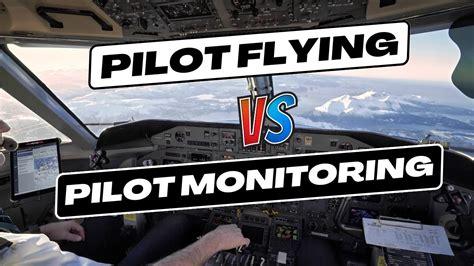
When two pilots operate a fixed-wing airplane that requires a two-person flight crew, the roles are clearly defined. The aircraft commander, who is qualified and holds the rank of Captain, typically sits in the left seat. The First Officer, also known as the Co-Pilot, usually occupies the right seat. Before each flight segment begins, the commander decides which pilot will take direct responsibility for flying the aircraft. This pilot becomes the ‘Pilot Flying’ (PF) for that portion of the flight. The other pilot is designated as ‘Pilot Monitoring’ (PM) or ‘Pilot Not Flying’ (PNF). In this role, the PM monitors the actions of the PF and performs essential support tasks, such as communication and reading checklists.
The Operations Manual outlines the specific roles of the PF and PM/PNF. One crucial duty of the PM/PNF is to cross-check the PF’s actions. This cross-checking is one of the primary reasons for having a two-pilot crew. While the aircraft commander ultimately holds responsibility for the safe operation of the aircraft, the roles of PF and PM/PNF are typically shared. This allows both pilots to engage in flying and monitoring duties throughout the flight.
Check/Training Captains, who are appropriately qualified, may occupy either seat as the aircraft commander during crew training. Initially, when the terms PF and PM/PNF were introduced, these roles were assigned with the understanding that the pilot in the right seat had limitations on controlling the aircraft on the ground due to the lack of a steering tiller. However, some operators now use the Monitored Approach concept. In this approach, the PM during descent and approach transitions to PF for landing. This strategy enhances operational safety by facilitating a smoother transition from instrument flight to visual reference needed for touchdown.