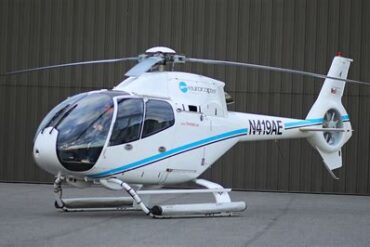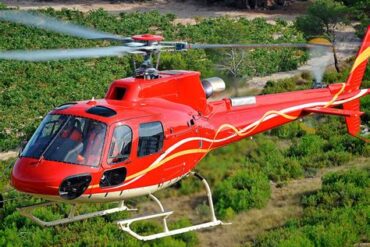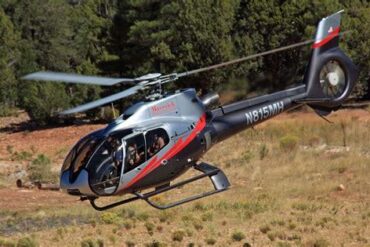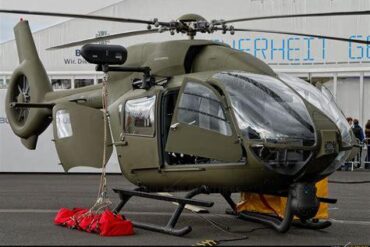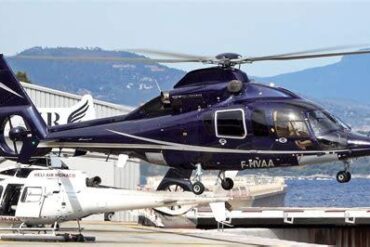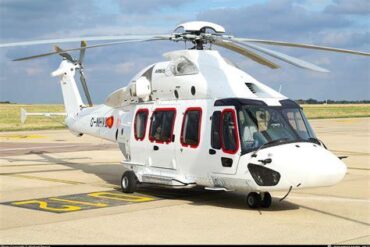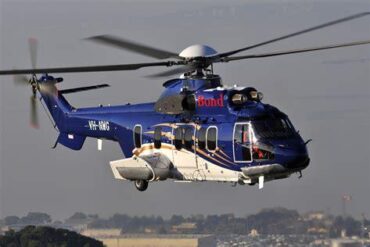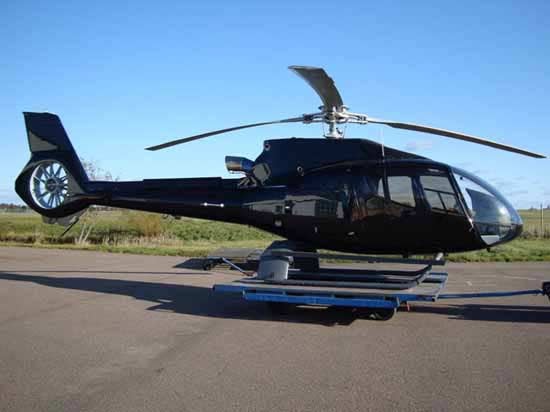
The Eurocopter EC130, now known as the Airbus H130, represents a paradigm of light utility helicopter innovation, blending aerodynamic precision, passenger comfort, and multi-role versatility. As a refined evolution of the AS350 Écureuil, the EC130 has etched a global legacy in aerial tourism, emergency medical services, and law enforcement operations. First flown in 1999 and entering service in 2001, the EC130’s rise reflects a commitment to both operational performance and environmental consciousness, particularly through its Fenestron tail rotor technology.
Origins: From Écureuil to EC130
The EC130 project emerged in response to growing demand for a quieter, more spacious rotorcraft that could meet the expectations of aerial tour operators and other commercial users. Rooted in the AS350 platform, the EC130 integrated several pioneering features:
- Fenestron tail rotor replacing the traditional tail for reduced noise and enhanced safety
- Wider main body for increased cabin space and visibility
- Dual-hydraulic systems for operational redundancy
Development was shaped by a strategic partnership with leading tour operators like Blue Hawaiian Helicopters, whose feedback influenced core design choices. The result was a helicopter tailored for high-volume, visually immersive tourism markets such as Hawaii and the Grand Canyon.
Flight Testing and Certification
On 24 June 1999, Australian test pilot Steven Page conducted the EC130’s maiden flight in France, marking a new chapter in Eurocopter’s civil aviation portfolio. Extensive prototype testing refined its aerodynamics, structural design, and systems reliability. Certification processes confirmed the aircraft’s compliance with FAA and EASA regulations, including stringent noise reduction benchmarks — a major selling point for urban and protected environment operations.
Design Innovations and Aerodynamics
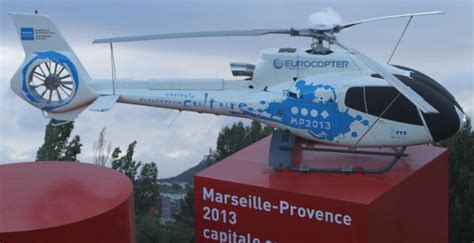
At the heart of the EC130’s design is its three-blade Starflex main rotor, paired with the enclosed Fenestron tail rotor. This anti-torque system drastically reduces exterior noise levels — by nearly 50% — and enhances ground safety, a critical aspect in high-turnover passenger environments.
The Fenestron’s unevenly spaced blades disrupt harmonic frequencies, enabling an FAA flyover noise rating of just 84.3 EPNdB, well below Stage 2 limits. This makes the EC130 ideal for sensitive areas such as national parks and urban centers.
Powerplant and Performance
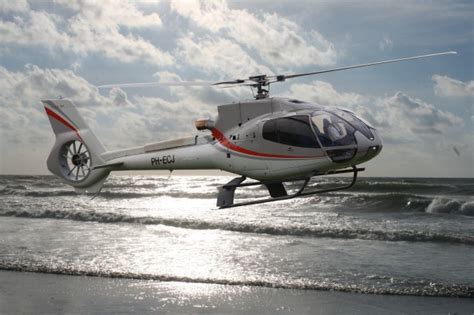
Equipped with the Turbomeca Arriel 2D turboshaft engine, the EC130 delivers 710 kW (950 hp) of sustained thrust. The T2 variant benefits from Full Authority Digital Engine Control (FADEC), ensuring optimal fuel management and high-altitude performance.
The EC130’s performance metrics are compelling:
- Cruise Speed: 237 km/h (147 mph)
- Range: 606 km (377 mi)
- Service Ceiling: 7,010 m (23,000 ft)
- Hover Ceiling OGE: 2,957 m (9,701 ft)
This combination of speed, range, and vertical performance allows operators to navigate mountainous terrains, urban environments, and hot-and-high climates with confidence.
Cabin Configuration and Versatility
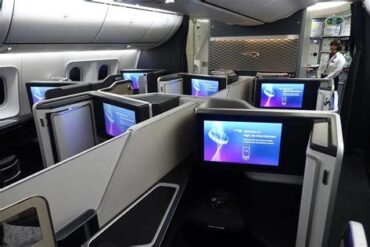
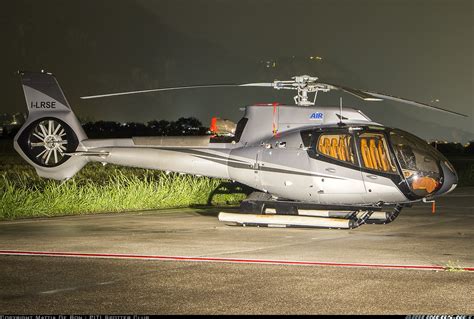
One of the EC130’s defining advantages is its cabin layout. With 54% more usable interior space and 143% more baggage capacity than competitors like the Bell 407, the EC130 sets the benchmark for passenger comfort and mission flexibility.
The aircraft supports three main cabin configurations:
- Standard: Pilot + 6 passengers
- Executive (Stylence): 4-5 passengers with luxury trim
- High Density: Pilot + 7 passengers (including front-center seat)
Additionally, operators can convert the aircraft between passenger and freight transport, or install medical configurations for EMS roles. Notably, the EC130 accommodates up to two stretchers, with ample space for medical personnel, oxygen tanks, and critical care equipment.
Avionics and Safety Systems
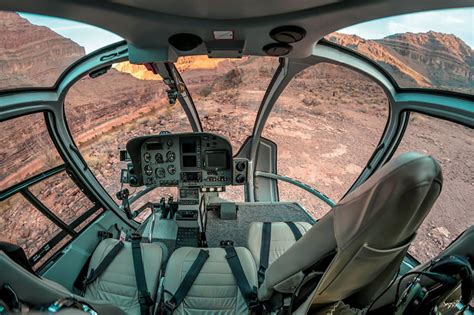
The EC130 cockpit is a study in ergonomic clarity. The Vehicle and Engine Multifunction Display (VEMD) integrates flight, engine, and fuel parameters in a single interface. A First Limit Indicator (FLI) simplifies power monitoring during critical maneuvers.
Additional safety elements include:
- Crashworthy seats and fuel tanks
- Redundant hydraulic and electrical systems
- Night VFR capability with integrated GPS navigation
- Active anti-vibration systems adapted from the EC225 Super Puma
Control response is described as “tight and pleasant,” reducing pilot fatigue and enhancing flight precision. Operators can opt for dual-control systems, making the EC130 adaptable for training or dual-pilot commercial missions.
Market Impact and Global Operations
Since its service debut in 2001, the EC130 has become a cornerstone of light helicopter fleets across North America, Europe, South America, and Asia. By 2015, over 1,177,000 flight hours had been logged by more than 279 operators worldwide.
In the aerial tour sector, operators such as Maverick Helicopters, Papillon, and Blue Hawaiian have leveraged the EC130’s quiet operation, wide field of view, and cost-efficiency. In fact, Maverick Helicopters’ fleet alone had surpassed 300,000 flight hours by 2015, with the EC130 T2 forming the backbone of their business.
Recent Developments and Hybrid Integration
In 2021, Airbus tested a hybrid electric assist system on the H130, designed to provide 30 seconds of supplemental rotor power following an engine failure — significantly improving safety during autorotation transitions.
Production continues at Airbus facilities worldwide, including Helibras in Brazil and Australian assembly lines, reflecting the aircraft’s international demand and localized support infrastructure.
Notable Variants
- EC130 B4: Original production variant; renowned for its reliability and simplicity.
- EC130 T2: Upgraded variant with 14% improved fuel economy, superior cabin climate control, and structural enhancements across 70% of the airframe.
- ACH130: VIP luxury configuration under Airbus Corporate Helicopters branding.
Safety Record and Challenges
Despite its technical merits, the EC130’s operational history includes several high-profile accidents. The 2018 Papillon Grand Canyon crash, caused by strong winds and a ruptured non-crash-resistant fuel tank, led to industry-wide safety reform. Following legal action, Airbus and Papillon settled with victims’ families in 2024 for $100 million, prompting regulatory shifts toward fuel tank shielding standards.
Other incidents, including mid-air collisions in Australia and crashes in Bhutan and the United States, underscore the critical importance of pilot training, terrain awareness, and adherence to maintenance protocols.

Specifications: EC130 T2
| Characteristic | Specification |
|---|---|
| Crew | 1 or 2 |
| Passengers | 6-7 |
| Length | 10.68 m (35 ft) |
| Max Takeoff Weight | 2,500 kg (5,512 lb) |
| Powerplant | Turbomeca Arriel 2D, 950 hp |
| Cruise Speed | 237 km/h (147 mph) |
| Range | 606 km (377 mi) |
| Service Ceiling | 7,010 m (23,000 ft) |
| Rotor Diameter | 10.69 m (35 ft) |
| Avionics | VEMD, GPS, FADEC |
FAQ: Eurocopter EC130
What makes the EC130 quieter than other helicopters in its class?
The EC130 features an enclosed Fenestron tail rotor with uneven blade spacing, which reduces harmonic noise signatures. Combined with its aerodynamic body and optimized rotor blade shape, it achieves a flyover noise signature of 84.3 EPNdB, well below FAA noise limits.
Is the EC130 suitable for emergency medical services (EMS)?
Yes. The EC130 is widely used in EMS roles due to its spacious cabin, which accommodates dual-stretcher setups, and features such as wide sliding doors, crash-resistant fuel systems, and medical equipment integration.
How does the EC130 T2 compare to earlier versions?
The T2 variant includes a more powerful engine (Arriel 2D), active vibration dampening, better air conditioning, and improved fuel efficiency by 14%. Over 70% of its structure was redesigned for improved performance and passenger experience.
The Eurocopter EC130 continues to stand as a benchmark in light helicopter design, combining technological sophistication, mission adaptability, and safety-first engineering. Its proven reliability and evolution across decades affirm its position as a cornerstone of civil rotorcraft aviation.