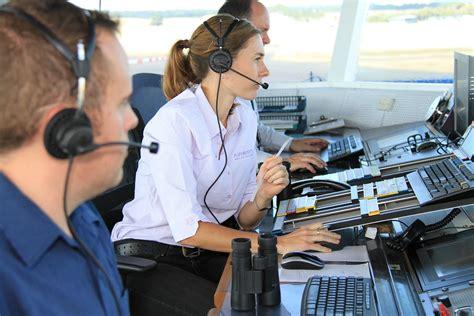
Air traffic controllers often work in pairs, with one designated as the Executive Controller (EXE) and the other as the Planner Controller (PLN). Although both are responsible for managing the same airspace, they perform different but interconnected tasks, functioning as a cohesive team. This setup is somewhat similar to flight crews, where the pilot in command holds ultimate responsibility. However, in air traffic control, both controllers share equal authority unless stated otherwise in local procedures.
The EXE primarily focuses on managing air traffic within their designated area of responsibility (AoR). They handle tactical tasks, which is why they’re sometimes referred to as “tactical controllers.” Their main tool is the microphone, used to communicate with aircraft, issue instructions, and provide essential information to maintain safe separation between flights.
On the other hand, the PLN coordinates with neighboring sectors and units to manage how aircraft enter and exit the AoR. Their goal is to ensure that the EXE is well-informed and that traffic flows smoothly in and out of the sector. The PLN mainly utilizes the telephone for communication.
While both the EXE and PLN oversee the same volume of airspace, they have distinct responsibilities outlined in the local operations manual. Here’s a brief overview of each controller’s duties:
Executive Controller (EXE) Responsibilities:
-
Ensure safe separation between aircraft.
-
Follow the PLN’s plans while having the option to suggest changes.
-
Communicate with aircraft and issue ATC clearances.
-
Monitor all aircraft to ensure compliance with clearances and instructions.
-
Provide useful information to pilots.
-
Inform the PLN of any significant events, like emergencies.
Planner Controller (PLN) Responsibilities:
-
Identify potential safety risks, such as conflicts between aircraft.
-
Develop plans to resolve these issues, while allowing the EXE input.
-
Coordinate entry and exit conditions for orderly traffic flow.
-
Manage deviations from standard procedures with adjacent sectors.
-
Notify supervisors and adjacent sectors of significant events.
Interaction with the ATC system may vary depending on each controller’s role. For instance, certain fields in the aircraft label might only be accessible to one controller.
To enhance safety, controllers practice the “four-eye principle,” where each monitors the other’s actions. This collaborative approach helps catch errors early and improves service quality. For example, the PLN might spot issues in the EXE’s clearances, while the EXE might identify a need for coordination with another sector that the PLN missed.
Example Scenario:
Consider a scenario involving workload distribution between the EXE and PLN. Upon receiving an estimate for flight IVB995, the PLN reviews the flight path and notes that the requested altitude is FL 400, while the current altitude is FL 320. After assessing the situation, the PLN identifies that FL 400 is already occupied by flight ABC123 exiting via FIREX. To avoid a conflict, the PLN sets IVB995’s exit flight level to FL 380 but notices a crossing conflict with DJK0905 at FL 360. Consequently, the PLN advises the EXE to initially clear IVB995 to FL 340.
When IVB995 checks in, the EXE confirms the crew’s identification and requests confirmation of the cruising level, which is FL 400. The EXE then clears the flight to climb to FL 340, ensuring procedural separation from DJK0905. A few minutes later, noticing a sufficient rate of climb, the EXE discusses with the PLN the possibility of reclearing IVB995 to FL 380. After confirming this with the pilot, the EXE clears the action.
As IVB995 and DJK0905 begin to diverge after FIREX, the EXE asks the PLN to coordinate a direct routing for IVB995 with the next sector, achieving earlier altitude clearance. After obtaining approval, the EXE waits until IVB995 climbs above DJK0905 before issuing a direct route clearance. Finally, once IVB995 and ABC123 are safely separated, the EXE clears IVB995 to climb to FL 400.