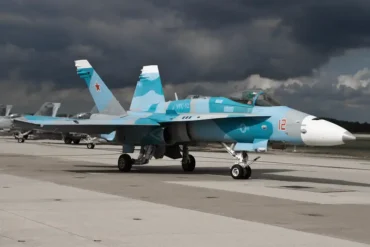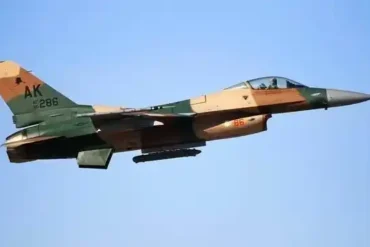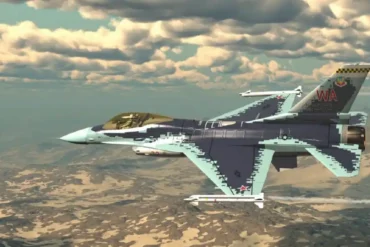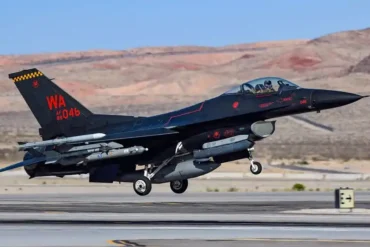
The F-16 Fighting Falcon has long been recognized as one of the most versatile multirole fighter aircraft. However, its role as an Aggressor Aircraft is gaining increasing significance in modern air combat training. The Top Aces’ F-16 Advanced Aggressor Fighter (AAF) program represents the pinnacle of this application, transforming the legacy fighter into a highly capable adversary platform.
Technological Upgrades: Simulating Fifth-Generation Threats
The F-16 AAF incorporates extensive modifications to emulate the capabilities of advanced fifth-generation aircraft, such as the Chengdu J-20 and Sukhoi Su-57. These enhancements include advanced sensor suites, electronic warfare capabilities, and high-fidelity battlefield simulation features.
Infrared Search and Track (IRST) System
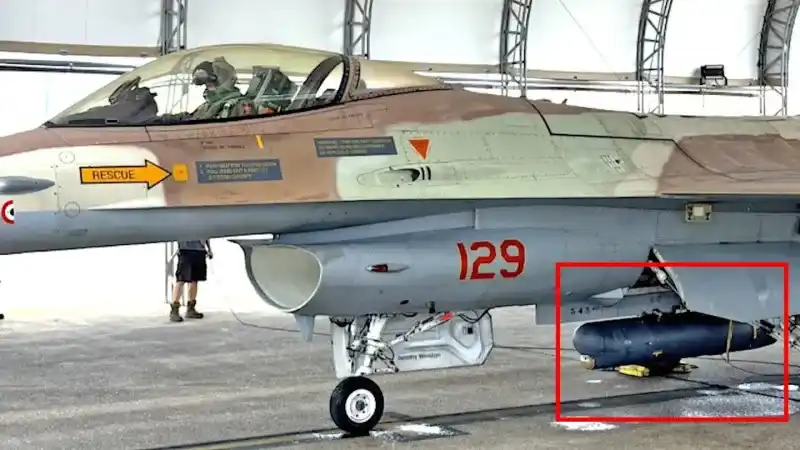
A major enhancement in the Top Aces’ F-16 AAF is the integration of the Leonardo SkyWard long-wave IRST sensor. This system provides passive infrared detection, allowing the aircraft to identify enemy targets based on their heat emissions rather than radar signals. Since stealth aircraft are designed to evade radar detection, IRST technology plays a crucial role in countering such threats.
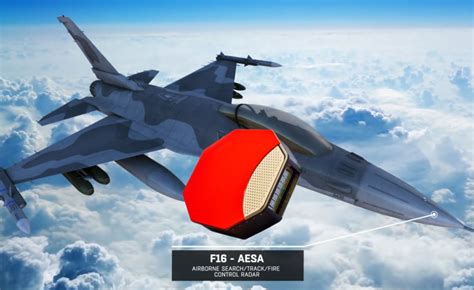
Active Electronically Scanned Array (AESA) Radar
The F-16 AAF is equipped with the Northrop Grumman APG-83 SABR AESA radar, extending its detection range to 370 kilometers. This radar, combined with IRST, provides sensor fusion, creating a detailed and highly accurate situational awareness picture. It effectively simulates the battlefield perception capabilities of fifth-generation fighters, making training exercises far more realistic.
Open Architecture Pod System (OpenPod)
The OpenPod system enhances the F-16 AAF’s modularity, allowing for rapid integration of various electronic warfare systems, jamming pods, laser countermeasures, and additional sensors. This adaptability ensures that the aircraft can accurately replicate multiple threat profiles, from stealthy adversaries to high-G dogfighters.
Realistic Air Combat Training Capabilities
Electronic Warfare and Tactical Deception
The F-16 AAF is fully integrated with the Link-16 tactical data link, enabling it to connect with real-world combat networks. This connectivity allows it to simulate enemy electronic warfare tactics, coordinated attacks, and complex radar jamming techniques, creating an authentic training environment for modern fighter pilots.
High-G Maneuverability and Stealth Simulation
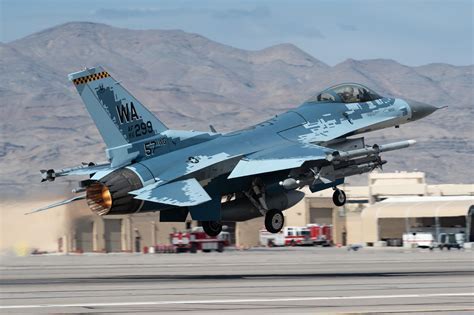
One of the key reasons the F-16 is chosen as an Aggressor Aircraft is its exceptional maneuverability. With a 9G capability, fly-by-wire control system, and relaxed static stability design, the aircraft can accurately replicate the aggressive flight profiles of advanced enemy aircraft.
Furthermore, its IRST-based targeting system allows it to train pilots on how to detect and counter stealth aircraft tactics, replicating close-range engagements where radar is ineffective.
Adaptability Across Combat Scenarios
The F-16 AAF can execute a variety of combat training missions, including:
- Beyond-Visual-Range (BVR) Intercepts: Simulating long-range missile engagements against stealth aircraft.
- Close-Range Dogfighting: Utilizing high-G turns and aggressive maneuvering techniques.
- Suppression of Enemy Air Defenses (SEAD): Simulating anti-air defense missions using electronic warfare countermeasures.
This multi-role aggressor capability enables a comprehensive training experience, covering both traditional fourth-generation threats and emerging fifth-generation tactics.
Operational Deployment and Real-World Applications
Top Aces’ Private F-16 Fleet
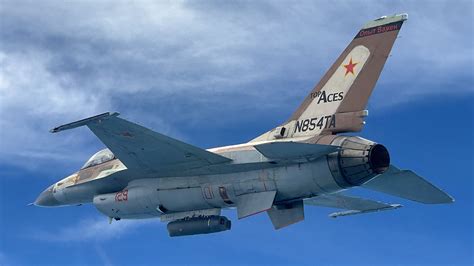
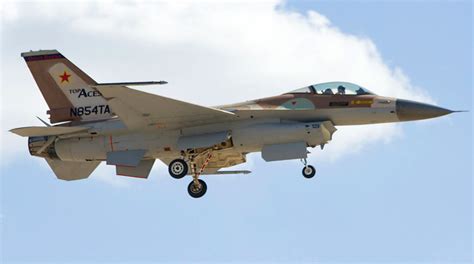
Top Aces is currently the only private company in the world operating a fleet of F-16s for adversary air training. Their fleet consists of nearly 30 ex-Israeli Air Force F-16A/B models, serving military clients in the United States, Canada, and other allied nations.
Critical Role in Stealth Fighter Training
The F-16 AAF provides a cost-effective alternative to deploying actual fifth-generation aircraft for training purposes. By utilizing IRST and AESA sensor fusion, it forces trainees to operate in a sensor-degraded environment, preparing them for real-world encounters with enemy stealth fighters. This fills a critical training gap, ensuring that modern air forces are well-prepared for future conflicts.
Why the F-16 is the Ideal Aggressor Platform
Cost-Effective Solution
Purchasing and maintaining second-hand F-16s is significantly more affordable than acquiring modern stealth aircraft. The estimated procurement cost of an upgraded F-16 AAF is approximately $70 million per unit, a fraction of the cost of fifth-generation fighters like the F-35.
Superior Maneuverability
With an instantaneous turn rate of 25.5 degrees per second and a low wing loading design, the F-16 can effectively mimic high-maneuverability threats. These attributes make it ideal for simulating adversary tactics in both BVR and close-range dogfight scenarios.
Upgradeable Design
The modular nature of the F-16 allows for continuous upgrades, such as:
- Drag-reducing conformal fuel tanks
- Advanced electronic countermeasures (ECM)
- Towed decoys for missile evasion
Modern variants, such as the F-16 Block 70/72, already incorporate many of these enhancements, ensuring the platform remains relevant for future adversary air training programs.
Conclusion
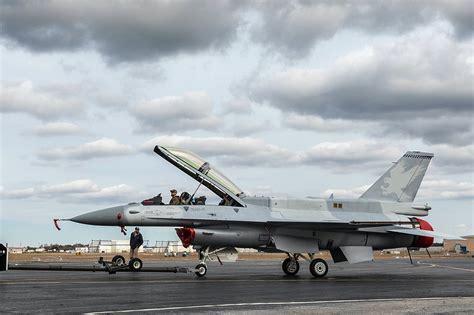
The F-16 Advanced Aggressor Fighter (AAF) is an invaluable asset in modern air combat training. Through the integration of advanced sensor fusion, high-G maneuverability, and modular electronic warfare capabilities, it provides a cost-effective and highly realistic training experience for next-generation fighter pilots. Top Aces’ privatized fleet further enhances its accessibility, ensuring that allied air forces remain combat-ready against emerging threats. As aerial warfare continues to evolve, the F-16’s role as an adversary aircraft will remain essential for years to come.
FAQ
1. Why is the F-16 used as an Aggressor Aircraft?
The F-16’s exceptional maneuverability, affordability, and upgrade potential make it an ideal platform for simulating enemy fighter tactics. Its ability to integrate advanced sensors and electronic warfare systems further enhances its adversary training capabilities.
2. How does the F-16 AAF simulate stealth aircraft threats?
By utilizing passive IRST tracking and AESA radar, the F-16 AAF can replicate the sensor fusion capabilities of stealth fighters. This forces pilots to train in a radar-denied environment, improving their ability to detect and counter stealth threats.
3. Who operates the F-16 as an Aggressor Fighter?
The Top Aces company currently operates the only private fleet of F-16 Aggressor Aircraft, providing adversary training services to the U.S. Air Force, Canadian Air Force, and other allied nations.