The F-35 Lightning II is a revolutionary multirole stealth fighter designed to perform a wide array of missions, from air superiority to close air support. In the U.S. Air Force, the F-35 is now playing an increasingly critical role in advanced training programs, particularly in the aggressor role. The F-35 Aggressor Program, which was significantly expanded with the reactivation of the 65th Aggressor Squadron in 2022, represents a key strategic shift in how the U.S. military prepares for future conflicts involving adversaries with similar or advanced stealth capabilities.
Reactivation of the 65th Aggressor Squadron
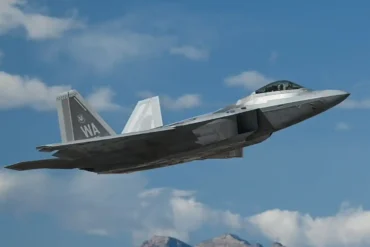
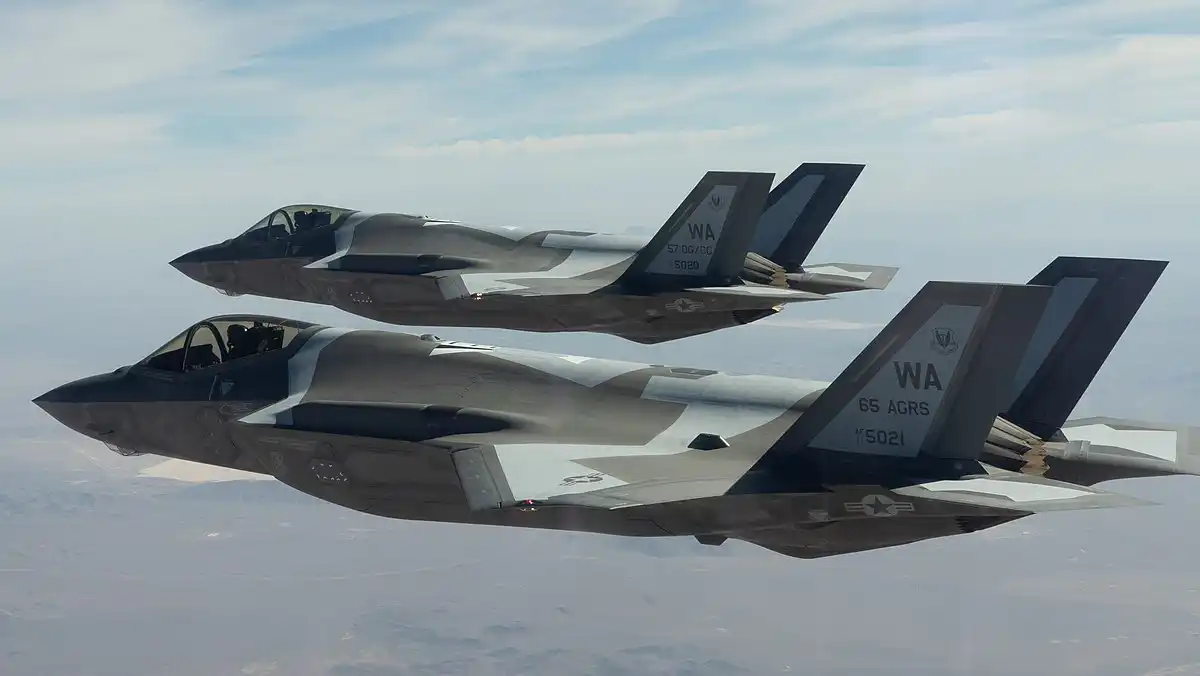
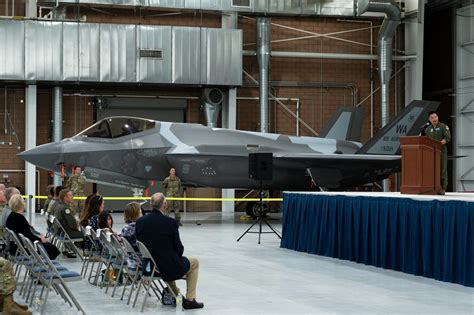
On June 9, 2022, the U.S. Air Force reactivated the 65th Aggressor Squadron at Nellis Air Force Base in Nevada. This squadron has a primary mission: to replicate and simulate fifth-generation air adversaries using the F-35A Lightning II. The purpose of this squadron is to train U.S. pilots and allied forces against highly capable, stealthy threats that mirror potential adversary aircraft. As modern combat increasingly involves encounters with adversaries using stealth technology, training against these threats has become a critical aspect of military readiness.
The reactivation of this squadron marks a significant step in enhancing combat training for U.S. Air Force pilots. It serves as a realistic adversary simulation, which is essential for pilots to hone their skills against the latest threats. This new focus on stealth fighter simulation ensures that the U.S. military is ready to counter the evolving air combat environment.
The F-35 in the Aggressor Role
The F-35 Lightning II is a cutting-edge, fifth-generation stealth fighter designed to perform a variety of roles, including air superiority, close air support, and reconnaissance. As an aggressor aircraft, the F-35 is used to simulate low-observable threats that are characteristic of adversary nations like China and Russia, who are developing next-generation stealth fighters.
One of the key objectives of the F-35 Aggressor Program is to provide U.S. pilots with training against aircraft that are not only capable of evading radar detection but also feature advanced weapons systems and tactics. In particular, the F-35 replicates potential adversaries such as the Chinese J-20 fighter, a highly advanced stealth aircraft that poses a significant threat to current air combat strategies.
The role of the F-35 as an aggressor involves mimicking the capabilities of adversary aircraft, including advanced stealth features, long-range radar, and highly maneuverable airframes. These features make the F-35 an ideal tool for simulation-based training, offering realistic exercises that challenge pilots to adapt to highly advanced threats.
Aggressor Paint Schemes: Enhancing Realism in Training
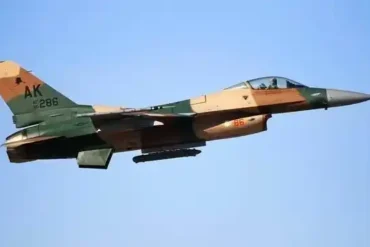
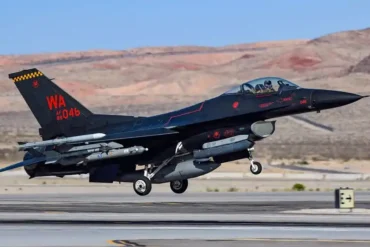
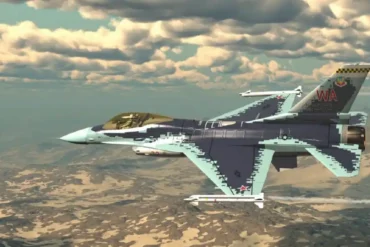
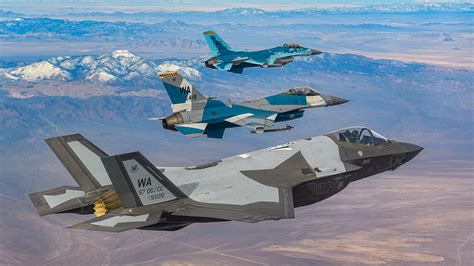
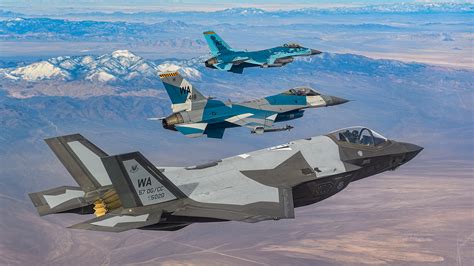
To further enhance the realism of the training exercises, the F-35 aircraft assigned to the 65th Aggressor Squadron are outfitted with custom paint schemes. These paint schemes are designed to simulate the appearance of adversary aircraft, with some F-35s even mimicking the Chinese J-20 fighter’s distinctive visual characteristics.
The customized paint schemes are a crucial aspect of the aggressor program, as they help create a visual environment that mirrors real-world combat situations. This visual realism allows pilots to immerse themselves fully in the training, ensuring that their responses are instinctive and effective. Additionally, the paint schemes provide a visual reference that makes it easier to identify and simulate the capabilities of a potential adversary.
By creating more realistic adversary representations, the F-35 Aggressor Program ensures that pilots can prepare for the types of aerial engagements that could be encountered in future conflicts. These paint schemes, in combination with the F-35’s advanced capabilities, make the 65th Aggressor Squadron a vital component of modern U.S. Air Force training.
Training Exercises and Simulations
The F-35 Aggressor Program plays a vital role in large-scale training exercises like Red Flag-Nellis and U.S. Air Force Weapons School missions. These exercises are conducted to simulate high-intensity, real-world combat scenarios, where U.S. pilots must face off against complex and ever-evolving threats. During these missions, the F-35 aggressors engage in simulated combat with U.S. and allied fighter aircraft, allowing pilots to refine their skills in air-to-air and air-to-ground combat.
Participating in joint exercises, such as those with the U.S. Navy or allied air forces, the F-35 aggressor squadron provides highly realistic training environments. The aggressor aircraft simulate advanced enemy tactics, including stealth maneuvers, electronic warfare, and coordinated strikes. This challenging environment ensures that U.S. pilots are prepared for any potential combat situation.
Red Flag-Nellis, one of the largest and most complex exercises in the U.S. Air Force, provides a particularly valuable opportunity for pilots to engage in realistic combat scenarios against simulated adversary threats. The F-35’s role in this exercise highlights the critical importance of training against fifth-generation stealth fighters.
Historical Context of the U.S. Air Force Aggressor Program
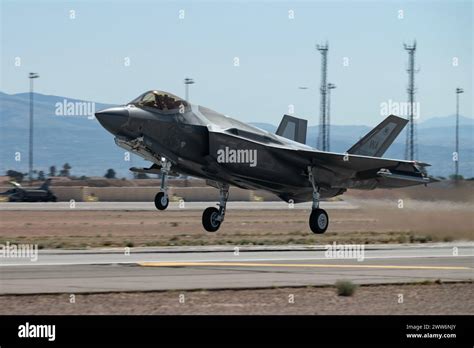
The U.S. Air Force Aggressor Program was established in the 1970s to provide pilots with an opportunity to train against highly capable, advanced adversary tactics. Over the years, the program has evolved as new threats have emerged, leading to the integration of different aircraft to replicate these advanced capabilities.
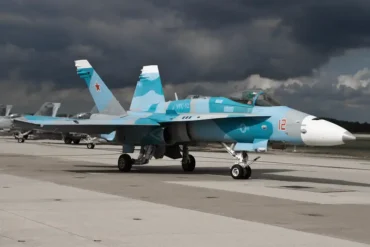
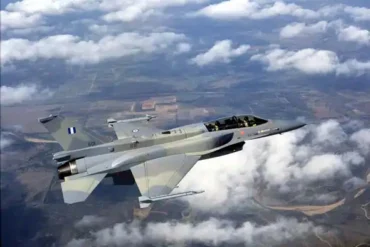
Before the F-35, the U.S. Air Force used other aircraft, such as the F-5E Tiger II and F-15/F-16 variants, in the aggressor role. These aircraft were selected for their ability to simulate a wide range of adversary tactics, but they lacked the advanced stealth and capabilities of modern fifth-generation fighters. As the threat landscape changed, it became clear that new approaches to training were necessary, which led to the decision to integrate the F-35 into the aggressor program.
The F-35 provides a unique capability by replicating the next-generation threats being developed by adversaries. Its stealth and advanced technologies allow it to replicate adversary tactics, such as evading radar detection and launching highly accurate strikes at long ranges. This makes the F-35 an invaluable tool in modern combat readiness training.
The Evolution of Training: From F-5s to F-35s
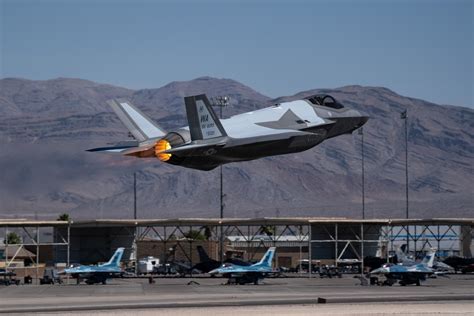
The transition from the F-5 and F-15/F-16 fighters to the F-35 in the aggressor role marks a significant shift in how the U.S. Air Force prepares its pilots. In previous decades, the focus of the aggressor program was primarily on simulating threats from non-stealthy aircraft. However, as the technological landscape evolved, the need for more realistic training against advanced, stealthy adversaries became critical.
The F-35’s inclusion into the aggressor role has revolutionized the program by providing a realistic, high-fidelity representation of fifth-generation threats. The F-35 not only mimics the physical characteristics of advanced enemy aircraft but also replicates their tactics and technologies, including sensor fusion, advanced weapons systems, and electronic warfare capabilities.
This evolution reflects the growing importance of stealth and advanced tactics in modern air combat, and the F-35 is at the forefront of this transformation.
Conclusion: Preparing for the Future of Air Combat
The F-35 Aggressor Program represents a major milestone in the evolution of military training, particularly in the context of preparing for future air combat. By simulating advanced fifth-generation threats, the 65th Aggressor Squadron plays a crucial role in ensuring that U.S. and allied pilots are prepared for the challenges posed by stealthy, high-tech adversaries.
The F-35’s integration into the aggressor role is a forward-looking strategy that recognizes the importance of evolving training methodologies to keep pace with technological advancements in military aviation. This program not only enhances combat readiness but also ensures that U.S. forces are well-equipped to face the challenges of modern warfare.
FAQ
What is the purpose of the F-35 Aggressor Program?
The F-35 Aggressor Program is designed to provide realistic combat training for U.S. and allied pilots by simulating advanced fifth-generation stealth aircraft. It prepares pilots for air combat scenarios involving highly capable adversaries.
Why was the 65th Aggressor Squadron reactivated?
The reactivation of the 65th Aggressor Squadron in 2022 was part of the U.S. Air Force’s strategy to enhance training realism by using the F-35 to simulate advanced stealth threats, such as the Chinese J-20.
What role does the F-35 play in aggressor training?
The F-35 is used to simulate low-observable threats from adversary nations, replicating their advanced stealth capabilities, radar systems, and weapons. This allows pilots to train against realistic, next-generation threats.