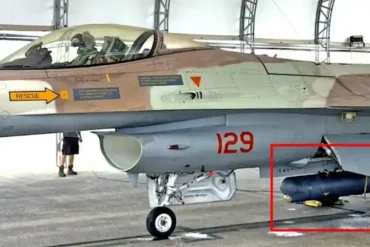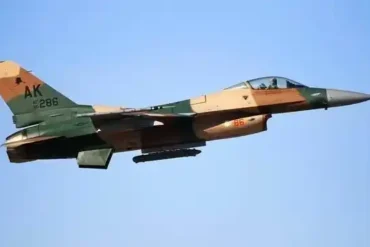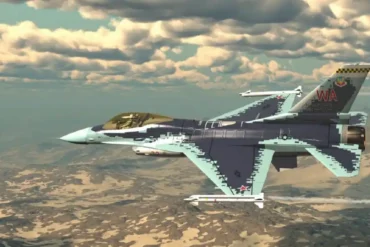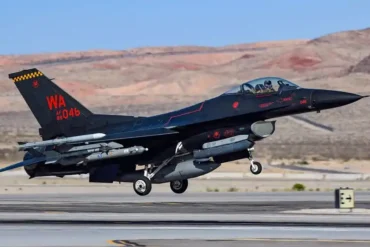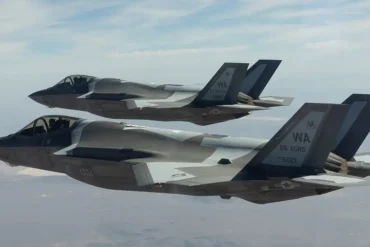
The F/A-18 Hornet series, serving as a premier carrier-based fighter for the United States Navy, plays a critical role in Aggressor training—an essential component of modern aerial combat preparation. Its superior maneuverability, avionics advancements, and multirole adaptability make it an ideal platform for simulating enemy tactics, enhancing the combat readiness of U.S. and allied forces. By replicating the performance, weapons, and electronic warfare tactics of adversarial aircraft, the F/A-18 Aggressor ensures pilots receive the most realistic training possible.
Tactical Adaptability of the F/A-18 Aggressor
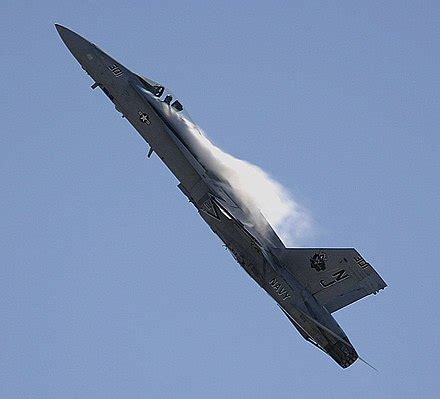
The F/A-18’s leading-edge extensions (LEX) allow for high-angle-of-attack maneuvering, reaching up to 45 degrees, a critical feature when mimicking Russian Su-27 and MiG-29 series aircraft. This high-agility performance enables it to simulate enemy dogfighting techniques effectively, providing trainees with exposure to real-world aerial combat scenarios.
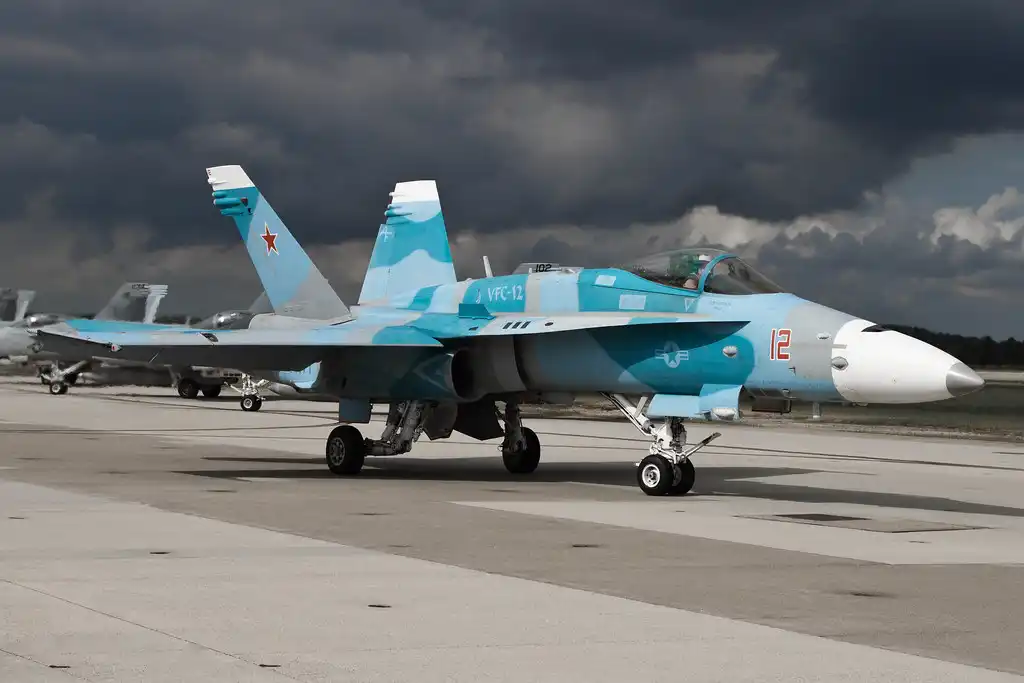
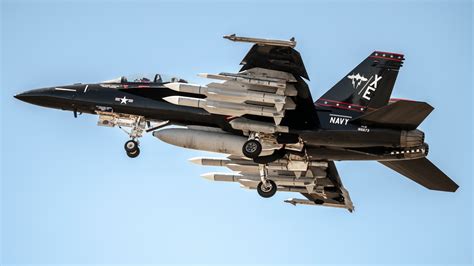
Additionally, its twin-engine design enhances flight safety and operational reliability, particularly for carrier-based operations. In Aggressor squadrons such as VFC-12, the F/A-18E/F Super Hornet is deployed to replicate enemy close-range air combat and beyond-visual-range (BVR) engagements, offering unparalleled realism in opposition force (OPFOR) exercises.
Advanced Avionics and Training Capabilities
Equipped with the AN/APG-79 Active Electronically Scanned Array (AESA) radar, the F/A-18 Aggressor can emulate enemy radar signatures and electronic warfare threats. This radar system enables the aircraft to replicate hostile tracking and jamming tactics, giving trainees critical experience in countering sophisticated threats.
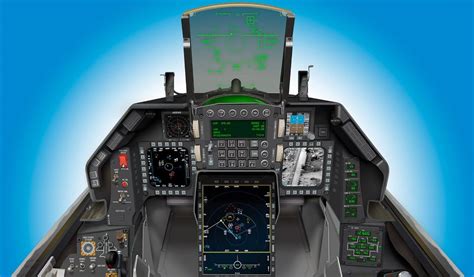
The Block III upgrades introduce Distributed Targeting Systems (DTS) and enhanced Tactical Data Link (TDL) capabilities, allowing the F/A-18 to interact with E-2D Advanced Hawkeye, F-35 Lightning II, and other networked platforms. These advancements create multi-layered combat scenarios, preparing pilots for integrated enemy strategies and cooperative electronic warfare challenges.
Weapons and Electronic Warfare Training Flexibility
With 11 hardpoints, the F/A-18 Aggressor is capable of carrying training-configured air-to-air missiles, such as AIM-9X Sidewinder simulation rounds, and electronic warfare pods. The ALQ-214 Integrated Defensive Electronic Countermeasures (IDECM) suite is particularly valuable for simulating adversary jamming techniques.
Furthermore, its modular weapons system allows pilots to train against both traditional and hybrid threats, such as electronic jamming coupled with kinetic attack simulations. These elements are crucial for preparing forces to counter modern near-peer adversaries.
Operational Readiness and Maintenance Efficiency
The F/A-18’s modular maintenance design enhances its operational availability, a critical factor in high-frequency training environments. With 53% of its maintenance access panels featuring quick-release mechanisms, servicing is streamlined, ensuring high sortie rates. Reports indicate that F/A-18 Aggressors achieve up to 4.4 daily sorties per aircraft, significantly outperforming legacy aircraft like the F-14 Tomcat.
Such reliability is essential for intensive training exercises, including Red Flag and Top Gun adversary programs, where rapid turnaround times enable pilots to face repeated combat simulations in a single training cycle.
Future Upgrades and Expanded Electronic Warfare Capabilities
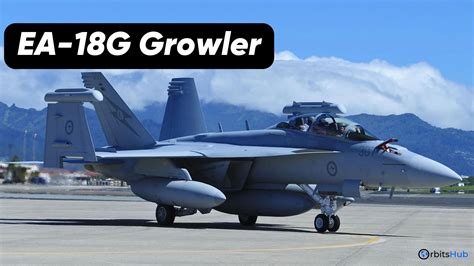
The EA-18G Growler, an electronic warfare variant derived from the F/A-18, has been partially integrated into Aggressor training. The ALQ-99 jamming system and AN/ALQ-218 tactical receivers onboard the Growler provide unparalleled electronic attack simulation, mimicking Integrated Air Defense Systems (IADS).
Future enhancements in the F/A-18 Block III may incorporate AI-driven threat modeling and open-architecture mission systems, further refining its role as an advanced threat emulation platform. These upgrades will help the U.S. Navy and allied forces stay ahead in the evolving landscape of electronic warfare and contested airspace operations.
Conclusion
The F/A-18 Aggressor plays a pivotal role in modern aerial combat training, combining high maneuverability, advanced avionics, and multi-mission adaptability to replicate enemy air and electronic warfare tactics. As military aviation evolves, continuous upgrades to the F/A-18 platform ensure that U.S. and allied pilots receive the most realistic and challenging adversary training possible. Its ability to simulate peer and near-peer threats makes it an indispensable asset in combat readiness programs.
FAQ
Why is the F/A-18 used as an Aggressor aircraft?
The F/A-18 Aggressor is selected due to its high maneuverability, avionics flexibility, and ability to replicate enemy aircraft performance. Its advanced radar systems and electronic warfare capabilities allow it to simulate modern air combat threats, making it an ideal training adversary.
What squadrons operate the F/A-18 in an Aggressor role?
The U.S. Navy’s VFC-12 squadron and other adversary units employ F/A-18E/F Super Hornets in their Aggressor training programs. These squadrons participate in exercises such as Red Flag, Top Gun, and Fleet Replacement Training.
What are the key advantages of the F/A-18 Block III upgrade for Aggressor training?
The Block III upgrade enhances the F/A-18’s capabilities with improved AESA radar, extended-range fuel tanks, advanced cockpit displays, and AI-driven threat analysis. These features make it even more effective in simulating high-end enemy threats for next-generation combat training.