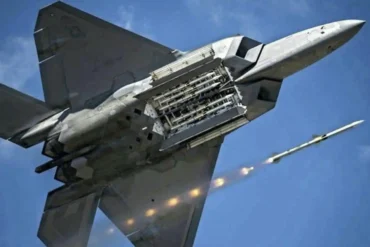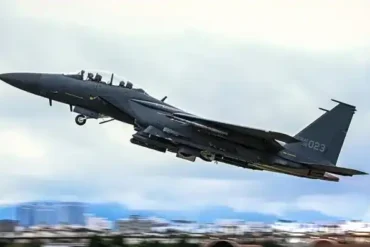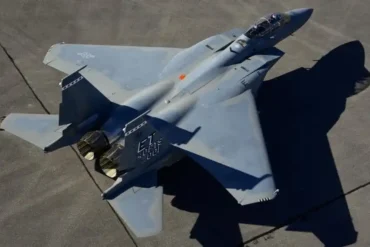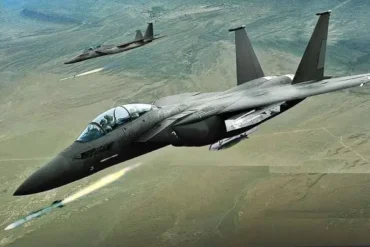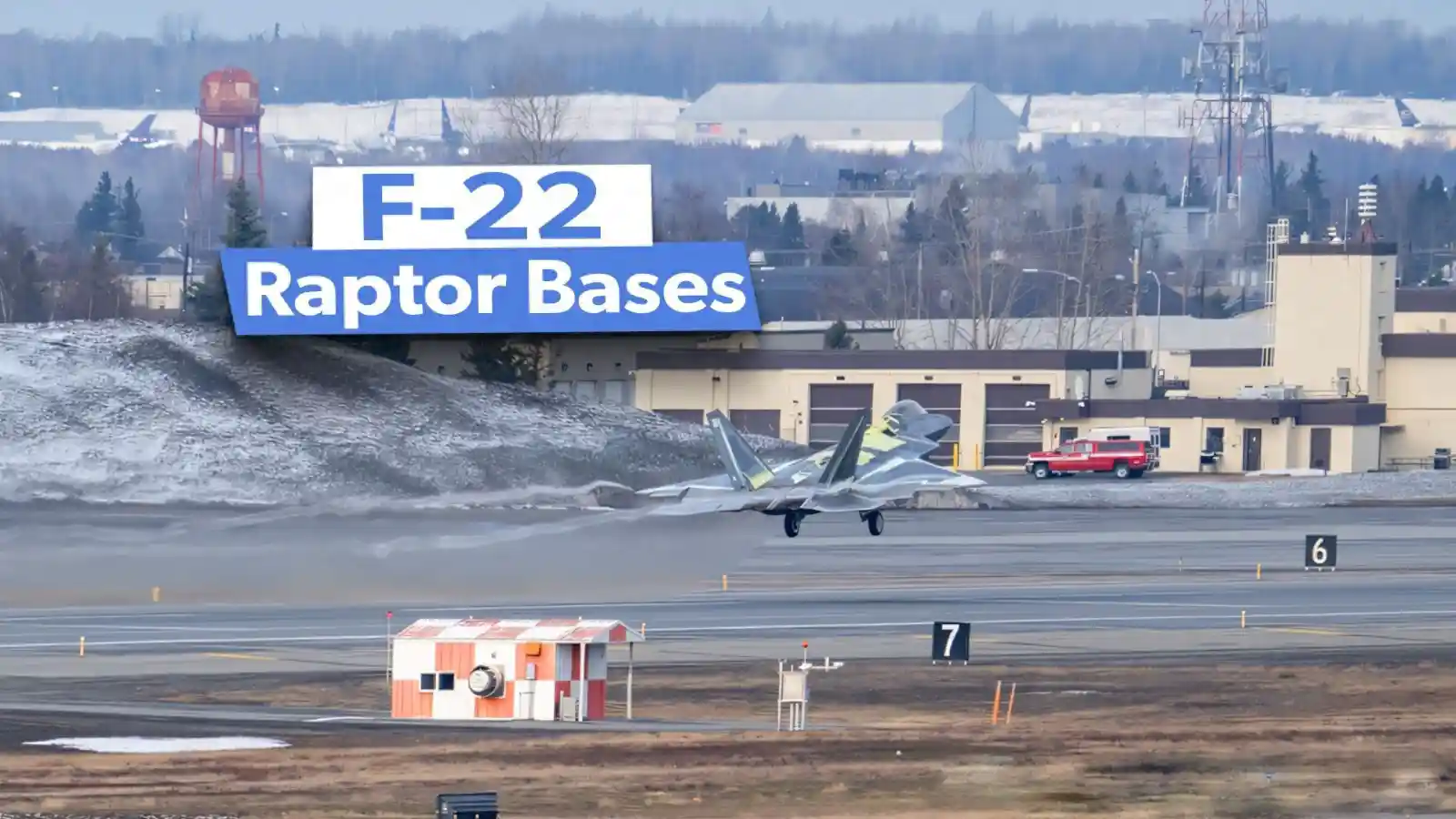
The F-22 Raptor is one of the most advanced fifth-generation fighter jets in the world, designed for air superiority, stealth, and rapid response capabilities. The aircraft is strategically stationed at key bases across the United States, ensuring its operational effectiveness for both domestic defense and global deployments. This article provides an in-depth analysis of the primary bases, operational squadrons, and temporary deployments of the F-22 Raptor.
Primary F-22 Raptor Bases
1. Joint Base Langley-Eustis, Virginia
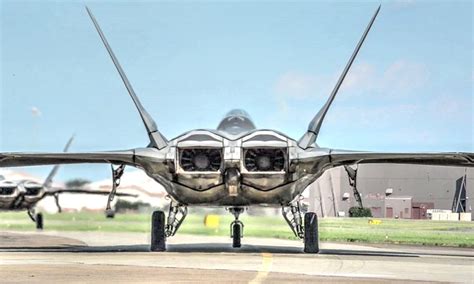
Located on the East Coast, Joint Base Langley-Eustis (JBLE) serves as one of the most significant hubs for F-22 operations. It is home to the 1st Fighter Wing, which includes:
- 27th Fighter Squadron (Fighting Eagles) – Identified by the tail code FF, responsible for air dominance missions.
- 94th Fighter Squadron (Hat in the Ring) – Another crucial squadron operating the F-22A Raptor, also with tail code FF.
This base plays a critical role in air combat training, supporting the U.S. Air Force’s (USAF) rapid deployment strategies.
2. Joint Base Elmendorf-Richardson, Alaska
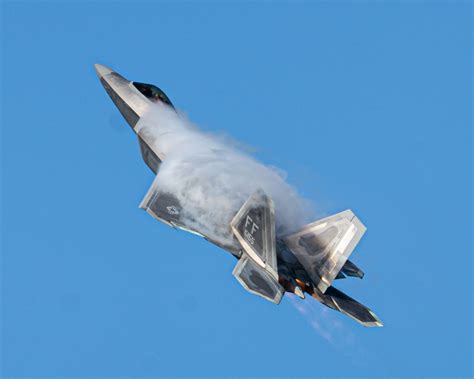
Situated in Alaska, Joint Base Elmendorf-Richardson (JBER) is a vital hub for Pacific and Arctic defense. The base hosts the 3rd Wing, which includes:
- 90th Fighter Squadron (Dicemen) – Operating F-22 Raptors with the tail code AK, tasked with air superiority missions.
- 525th Fighter Squadron – Another Raptor unit, reinforcing strategic deterrence in the Pacific theater.
This base’s location enables quick responses to threats in the Asia-Pacific region, reinforcing the U.S. military’s presence in the Indo-Pacific.
3. Joint Base Pearl Harbor-Hickam, Hawaii
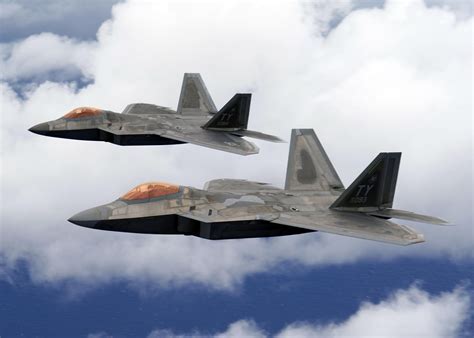
Located in Hawaii, this base supports Pacific Air Forces (PACAF) and is home to the 15th Wing:
- 19th Fighter Squadron (Gamecocks) – Operating the F-22A Raptor, designated with tail code HH.
This base plays a key role in securing U.S. interests in the Pacific, particularly in deterring potential threats from China and North Korea.
4. Joint Base Andrews, Maryland
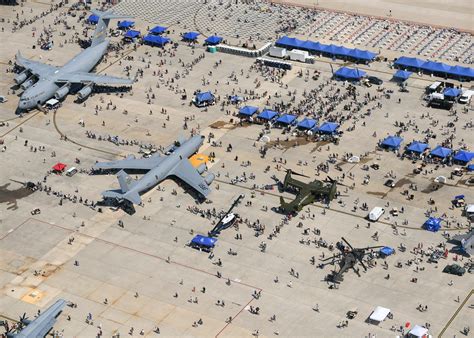
Unlike the previous bases, Joint Base Andrews is primarily known for hosting VIP and presidential airlift missions. However, it also supports F-22 operations through the 192nd Fighter Wing (Virginia Air National Guard):
- 149th Fighter Squadron – A unit dedicated to maintaining combat readiness with F-22 Raptors.
This base’s strategic location near Washington, D.C., highlights the Air National Guard’s role in supplementing the USAF’s air superiority capabilities.
Former and Temporary F-22 Bases
1. Tyndall Air Force Base, Florida (Former Base)
Historically, Tyndall AFB housed the 325th Fighter Wing, which included:
- 43rd Fighter Squadron
- 95th Fighter Squadron
However, after Hurricane Michael (2018) caused severe damage, the F-22 operations were relocated to Eglin AFB. By 2023, Tyndall transitioned to an F-35A Lightning II base.
2. Edwards Air Force Base, California (Testing Facility)
While not a primary operational base, Edwards AFB houses the 412th Test Wing, which operates a limited number of F-22s for testing and evaluation purposes.
3. Nellis Air Force Base, Nevada (Tactical Training)
At Nellis AFB, the 53rd Wing occasionally utilizes F-22s for Red Flag exercises, but it does not serve as a permanent operational base.
4. Overseas Temporary Deployments
The F-22 Raptor has been deployed temporarily to overseas locations for combat readiness exercises and deterrence missions:
- Andersen Air Force Base, Guam – Strategic deployments to counter threats in the Pacific.
- Osan Air Base, South Korea – Demonstrations of U.S. air power against North Korean provocations.
- Al Dhafra Air Base, UAE – Operations supporting U.S. interests in the Middle East.
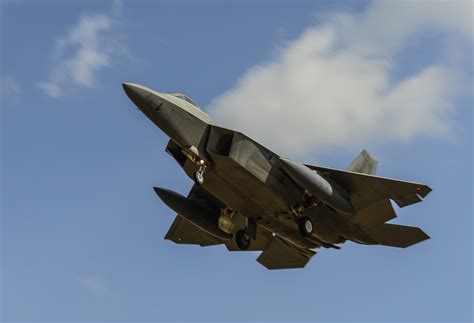
Current F-22 Fleet Status and Distribution
As of 2025, the USAF maintains approximately 183 F-22 Raptors, but only about 150 are fully mission-capable at any given time due to maintenance and upgrades. Here’s the distribution:
| Base | Wing | F-22 Squadrons | Role |
|---|---|---|---|
| Joint Base Langley-Eustis, VA | 1st Fighter Wing | 27th FS, 94th FS | East Coast air dominance |
| Joint Base Elmendorf-Richardson, AK | 3rd Wing | 90th FS, 525th FS | Pacific & Arctic defense |
| Joint Base Pearl Harbor-Hickam, HI | 15th Wing | 19th FS | Pacific air operations |
| Joint Base Andrews, MD | 192nd Fighter Wing (ANG) | 149th FS | National defense |
Conclusion
The F-22 Raptor is strategically stationed across four primary bases in the United States, with additional roles at testing facilities and temporary deployment sites. While Langley-Eustis, Elmendorf-Richardson, Pearl Harbor-Hickam, and Andrews serve as permanent bases, the aircraft’s flexibility allows for global operations, ensuring U.S. air superiority.
FAQ
1. Why are F-22 Raptors primarily based in the United States?
The F-22 Raptor is a highly sensitive aircraft with advanced stealth technology, making it unsuitable for permanent overseas basing due to security concerns and logistical challenges.
2. Which base has the most F-22s?
Historically, Joint Base Langley-Eustis and Joint Base Elmendorf-Richardson have the highest concentration of F-22 squadrons, each hosting two operational squadrons.
3. Are there any plans to replace the F-22 Raptor?
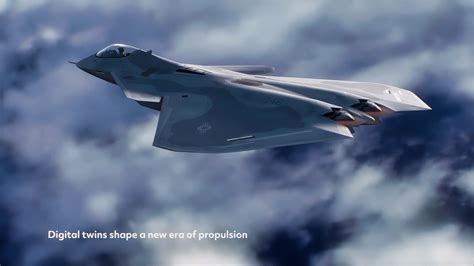
Yes, the USAF is developing the Next Generation Air Dominance (NGAD) program, which aims to introduce a sixth-generation fighter to gradually replace the F-22 by the 2030s.
This comprehensive breakdown ensures that the F-22’s basing strategy aligns with national defense priorities, reinforcing U.S. air superiority well into the future.