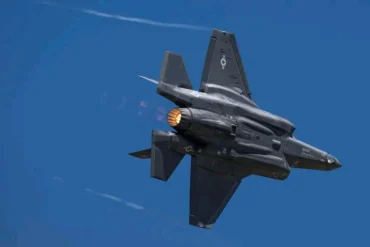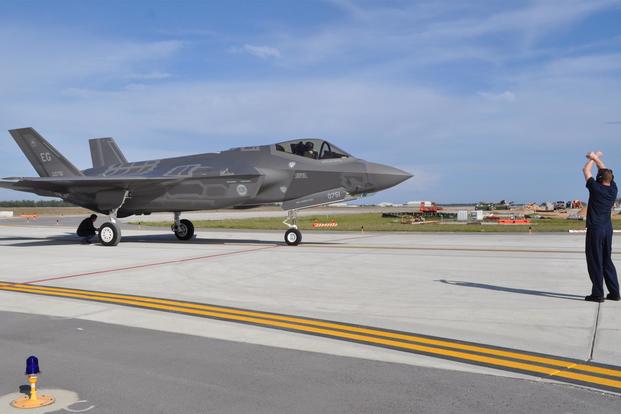
The F-35 Lightning II is one of the most advanced and versatile stealth multirole fighter jets in the world. Developed by Lockheed Martin in collaboration with international partners, the F-35 has become a cornerstone of modern air forces worldwide. It combines cutting-edge technology, stealth capabilities, and multirole versatility, making it the preferred choice for numerous nations looking to modernize their military forces. As of April 2025, the distribution of F-35 orders across various countries reveals critical insights into the global defense landscape and procurement strategies. This article provides an in-depth analysis of the F-35 orders by country, highlighting key players and providing a detailed breakdown of each nation’s commitment.
Overview of F-35 Orders
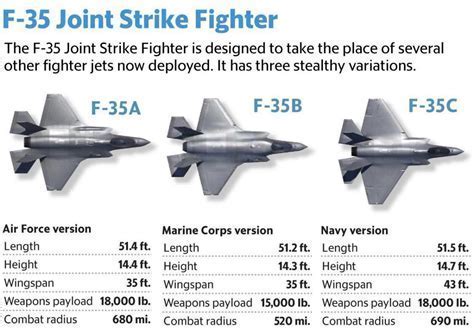
The F-35 program, which includes variants like the F-35A, F-35B, and F-35C, has seen varying levels of participation depending on a country’s defense needs, budget, and strategic goals. While the United States remains the largest and most influential buyer, several European, Asian-Pacific, and Middle Eastern nations have also made significant commitments. Procurement strategies are shaped not only by defense needs but also by geopolitical considerations, which sometimes introduce uncertainty into exact order figures.
| Country | Estimated Orders | Notes |
|---|---|---|
| United States | 1,763+ | Likely higher, includes deliveries by 2024 |
| United Kingdom | 138 | For RAF and RN, first 48 by end 2025 |
| Denmark | 27 | First in-country 2023 |
| Italy | 90 | 60 A, 30 B, through 2030 |
| Netherlands | 52 | IOC 2021, additional order in 2022 |
| Norway | 52 | Fully operational by 2025 |
| Belgium | 34 | Completed by 2030, replaces F-16 |
| Czech Republic | 24 | First deliveries 2031, likely by 2037 |
| Finland | 64 | 2025-2030, replaces F/A-18 |
| Germany | 35 | First 2026, nuclear role by 2030 |
| Poland | 32 | Training at Luke AFB 2024, last by 2030 |
| Switzerland | 36 | First deliveries 2027, replaces F/A-18, F-5 |
| Canada | 88 | First aircraft 2026, full fleet by 2034 |
| Japan | 27 | Out of 42 planned, deploying to Nyutabaru |
| South Korea | 40 | Estimated, operates F-35A |
| Australia | 40 | Estimated, non-NATO operator |
| Israel | 40 | Estimated, non-NATO operator |
Key Countries and Their F-35 Orders
United States: The Leading Nation in F-35 Procurement
The United States is by far the largest customer of the F-35, with orders expected to surpass 1,763 aircraft. The U.S. military uses all variants of the F-35—A (conventional takeoff and landing), B (short takeoff and vertical landing), and C (carrier-based)—as part of its ongoing defense modernization program. The F-35 is poised to replace older aircraft, including the F-16 Fighting Falcon and F/A-18 Hornet, which are critical components of U.S. air superiority. The vast number of aircraft ordered reflects the significant role the F-35 will play in future U.S. military operations. With ongoing delivery schedules and production backlogs, the total number of F-35s in U.S. service is expected to grow even higher in the coming years.
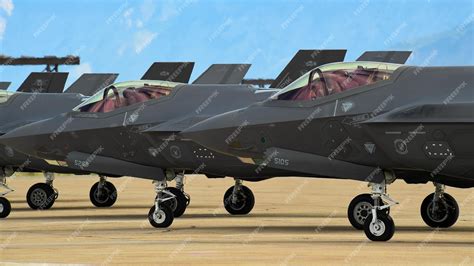
United Kingdom: A Leading European Customer
The United Kingdom has ordered approximately 138 F-35 aircraft as of 2025. These orders are primarily for the Royal Air Force (RAF) and the Royal Navy (RN), with the first batch of 48 jets expected by the end of 2025. The F-35 is integral to the UK’s defense strategy, particularly in enhancing the capabilities of its aircraft carriers and bolstering its overall air superiority. The UK’s commitment includes both the F-35B variant for its carrier operations and the F-35A variant for air force use. The first operational deployment of the F-35B on the HMS Queen Elizabeth carrier was in 2021, underscoring the UK’s deep investment in the program.
Denmark: Modernizing with F-35A
Denmark has committed to purchasing 27 F-35A aircraft, with the first delivery arriving in 2023. This order is part of Denmark’s broader defense modernization efforts and reflects the country’s desire to replace its aging fleet of F-16 Fighting Falcons. As a Tier 3 partner in the F-35 program, Denmark is also involved in the production and development phases, contributing to the global supply chain for the aircraft. With an operational timeline extending to 2025, Denmark is expected to fully integrate the F-35A into its air force by that time.
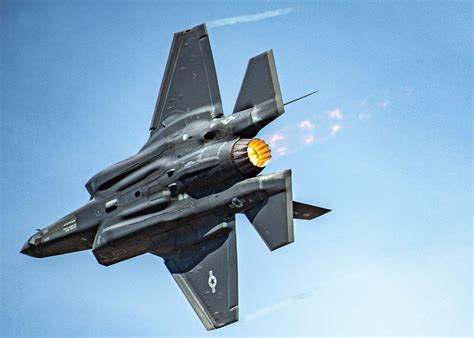
Italy: A Key European Contributor
Italy has placed an order for 90 F-35 aircraft, consisting of 60 F-35A and 30 F-35B variants. Italy’s involvement in the F-35 program is substantial, reflecting its role as a Tier 2 partner in the development of the aircraft. The Italian Air Force has already begun integrating the F-35A into its fleet, with initial operational capability (IOC) for the F-35A achieved in 2018. The country is expected to continue receiving aircraft through 2030 as part of its defense modernization efforts, with a focus on replacing older fighter aircraft, including the Tornado IDS and F-16.
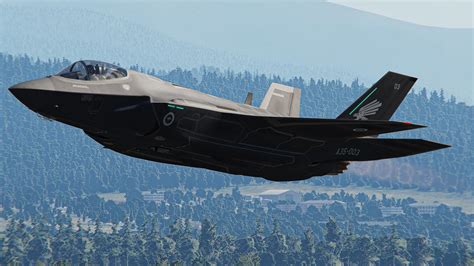
Canada: Facing Strategic Decisions
Canada has ordered 88 F-35 aircraft, with deliveries expected to begin in 2026 and continue through 2034. The F-35 will replace the aging CF-18 Hornet fleet, providing Canada with enhanced stealth and multirole capabilities. The Canadian Air Force is expected to have its first squadron operational by 2029, and the full fleet is anticipated to be in service by the early 2030s. Despite some political pushback and delays in procurement decisions, Canada remains firmly committed to integrating the F-35 into its defense infrastructure.
Other European Orders: A Diverse Landscape
Several other European countries have made significant F-35 commitments, including:
- Norway (52 aircraft, fully operational by 2025),
- Netherlands (52 aircraft, IOC in 2021),
- Belgium (34 aircraft, replacing F-16s),
- Poland (32 aircraft, with training scheduled at Luke Air Force Base in 2024).
These countries’ orders reflect a desire to modernize their air forces while maintaining NATO interoperability. The F-35 is poised to replace older, less capable aircraft, providing these nations with advanced air defense capabilities for decades to come.
Asian-Pacific and Middle Eastern Orders
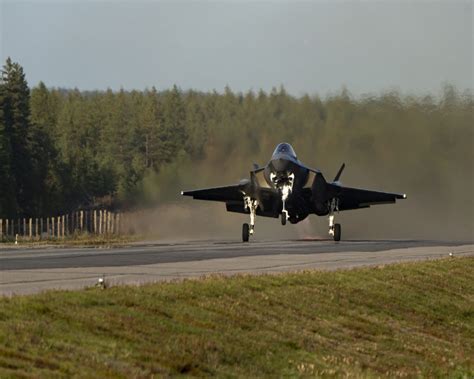
In the Asia-Pacific region, Japan has ordered 27 F-35A aircraft, with plans to expand this to 42 aircraft. Japan’s commitment to the F-35 program is driven by its need for advanced capabilities to counter regional threats, particularly from neighboring China and North Korea.
South Korea and Australia are also significant players in the F-35 program, with both nations having ordered an estimated 40 aircraft each. These countries are non-NATO operators, and their orders reflect the importance of air superiority and regional security in the Asia-Pacific.
In the Middle East, Israel has ordered approximately 40 F-35A/B aircraft, which will significantly enhance its air force’s operational capabilities. As a non-NATO operator, Israel’s involvement underscores the importance of the F-35 in maintaining military superiority in the region.
Detailed Country-by-Country Analysis
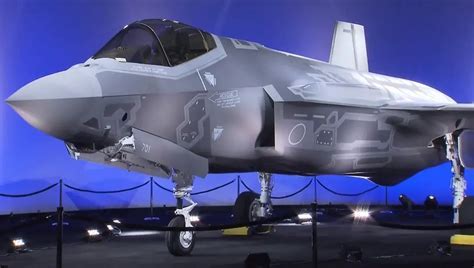
The following table consolidates available data on F-35 orders, including both confirmed figures and estimates where precise numbers are unavailable. The table is organized by region for clarity, starting with the US, followed by Europe, and then other global operators.
| Country | Estimated Orders | Variant | Delivery Timeline | Notes |
|---|---|---|---|---|
| United States | 1,763+ | A, B, C | Ongoing, significant backlog | Primary developer, likely higher orders, 1,763 delivered by 2024 |
| United Kingdom | 138 | B | First 48 by end 2025, 74 by 2033 | RAF and RN, IOC declared 2018 (RAF), 2020 (RN), first carrier deployment 2021 |
| Denmark | 27 | A | First in-country 2023 | Tier 3 partner, 7 sent to Luke AFB for training since 2021 |
| Italy | 90 | A, B | Through 2030 | 60 A, 30 B, Tier 2, IOC for F-35A in 2018, reduced from 131 due to budget |
| Netherlands | 52 | A | First operational 2019, IOC 2021 | Tier 2, additional order in 2022 |
| Norway | 52 | A | Fully operational by 2025 | Tier 3, IOC 2019, assumed QRA in 2022 |
| Belgium | 34 | A | Completed by 2030 | FMS, contract signed 2020, replaces F-16 |
| Czech Republic | 24 | A | First deliveries 2031, likely by 2037 | FMS, signed Jan 2024, replaces JAS 39 Gripen |
| Finland | 64 | A | 2025-2030 | FMS, signed Feb 2022, replaces F/A-18 |
| Germany | 35 | A | First 2026, IOC 2028, nuclear role by 2030 | FMS, announced Mar 2022, replaces Tornado IDS |
| Poland | 32 | A | Training at Luke AFB 2024, last by 2030 | FMS, contract signed Jan 2020 |
| Switzerland | 36 | A | Production begins 2025, first deliveries 2027 | FMS, signed Sep 2022, replaces F/A-18 and F-5, not NATO member |
| Canada | 88 | A | First aircraft 2026, full fleet by 2034 | Ordered Jan 2023, first squadron operational 2029 |
| Japan | 27 | A | Out of 42 planned, deploying to Nyutabaru | 27 on order, planning expansion |
| South Korea | 40 | A | Estimated, operates F-35A | Non-NATO operator, exact figures unclear |
| Australia | 40 | A, B | Estimated, non-NATO operator | Likely around 40, exact numbers not specified |
| Israel | 40 | A, B | Estimated, non-NATO operator | Likely around 40, exact numbers not specified |
Factors Influencing F-35 Orders
Several factors influence F-35 orders by country, including:
- Geopolitical Relations: Countries like Portugal have reconsidered their F-35 orders due to shifting geopolitical dynamics, especially related to US-EU relations. This highlights the intersection of defense procurement with broader diplomatic considerations.
- Defense Modernization: Many countries are seeking to modernize their air forces, replacing outdated aircraft like the F-16 and F/A-18. The F-35 offers a significant upgrade in terms of stealth, multirole capability, and avionics.
- Budget Constraints: Some countries, such as Italy, have had to scale back their orders due to budgetary limitations, reducing their original commitments.
- Operational Needs: Nations with specific defense requirements, such as carrier-based operations or long-range strike capabilities, have opted for specific F-35 variants, such as the F-35B or F-35C.
Challenges and Uncertainties
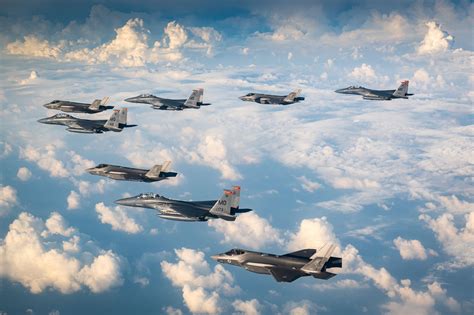
Despite the F-35 program’s success, several challenges remain. Delivery delays, geopolitical shifts, and changing defense priorities mean that some countries are still reconsidering their orders. For instance, Portugal has expressed concerns about the stability of US policies, potentially leading them to seek alternative fighter options. Additionally, Canada’s decision-making process has been delayed due to domestic political factors. These uncertainties highlight the fluid nature of international defense procurement.
Conclusion
The global distribution of F-35 orders reflects the aircraft’s central role in modernizing the air forces of both NATO and non-NATO countries. The United States remains the dominant player, while several European, Asian, and Middle Eastern countries are also making significant investments in the aircraft. As the F-35 continues to be delivered to operators worldwide, its role in shaping global air defense strategies will only grow.
FAQ
1. What is the total number of F-35 orders globally?
As of 2025, the total number of F-35 orders is estimated to exceed 2,000 aircraft, with the United States leading at over 1,763. Other notable orders come from the United Kingdom (138), Italy (90), and Canada (88).
2. Why are some countries reconsidering their F-35 orders?
Countries like Portugal have reconsidered their F-35 orders due to geopolitical tensions, particularly related
to shifting US-EU relations. Other factors include budget constraints and evolving defense priorities.
3. What are the different variants of the F-35?
The F-35 is available in three primary variants: the F-35A (conventional takeoff and landing), the F-35B (short takeoff and vertical landing), and the F-35C (carrier-based). Each variant serves different operational needs, with the F-35A being the most widely ordered.