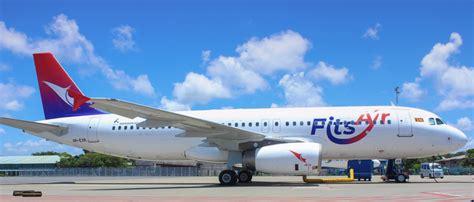
FitsAir, Sri Lanka’s pioneering private airline, has evolved into a distinctive aviation entity characterized by agility, strategic vision, and an unyielding commitment to connectivity. Founded in 1997 as Expo Aviation, the company began operations with modest cargo flights and later transitioned into a dynamic hybrid carrier, offering both passenger and freight services across South Asia, the Middle East, and selected destinations in Africa.
From its inception, FitsAir was never content to merely mirror industry standards. Instead, it sought to define its own trajectory. In 1998, the airline took to the skies with Antonov An-8 aircraft and swiftly replaced them with more efficient An-12s. This early adaptability set the tone for its operational philosophy, which continues to prioritize fleet optimization, route diversity, and market responsiveness.

Transformation from ExpoAir to FitsAir: A Strategic Pivot
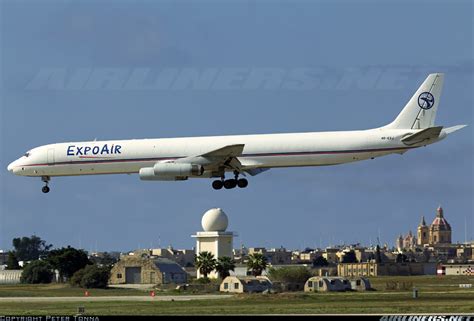
The transition from Expo Aviation to ExpoAir in the early 2000s marked the company’s first phase of brand realignment. This period saw the inclusion of aircraft such as the Fokker F27 and Ilyushin Il-18, which were crucial for launching domestic flights to Jaffna, reconnecting war-affected regions with Colombo.
By 2005, ExpoAir had filed for approval to conduct a sweeping range of international cargo operations. Proposed destinations stretched across major cities in Asia, the Middle East, Europe, and Australia, demonstrating the carrier’s growing ambitions. These included prominent gateways such as Dubai, Kuala Lumpur, Cairo, and Singapore, often serviced by wide-body aircraft like the Airbus A330 and A340.
The company formally rebranded to FitsAir in the 2010s, aligning its brand identity with the new slogan: “Friend in the Skies.” This rebranding was not merely cosmetic—it signaled a renewed focus on customer experience, scheduled passenger operations, and a reputation for reliability in underserved routes.
A Resilient Domestic Network Anchored in Accessibility
FitsAir’s domestic network is tailored for maximum regional integration. With hubs at Bandaranaike International Airport and Ratmalana Airport, the airline connects the capital to strategic towns including Batticaloa, Anuradhapura, Trincomalee, and Jaffna. These routes are vital for both civilian mobility and commercial logistics, often serving regions previously cut off from consistent air service.
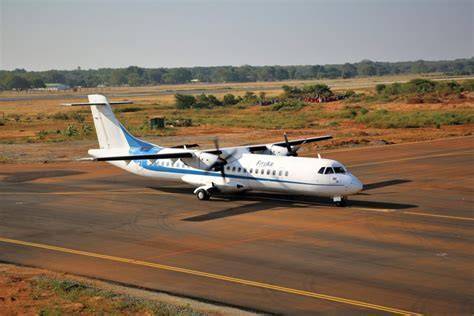
The airline resumed scheduled flights to Jaffna in 2020, now operated by an ATR 72-200, offering swift and reliable service in under an hour. This was particularly significant during a time when Sri Lanka’s infrastructure rebuild was in progress following years of conflict.
Expansion into Scheduled International Passenger Services
The most pivotal milestone in FitsAir’s recent history came on 5 October 2022, when it inaugurated its first scheduled international passenger flight between Colombo (CMB) and Dubai (DXB). Initially launched with a few frequencies, the route quickly proved successful, and by March 2023, it had expanded to daily operations.
Shortly after, FitsAir launched flights to Chennai (MAA) on 20 February 2023, reinforcing ties with the South Indian market. These two routes were instrumental in achieving a significant operational feat—by May 2023, the airline surpassed 50,000 passengers, a remarkable figure for a carrier just seven months into scheduled international operations.
Fleet Composition: Efficient, Focused, and Scalable
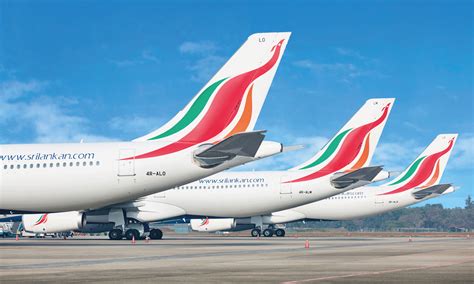
FitsAir operates with a lean yet efficient fleet tailored to its mixed-use operations. As of 2025, the mainline fleet consists of:
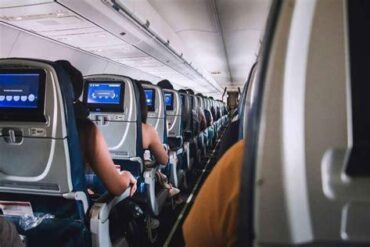
- 3 Airbus A320-200s for medium-haul international passenger routes (configured with 8 business and 156 economy seats)
- 1 Cessna 208B Grand Caravan for short domestic hops
- 1 Cessna 152 and 1 Cessna 150, primarily used for pilot training under Flying Angel’s Flight Academy
The Airbus A320-200, a globally respected narrow-body jet, forms the backbone of its regional passenger network, allowing the airline to maintain a balance between route density, fuel efficiency, and operational reliability.
Charter and Cargo Operations: Dual Revenue Streams
FitsAir’s ability to pivot between charter, cargo, and scheduled services has kept it financially agile. The airline’s cargo arm continues to serve essential logistics functions between Colombo and major hubs such as Dubai, Lahore, and Dhaka, leveraging aircraft like the A321 freighter (leased post-Thomas Cook operations) and wet-lease collaborations with carriers including Air Arabia.
In parallel, FitsAir offers charter services to remote airfields in Sri Lanka such as Sigiriya, Koggala, and Vavuniya, supporting tourism, business, and humanitarian relief efforts. This capability was essential during global disruptions, including the COVID-19 period, when flexible logistics and bespoke travel solutions were in high demand.

International Footprint and Planned Expansion
As of September 2024, FitsAir serves 7 international destinations and plans to expand into markets like Singapore, Kuwait, Bangkok, Riyadh, and Yerevan. These markets align with high-density South Asian expatriate communities and regional trade corridors.
Current passenger destinations include:
- Dubai (UAE)
- Chennai and Trivandrum (India)
- Dhaka (Bangladesh)
- Malé (Maldives)
- Kuala Lumpur (Malaysia)
Cargo routes include Lahore (Pakistan), while seasonal operations continue to Fujairah and Sharjah. The airline’s interline agreement with Air Astana allows for extended travel options beyond FitsAir’s immediate network.

Business Model and Ownership Structure
FitsAir operates under Aberdeen Holdings (Pvt) Ltd, a diversified conglomerate with interests across energy, trading, and logistics. This ownership offers FitsAir financial backing and strategic oversight, allowing it to experiment with fleet leasing, wet leases, and code-sharing agreements that more risk-averse airlines might avoid.
In fact, its aircraft leasing arm has historically dry-leased to Pakistan International Airlines, Mihin Lanka, and others. The airline’s 2006 lease of a DC-8 to Air Mauritius and its ATR 72 to Dimonim Air (Indonesia) in 2014 are clear examples of its operational reach and commercial creativity.
Training, Safety, and Regulatory Recognition
FitsAir was the first Sri Lankan private carrier to receive ICAO certification and also the first to be cleared by Sri Lanka’s Civil Aviation Authority for flights to Jaffna. It invests in crew development, having launched in-house cabin crew training in 2004—a move that has continued to yield highly trained personnel aligned with both Sri Lankan and international aviation safety norms.
Conclusion: FitsAir’s Future Among Giants
In an industry dominated by government-backed flag carriers and massive regional players, FitsAir’s growth is a case study in agility, resilience, and strategic clarity. It operates in a niche between low-cost and legacy, carving out a space where pragmatism meets innovation. With a steady climb in passenger volumes, planned fleet expansion, and growing destination map, FitsAir is poised to redefine Sri Lanka’s aviation identity on the regional stage.
What began as a modest air cargo operator is now a symbol of entrepreneurial aviation in South Asia—and its wings are still unfolding.