Definition
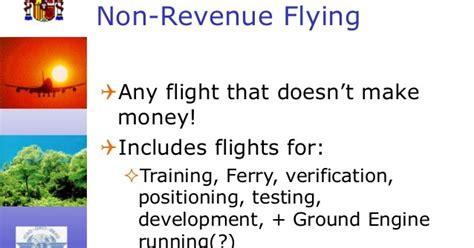
Non-revenue flights are those conducted for purposes other than generating income. They include:
-
Ferry and positioning
-
Flying displays
-
Airworthiness function/check flights
-
Flight crew base training
Description
Non-revenue flights often present a higher risk of accidents or serious incidents compared to revenue flights, which are the backbone of any commercial airline. The reasons for this increased risk mirror those found in a broader category known as non-standard flights.
Accident & Incident Reports
Here are some notable accidents and events involving non-revenue flights:
A320 / P28A, Seville, Spain, 2022
On October 6, 2022, a solo student pilot in a PA28 was instructed to hold short of the active runway at Seville. Unfortunately, the pilot entered the runway without the controller noticing. An Airbus A320, cleared to land, reported the light aircraft on the runway. The incident arose from language barriers in communications and the lack of activated stop bars during daylight.
A321, en-route near Luton, UK, 2023
On October 4, 2023, an Airbus A321 departing London Stansted was found to have several missing or damaged windowpanes. The aircraft returned safely after it was discovered that the damage occurred due to high-intensity lights used in a previous filming event. Previous similar incidents had occurred, but awareness in the aviation community was lacking.
S92, Plymouth, UK, 2022
On March 4, 2022, a Sikorsky S92A landing at a Plymouth hospital caused significant downwash injuries to two individuals in a nearby parking lot, resulting in one fatality. Hospital management failed to assess the risks effectively, leading to unsafe landing site operations.
B738, Yerevan, Armenia, 2021
On July 23, 2021, a Boeing 737-800 experienced an intersection departure from Yerevan, exceeding the runway length by 81 meters but completed its flight without damage. An investigation revealed that the Onboard Performance Tool was incorrectly configured, contributing to the error.
E190 / LJ60, Boston, USA, 2023
On February 27, 2023, an Embraer 190 was preparing for landing at Boston when a Learjet 60 took off from an intersecting runway without clearance. The Embraer crew was instructed to go around at low altitude to avoid a collision.
B738 / GL5T, Hong Kong, China, 2018
On November 13, 2018, a Boeing 737-800 received a late landing clearance at Hong Kong, touching down without realizing a Bombardier Global 5000 was still on the runway. The air traffic controller had not recognized the runway was occupied.
BK17, Auckland Islands, New Zealand, 2019
On April 22, 2019, a Eurocopter-Kawasaki BK-117C-1 helicopter crashed into the sea during positioning for an aeromedical evacuation. The pilot lost situational awareness due to night vision goggles.
SH36, Ndola, Zambia, 2021
On October 24, 2021, a Shorts SD360 mistakenly landed at a closed airport due to poor visibility while in contact with ATC at a newly opened airport with the same name. Mismanagement of the airport changeover contributed to the incident.
SF34, southwest Scotland, UK, 2021
On September 14, 2021, a Saab S340B faced engine failure during training. A MAYDAY was declared, and despite issues, the crew successfully diverted to safety.
F900 / BT36, Bremgarten, Germany, 2018
On April 28, 2018, a Dassault Falcon F900B nearly collided with a Beech B36T Bonanza during an uncontrolled approach. The Falcon crew’s preparation was inadequate, leading to a dangerous situation.
F900, Kangerlussuaq, Greenland, 2020
On December 3, 2020, a Dassault Falcon 900 lost control after landing due to brake system failure. The crew did not follow recommended procedures, resulting in damage to the aircraft.
B738, Kuusamo, Finland, 2021
On December 1, 2021, a Boeing 737-800 took off without sufficient thrust due to pilot errors during engine run-up, leading to a dangerously low climb rate.
32970 S92, near Black Rock, Western Ireland, 2017
On March 14, 2017, a Sikorsky S92A crashed into the sea after losing control in poor visibility. Inadequate safety management and regulatory oversight were key factors in this tragic accident.
B744, Hong Kong, China, 2018
On August 30, 2018, a Boeing 747-400F made a crosswind landing that resulted in abnormal behavior and engine damage. The flight was part of a line check and may have been impacted by the Check Captain’s expectations.