Definition
The Flow Management Position (FMP) is a designated role within specific air traffic control units. Its primary purpose is to create a vital link between local air traffic flow and capacity management partners, such as air traffic controllers, airlines, and airports, and a central management unit. This connection is essential for coordinating air traffic flow and capacity management services effectively.
Description
An FMP plays a crucial role in ensuring that procedures impacting operators or nearby ATC units are communicated clearly. This communication may include NOTAMs, AIP updates, and ATM operational instructions. The Air Navigation Service Provider (ANSP) is responsible for setting local procedures and making sure the Network Manager (NM) has all necessary data at hand. Typically, the FMP’s responsibilities are confined to the area of its parent Area Control Center (ACC). However, depending on how a country is organized, some FMPs might oversee multiple ACC areas.
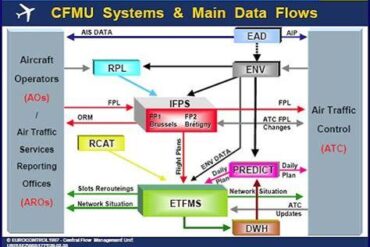
The FMP collaborates closely with the NM to deliver the most effective air traffic flow and capacity management services. To achieve this, they share important data with the NM, such as sector configurations and activations during both pre-tactical and tactical phases, monitoring values, traffic volumes, and taxi times. They also provide information on runway configurations and any events that could affect aerodrome capacity. Additionally, feedback on new or trial procedures is offered in the post-operations phase. The FMP brings valuable ‘local knowledge’ to the table, sharing insights that aid in the efficient execution of ATFCM tasks. Meanwhile, the NM keeps the FMP informed about any details that might impact the services provided by its associated ACC(s).
Personnel Requirements
FMP officers need to be well-trained and skilled for this position. Key requirements include: extensive knowledge of ATC and ATFCM operations, significant ATC experience, a solid understanding of NM operations, and relevant ATFCM training. These qualifications also apply to other staff members, such as ACC supervisors, who may take on FMP responsibilities during less busy times.