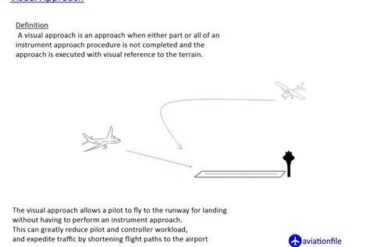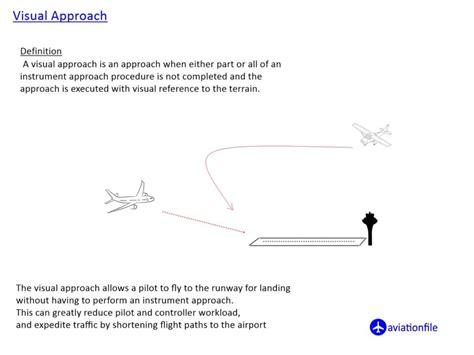
Although visual approaches are often the first type taught to student pilots flying light aircraft, they can pose significant risks. Therefore, pilots should carefully consider the conditions before opting for a visual approach instead of an instrument approach, particularly when flying larger aircraft. It’s essential for pilots to be well-acquainted with their aircraft’s typical attitudes and power settings during a stabilized approach. This knowledge helps identify any deviations that may indicate an inappropriate or unstable approach path.
The Flight Safety Foundation (FSF) provides important guidance in its ALAR Briefing Note 7.4 regarding visual approaches. It recommends that pilots balance their acceptance of air traffic control (ATC) clearances for visual approaches against several factors: ceiling and visibility, darkness, weather conditions (including wind and turbulence), crew experience, surrounding terrain, and the availability of visual aids such as approach light systems (ALS) or visual approach slope indicators (VASI).
When accepting a clearance for a visual approach, pilots must fully understand the responsibilities involved and what ATC expects from them. It’s also crucial to know the actions ATC in other countries may expect if a missed approach occurs. For example, in the USA, a visual approach is considered an IFR clearance but does not follow a specific instrument approach procedure, meaning it lacks a missed approach segment. Pilots may need to remain clear of clouds until further instructions are received from ATC. Following a published instrument approach missed procedure after a visual approach can cause confusion and has previously led to dangerous situations with other aircraft.
If a published visual approach chart exists, pilots should review it before starting their approach. Any restrictions detailed in the Company Operations Manual must be followed. Captains and crew members need to be clear about visual reference requirements during the approach and the necessary actions if those references are lost. It’s also important not to cancel prior IFR flight status when accepting a visual approach.
When considering a visual approach, especially in poor visibility or at night, flight crews should familiarize themselves with the terrain near the aerodrome, including potential obstacles like tall buildings and masts. A stabilized approach should be maintained according to Company Standard Operating Procedures (SOPs) and meet established criteria by 500 feet above the airport elevation. If these criteria aren’t met or if the approach becomes unstable below 500 feet, a go-around should be initiated.
Navigation aids for the runway in use and the flight management system (FMS) should be utilized to support navigation and enhance situational awareness. If a visual circuit is flown before the final approach, it should follow a standard rectangular pattern based on the runway orientation. The end of the downwind leg should be determined by timing from a point abeam the runway threshold, adjusted for airspeed. Bank angles in turns should not exceed thirty degrees or the angle needed for a Rate 1 turn. Aircraft configuration for landing should comply with company SOPs, typically extending landing gear and flaps before turning onto the base leg.
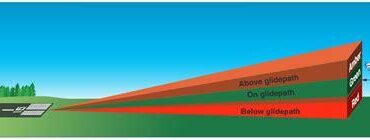
Minimum safe altitude should be maintained until positive visual reference and situational awareness are established. The FSF Briefing Note advises against the tendency to perform continuous closing turns toward the runway threshold. Before turning final, pilots should extend landing flaps and reduce speed to the target final approach speed, estimating the glide-path angle to the runway based on visual references or raw data. They should also avoid exceeding a 30-degree bank angle when turning final, anticipate crosswind effects, and ensure alignment with the runway by 500 feet above airport elevation.
Monitoring groundspeed for wind shear awareness is vital, as is calling out altitudes and any excessive deviations from expected flight parameters. Finally, maintaining visual focus on the aiming point—typically 1,000 feet from the runway threshold—helps prevent unintentional descents below the final approach path.