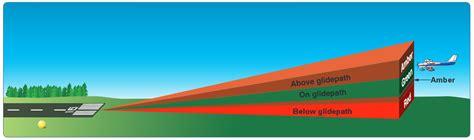
Visual glideslope indicators play a crucial role in guiding pilots during landing by providing vertical information through a narrow beam of light along the glide path. The main systems used are:
-
PAPI: Precision Approach Path Indicator
-
APAPI: Abbreviated Precision Approach Path Indicator
-
AT-VASIS: Abbreviated T Visual Approach Slope Indicator System
-
T-VASIS: Visual Approach Slope Indicator System, which can be installed flush with the runway surface for approach guidance.
A T-VASIS installation covers a significant area on either side of the runway centerline, extending from just beyond the runway threshold for about 500 meters. It’s important to note that, as per ICAO Annex 14, Volume I, point 5.3.5.4, the use of T-VASIS and AT-VASIS as standard visual approach slope indicators should be discontinued since January 1, 2020.
PAPI
The PAPI is typically located to the right of the runway. This system uses four lights arranged in a single row, usually on the left side of the runway. Depending on the configuration, it can also be placed on the right side. An aircraft is on the correct glide path when two lights are red and two are white. If three lights are red, the aircraft is below the glide path, while four red lights indicate it is well below. Conversely, three white lights signal that the aircraft is above the glide path, and four white lights indicate it is well above.
There are other less common slope indicator systems. A tri-color system utilizes a single light unit that projects three colors: red below the glide path, green on the glide path, and amber above. A small area of dark amber indicates descending below the glide path, which should not be confused with an ‘above the glide path’ signal.
Pulsating visual approach slope indicators consist of a single light unit projecting a two-color path into the runway’s final approach area. A steady white light shows the on-glide path indication, while a steady red light indicates slightly below the glide path. As the aircraft descends further below, the red light begins to pulsate, and a pulsating white light appears when above the glide path. These systems are effective up to four miles during the day and ten miles at night.
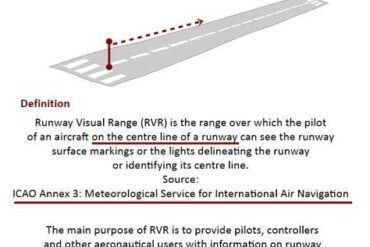
The minimum altitude for PAPI, or height above threshold, varies by installation, with a typical value around 50-60 feet. The lowest point where the PAPI signal is useful is called MEHT (Minimum Eye Height Over Threshold), which is listed in the AIP for each runway. MEHT takes into account the pilot’s eye position and the aircraft’s ILS aerial, which can differ across aircraft types. In many cases, PAPI remains usable almost until touchdown, but some regulations may require them to be turned off if the ceiling or RVR falls below a certain level, making PAPI available but not usable.
AT-VASIS & T-VASIS
AT-VASIS consists of ten light units arranged on one side of the runway, forming a single wing bar of four units with a bisecting line of six lights. T-VASIS features twenty light units symmetrically placed around the runway centerline, arranged as two wing bars of four units each, with bisecting longitudinal lines of six lights.
These light units are designed so that during an approach, pilots see:
-
Above the slope: Wing bars appear white with one to three fly-down lights. More fly-down lights indicate a higher altitude above the slope.
-
On the slope: Wing bars remain white.
-
Below the slope: Wing bars and one to three fly-up lights are visible. More fly-up lights indicate a lower altitude below the slope.
When significantly below the slope, all three fly-up lights turn red. No lights from the fly-up units should be visible when on or above the slope, and no lights from the fly-down units should be visible when on or below the slope.