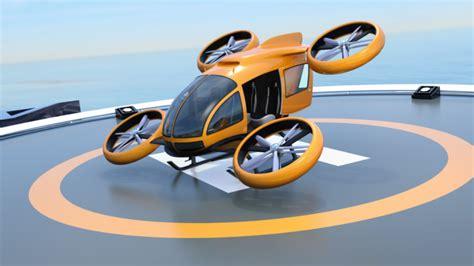
Electric aviation is no longer science fiction. Electric vertical takeoff and landing (eVTOL) aircraft are poised to transform urban transportation, offering fast, quiet, and congestion-free travel in cities suffering from outdated infrastructure. As the industry transitions from prototype to commercial readiness, 2026 is shaping up to be a pivotal year. With billions at stake and only a handful of companies nearing regulatory approval, the time to understand and invest in this emerging sector is now.
The Market Rationale Behind eVTOLs
Urban congestion costs the U.S. economy over $74 billion annually in lost time and fuel. eVTOLs address this by unlocking the vertical dimension, bypassing gridlock with silent, electric-powered aircraft. Their appeal lies not in novelty but in time efficiency. For instance, a 10-minute eVTOL ride from JFK Airport to Manhattan could cost $200 and avoid the hour-plus travel time of a premium ground ride service like Uber Black.
Beyond speed, the economic efficiency of eVTOL infrastructure is profound. While high-speed rail requires over $100 million per mile and years of land acquisition, eVTOL networks scale incrementally using underutilized rooftops and parking structures as vertiports, often for a fraction of the cost. Combined with recent advances in high-density batteries (>400 Wh/kg) and near-silent propulsion systems, the dream of scalable urban air mobility is technically viable and economically sound.
High-Stakes Investment: How to Approach the Sector
The eVTOL industry is in a binary phase of risk. Most companies are still pre-revenue, with valuation hinging entirely on passing the rigorous FAA and EASA certification processes. These gauntlets validate everything from battery safety to autonomous flight systems, taking years and costing billions. Yet for those who succeed, the reward is potential market dominance.
Investors can consider three strategic entry points:
- Pure-Play OEMs: Companies designing and operating their own aircraft (e.g., Joby, Archer).
- AAM Operators: Those focusing on running air taxi and infrastructure services (e.g., Bristow).
- Picks-and-Shovels Enablers: Suppliers of critical components like batteries and avionics (e.g., Amprius, Honeywell).
Joby Aviation (NYSE: JOBY) — The American Frontrunner
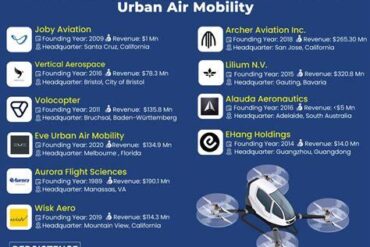
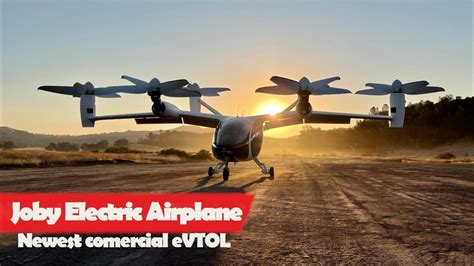
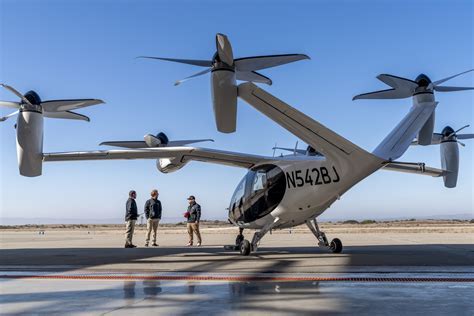
Joby Aviation stands as the leading U.S. contender. Its S4 aircraft, featuring six tilting propellers and a four-passenger capacity, reaches speeds of 200 mph while maintaining a quiet profile crucial for urban use. Joby’s vertically integrated model includes manufacturing, operations, and software—akin to Apple’s approach to control and user experience.
As of Q3 2025, Joby had reached Stage 4 of the FAA’s five-step certification, with over 70% of submissions complete. Partnerships with Toyota, which brings mass production expertise, and Delta Air Lines, which offers exclusive airport shuttle routes, further solidify its leadership. Joby is well-capitalized, setting the pace for a 2026 commercial launch.
Archer Aviation (NYSE: ACHR) — The Strategic Challenger
Archer Aviation takes a more modular, capital-light approach. Its Midnight aircraft uses a simpler “lift + cruise” configuration with twelve propellers. By outsourcing manufacturing to Stellantis and focusing internally on design and FAA certification, Archer reduces execution risk.
With a $1 billion conditional order from United Airlines, along with Part 135 and Part 145 certifications already secured, Archer is set to operate flights and handle maintenance prior to full type certification. Archer’s approach enables it to rapidly scale without bearing the burden of manufacturing, making it a formidable fast-follower.
EHang Holdings (NASDAQ: EH) — First to Market in China
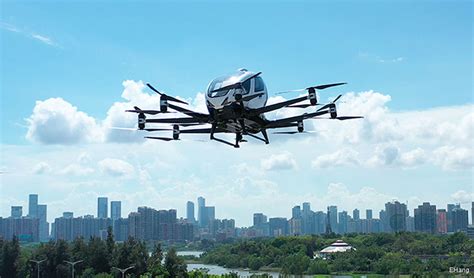
EHang is the only eVTOL company globally to achieve full commercial certification. Its EH216-S is an autonomous, two-seat multicopter with 16 fixed rotors. EHang has secured type, airworthiness, and production certificates from the Civil Aviation Administration of China (CAAC).
Unlike U.S. peers, EHang focuses on aircraft sales rather than operating flights. It already conducts commercial operations in cities like Guangzhou and Hefei, targeting markets such as tourism and short-range transit. Backed by Chinese regulatory support and a strong domestic market, EHang has moved beyond speculative status into revenue generation, offering investors early exposure to a functioning AAM business.
Eve Holding (NYSE: EVEX) — Embraer’s Global Ecosystem Play
Born from Embraer, Eve is building not just an aircraft but a full AAM ecosystem: including a lift + cruise eVTOL, urban air traffic software, and operational support tools. Its aircraft carries four passengers and one pilot, using a single cruise pusher propeller and eight lift rotors.
Eve’s competitive edge is its platform strategy—not just selling aircraft but also offering services to other operators. It boasts a massive non-binding order book of nearly 2,800 aircraft, including commitments from Bristow. Its certification path includes regulators in both Brazil and the U.S., with a target entry date of 2026. Eve’s light-asset model, bolstered by Embraer’s supply chain, provides a diversified AAM investment route.
Vertical Aerospace (NYSE: EVTL) — Europe’s Asset-Light Contender
UK-based Vertical Aerospace is betting on a best-of-breed supplier model, using partners like Honeywell (flight controls), Rolls-Royce (propulsion), and GKN Aerospace (airframe) to build its VX4 eVTOL. The aircraft combines vectored thrust and fixed wings, aiming for long-range cruise efficiency.
While still in transition flight testing as of Q3 2025, and targeting 2028 certification, Vertical has secured large pre-orders from Virgin Atlantic and American Airlines. Its dependence on external suppliers allows for cost efficiency and focus on integration, though it remains in need of additional capital to hit commercial scale.
Bristow Group (NYSE: VTOL) — The Infrastructure Backbone
Unlike OEMs, Bristow Group is a veteran operator of vertical flight services with one of the largest helicopter fleets globally. It is positioning itself as a neutral AAM operator, offering turnkey flight services, maintenance, and training across different eVTOL platforms.
Already placing pre-orders with Eve, Vertical Aerospace, and Overair, Bristow avoids the binary risk of aircraft certification. With steady cash flow and established aviation experience, Bristow offers investors a profitable entry into the AAM market infrastructure, while OEMs remain in developmental limbo.
Amprius Technologies (NYSE: AMPX) — Powering the Future of Flight
Amprius is solving one of the biggest technical hurdles in eVTOL: battery energy density. Its silicon nanowire anode batteries have hit 450 Wh/kg, significantly outperforming traditional lithium-ion cells. These high-power, lightweight cells are essential for achieving practical flight range and payload.
Amprius supplies aerospace and defense clients, including Airbus and AIBOT, making it less vulnerable to any one OEM’s failure. The company recently hit its first positive gross margin and is expanding production capacity, giving it the potential to become the battery supplier of choice for electric aviation.
SES AI Corp (NYSE: SES) — The AI-Safe Battery Disruptor
SES AI focuses on Li-Metal batteries, which promise even higher energy density than silicon anodes but have historically suffered from safety issues. SES’s breakthrough lies in combining a protective anode coating with AI-driven safety software called Avatar, which predicts battery failure in real time.
With partnerships across automotive giants like GM, Honda, and Hyundai, SES’s battery tech has direct applicability to eVTOLs. The acquisition of UZ Energy also positions SES to enter the stationary energy storage market, offering a nearer-term revenue path. SES represents a high-risk, high-reward bet on next-gen battery chemistry.
Honeywell International (NASDAQ: HON) — The Blue-Chip eVTOL Enabler
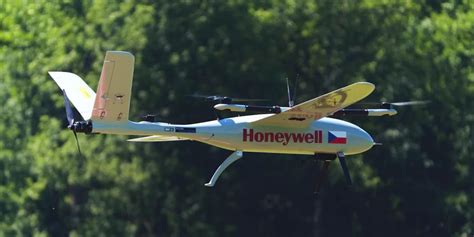
Honeywell is a cornerstone of the AAM sector, providing flight-critical components like fly-by-wire systems, Anthem flight decks, and thermal management systems. Its customers include top-tier OEMs such as Vertical Aerospace and Eve Holding.
As a profitable, diversified conglomerate, Honeywell offers perhaps the safest way to invest in eVTOL infrastructure, with exposure to multiple aircraft programs. It profits from the entire industry’s growth, regardless of which OEM leads in market share.
Final Thoughts: A Rare Inflection Point for Aviation
The race toward commercial Advanced Air Mobility is accelerating, and 2026 is shaping up to be the watershed year. With regulatory approvals pending and infrastructure beginning to scale, the companies positioned today will likely determine the shape of urban air travel for decades to come. From high-stakes aircraft developers like Joby and Archer, to infrastructure titans like Bristow and Honeywell, the eVTOL investment landscape offers a rich mix of risk profiles and technological innovations.
Investors must balance technical viability, regulatory momentum, and capital strength when evaluating these opportunities. For those with the vision and risk appetite, this moment may mark the dawn of the next transportation revolution in the skies.