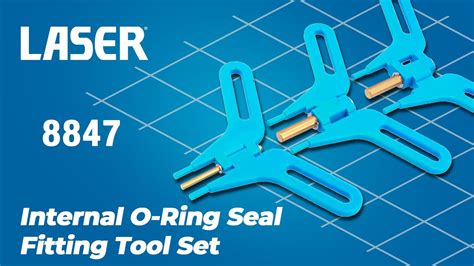
When the Fleet Readiness Center East (FRCE) Innovation Lab was approached by the F-35 Joint Program Office with an urgent request, it responded with the type of ingenuity and precision that defines the future of military aviation maintenance. In a remarkable feat of speed and technological prowess, a two-person team at the FRCE manufactured and distributed 2,000 O-ring installation tools in just under two weeks using digital light processing (DLP) — a form of advanced additive manufacturing. The impact of this swift production went far beyond simple logistics; it marked a significant evolution in how defense readiness challenges can be met in real time.
Strategic Response to a Critical Tooling Gap
The request wasn’t a routine order—it was a mission-critical call to action. The O-ring installation tool, essential across all three variants of the F-35 Lightning II fighter jet, was in short supply. Traditional acquisition processes would have taken up to six months to fulfill the request. Instead, the Innovation Lab at FRCE, under the leadership of Randall Lewis, executed a solution that bypassed procurement bureaucracy, ensuring rapid readiness without compromising quality.
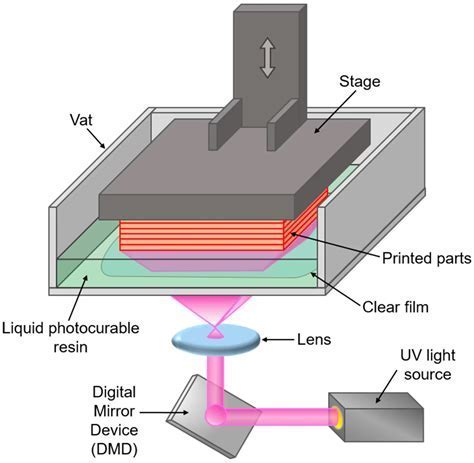
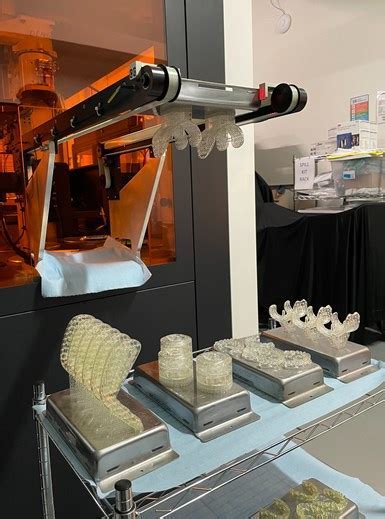
Using digital light processing, which cures photopolymer resin with ultraviolet light in entire layers rather than single points, the team scaled output exponentially. This meant multiple units could be fabricated simultaneously in significantly less time. The result: an agile, scalable manufacturing pipeline that matched the demand head-on.
Inside the Additive Manufacturing Breakthrough
At the heart of this accomplishment were Innovation Lab Lead Engineer Jeremy Bunting and technician Ken Murphy. When the request came in, the duo assessed which 3D printing method would yield the fastest and most durable product. Their evaluation led them to select digital light processing for its unique ability to produce high-resolution parts in volume. Initial batches of 20 tools were produced and quickly subjected to evaluation by the F-35 Lightning Support Team and the Joint Program Office.
Following the review, subtle design adjustments were made to optimize tool performance and chemical resistance, ensuring the parts could withstand the operational environment. Once validated, the Lab accelerated full-scale production—delivering the entire order in days rather than months.
Scalable Production with Minimal Time Overhead
Traditional filament-based 3D printers construct objects layer by layer using heated plastic filaments. However, this method scales linearly—more parts require more time. In contrast, DLP builds all parts in a layer simultaneously. As Bunting explained, “I did a batch of 20 and it took an hour and 15 minutes; then I did a batch of 60 and that also took an hour and 15 minutes.”
This efficiency transformed what would typically be a prolonged manufacturing cycle into a scalable, batch-based system capable of meeting high-volume demands rapidly. Bunting noted that this one job alone nearly matched the Innovation Lab’s total output for fiscal year 2024, underscoring the immense scalability and readiness value of DLP.
Tactical Delivery to U.S. Forces and Allies
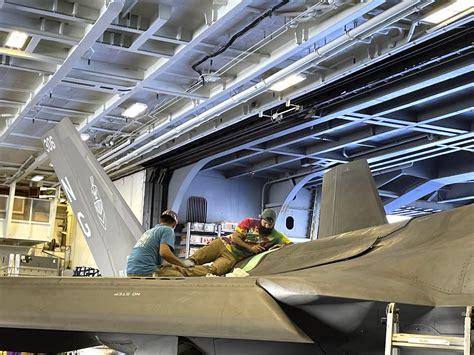
Once finalized, the O-ring installation tools were not just shelved or stored—they were immediately disseminated to aircraft maintainers across the U.S. Navy, Marine Corps, Air Force, and allied foreign military partners. One of the first direct beneficiaries was Marine Aviation Logistics Squadron 14 (MALS-14), based at Marine Corps Air Station Cherry Point.
Captain Jason Moore, MALS-14 Production Control Officer, emphasized that this initiative exemplified how additive manufacturing can break down traditional supply chain barriers. “These types of efforts lead to expeditious capabilities, rapid fielding and sustainment, and increased aircraft and mission readiness,” Moore said. He also highlighted the long-term potential of expanding DLP into a routine solution within aerospace sustainment.
From Agility to Routine Practice
While the volume of this particular job was unusual, Bunting was quick to clarify that agile manufacturing is business as usual at the Innovation Lab. “The Innovation Lab exists to be quick-turn and solve problems,” he said. “So this job was unique in terms of quantity and how we were able to leverage newer technology, but in terms of our day-to-day business, it was just what we do.”
This statement reflects a broader strategic direction: normalizing additive manufacturing within U.S. military operations. The ultimate goal isn’t just innovation—it’s integration. Bunting envisions a future where 3D printing is no longer a novel tool but a standardized part of the arsenal, just as machining and sheet metal work are today.
Strategic Impact on Naval Aviation Readiness
The Commander, Fleet Readiness Centers (COMFRC) and senior leadership have taken note. Robert Lessel, Chief Engineer and Fleet Support Teams Senior Executive at COMFRC, affirmed that projects like this reinforce aviation capability and affordability. “Wins like the manufacture of this O-ring installation tool produce meaningful outcomes for the fleet,” said Lessel. “It’s all about warfighting and supporting our warfighters.”
These efforts, he noted, are about more than just parts. They are about maintaining the readiness and lethality of the U.S. naval aviation fleet—faster, smarter, and more cost-effectively. By shortening the timeline between problem identification and fielded solution, additive manufacturing enhances operational agility at every level.
Building a New Manufacturing Paradigm
Since its founding in 2020, the FRCE Innovation Lab has committed to building a flexible, scalable, and results-driven additive manufacturing program. Far from a temporary project hub, it’s evolving into an institutional capability with long-term implications. With over 4,000 civilian, military, and contract workers, FRCE stands as North Carolina’s largest maintenance, repair, and overhaul facility, generating more than $1 billion in annual revenue.
The Lab’s alignment with broader production teams and training for artisans in additive workflows further solidifies its path toward normalized operations. As Bunting put it, “My catch line is that we’re trying to make additive manufacturing ‘boring.’ It’s exciting and new right now, but I would like it to become much more routine.”
The Road Ahead: From Win to Standard
The story of the O-ring installation tool is not just a story of engineering—it is a blueprint for the future of military logistics. The success showcases how cutting-edge manufacturing methods can translate directly to operational impact, bypassing months of wait time and cost while boosting force readiness.
As geopolitical pressures increase and military operations demand ever-greater efficiency, the lessons from FRCE’s Innovation Lab signal a shift. Additive manufacturing is no longer an experimental capability—it’s a battlefield necessity. And thanks to agile efforts like this one, the future of defense manufacturing is arriving faster than anyone anticipated.