Founded in 1933 by visionary inventor Warren G. Grimes, the Grimes Manufacturing Company emerged from the heartland of Urbana, Ohio, as a transformative force in aerospace lighting systems. With an unwavering focus on technical excellence and a foresight that matched the acceleration of aviation itself, Grimes evolved from a modest regional firm into a globally recognized brand synonymous with safety, innovation, and reliability in the skies.
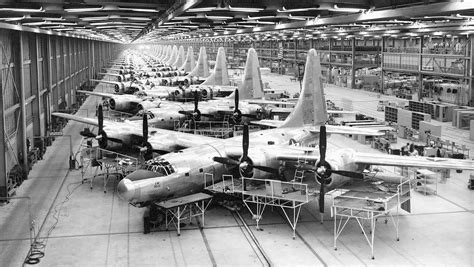
As war loomed in the late 1930s, aviation rapidly matured, and the demand for dependable airborne equipment surged. It was in this context that Grimes solidified its industry presence. When the United States entered World War II, Grimes Manufacturing responded by expanding its facilities, including the development of an entirely new building to meet the extraordinary wartime production requirements.
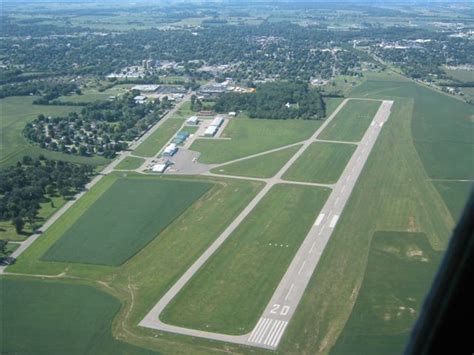
Beyond manufacturing alone, the company constructed and operated Grimes Field, an airstrip that served not only as a logistical asset but also as a testing ground for aviation technologies. This on-site airport, operational until 1987, was a testament to the company’s integrated approach to product development and real-world testing. It ensured Grimes lighting systems didn’t just work in theory—they excelled under practical flight conditions.
Warren G. Grimes: The Father of Aircraft Lighting
Warren G. Grimes wasn’t merely a businessman; he was a pioneer. Often credited as the “Father of the Aircraft Lighting Industry,” his ingenuity resulted in vital safety innovations that would become industry standards. His work brought about dependable navigation lights, cockpit illumination systems, and anti-collision strobes, crucial elements that allowed pilots to fly safely in low-visibility environments.
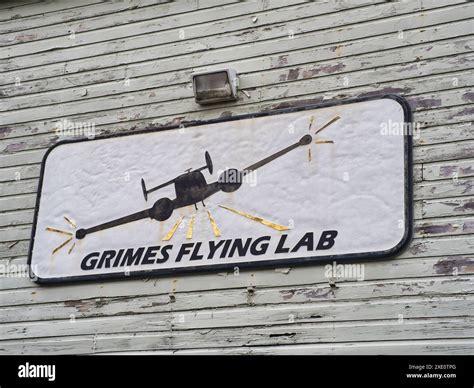
Grimes’ vision led to the founding of the company in a modest factory, but his influence quickly expanded. By the 1960s, Grimes was operating its own airborne laboratory—a modified Beech 18 aircraft, dubbed the Grimes Flying Lab. This aircraft played a pivotal role in testing lighting systems under authentic in-flight conditions.
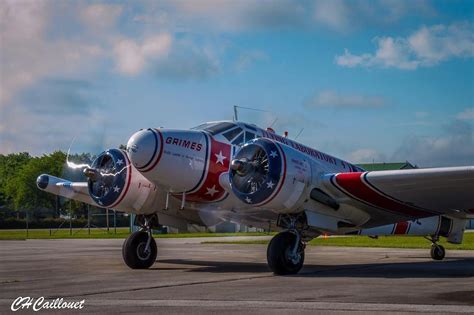
The Flying Lab gave Grimes engineers the ability to refine their lighting systems for use in all weather and operational scenarios, directly translating to increased reliability and performance for both military and civilian aviation clients.
Expansion, Innovation, and the Midland-Ross Era
In 1966, the company launched another major expansion—adding a 42,000-square-foot facility to increase production and accommodate growing demand. This momentum caught the attention of industrial conglomerates, leading to Midland-Ross Corporation’s acquisition of Grimes in 1977.
Under Midland-Ross, Grimes diversified and scaled. Less than two years post-acquisition, the company announced a strategic move to expand operations into Greenwood County Airport in South Carolina. This geographic diversification marked the beginning of a nationwide manufacturing footprint, further strengthening Grimes’ position as a leading OEM supplier.
In 1981, the acquisition of Mansfield Aircraft Products Company further cemented Grimes’ position. This new asset became a critical subsidiary and integrated seamlessly with Grimes’ existing product lines, supporting military and commercial contracts.
By 1982, Grimes had matured into a robust division that required structural segmentation. It was split into three major units:
- Grimes Galley Products
- Grimes Lighting Products
- Grimes EL (Electroluminescent) Products
This reorganization allowed for specialized R&D and targeted market focus. Although the Galley unit was shut down in 1984, the lighting and EL divisions continued to thrive, particularly as global aviation standards increasingly demanded higher-grade safety equipment.
Grimes Aerospace: Modernization and Market Dominance
In 1991, following corporate consolidation, the firm rebranded as Grimes Aerospace. The name change reflected not only a broader scope but also a deeper commitment to high-tech product development. The following year, the company broke ground on a 20,000-square-foot expansion of the Greenwood facility, signaling a commitment to growth amid rising global demand.
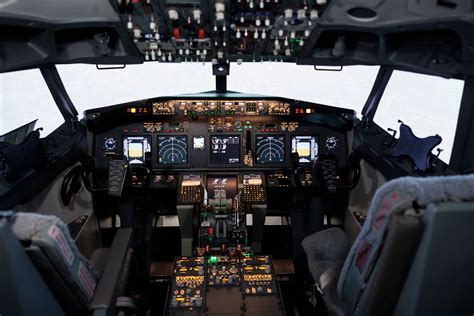
At this stage, Grimes products were standard equipment in numerous commercial aircraft, including platforms by Boeing, McDonnell Douglas, and Lockheed. The company’s systems were also integrated into multiple military airframes, securing its relevance within defense procurement pipelines.
Acquisition by AlliedSignal and Transition to Honeywell
In 1997, Grimes Aerospace was acquired by AlliedSignal, a strategic move intended to augment AlliedSignal’s aerospace portfolio. While the acquisition was initially seen as mutually beneficial, controversy soon followed. It was later revealed that AlliedSignal had allegedly pressured credit agencies to overlook the status of unrated Grimes bonds, creating friction among stakeholders and raising ethical concerns over financial transparency.
Despite this turbulence, AlliedSignal itself was on the verge of transformation. In 1999, it merged with Honeywell, forming a global aerospace and technology powerhouse. Today, Honeywell Aerospace continues to operate facilities in Urbana, preserving Grimes’ legacy within its broader technological ecosystem.

Enduring Legacy in Aviation Safety and Lighting Technology
The influence of Grimes Manufacturing endures far beyond its corporate name. The company’s legacy lives in the systems that continue to light runways, guide aircraft through fog and darkness, and keep pilots oriented in flight. It also persists in aviation museums, engineering textbooks, and in the practices of aerospace engineers who follow the standards Grimes helped establish.
Aviation lighting today relies on LED arrays, fiber optics, and smart control systems, but many of the foundational principles remain the same—principles pioneered by Warren G. Grimes and his team.
Notably, many of Grimes’ original innovations are still visible in:
- Navigation light configurations on modern airliners
- Redundant electrical routing for emergency lighting
- High-intensity strobes for anti-collision measures
The FAA and international aviation bodies now codify standards that trace directly back to Grimes prototypes.
Grimes Field and Historical Preservation
Although Grimes Field ceased being operated by the company in 1987, it remains a symbol of aviation history in Urbana. The field still operates today as a public-use airport and houses tributes to the company’s heritage. Enthusiasts and historians frequently visit the field to explore static displays and learn about the role that Urbana, Ohio, played in shaping aerospace engineering.
Conclusion: A Beacon of Progress in the Sky
From a small factory floor in Ohio to the wings of fighter jets and passenger planes, Grimes Manufacturing Company etched its mark in the firmament of aviation history. Its relentless pursuit of excellence, commitment to innovation, and impact on flight safety technologies define a legacy that continues to shine through every illuminated runway and every cockpit light flicked on at 30,000 feet.
As part of Honeywell, the torch burns on—powered by modern engineering, but ignited by the same spirit that once drove Warren G. Grimes to chase brilliance through the clouds.