The origins of the Sperry Company trace back to 1910, when Elmer Ambrose Sperry established the Sperry Gyroscope Company in Brooklyn, New York. From the outset, the company’s mission was clear: to develop cutting‑edge gyroscope‑based navigation instruments for marine and aviation use. Sperry’s early inventions, including the marine gyrostabilizer and gyrocompass, quickly earned the company a reputation for unwavering precision and robust reliability, laying the foundation for decades of technological leadership.
In the years leading up to World War I, Sperry expanded its product line to include bomb sights and fire‑control systems for military aircraft. This diversification not only bolstered the company’s technical portfolio but also proved critical when wartime demand surged. By 1918, Sperry’s Brooklyn facility was humming with activity, and the company had become synonymous with aero‑instrument innovation, supporting both Allied naval and aerial operations.
The interwar period saw Sperry navigate both internal competition and strategic partnerships. In 1918, Lawrence Sperry branched off to form his own aero‑instrument business before reuniting with his father’s company in 1924 following tragic circumstances. Five years later, North American Aviation acquired Sperry, only to spin it off again in 1933 as an independent corporation overseeing multiple entities, from the original Gyroscope division to the Ford Instrument Company and Intercontinental Aviation.
Early Innovations and World War II Contributions
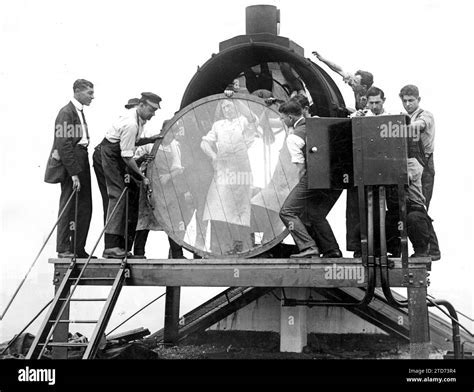
Sperry’s growth accelerated in the 1930s when it acquired Vickers, Inc. (1937), entering the hydraulics market and enhancing its capabilities in flight‑control systems. Collaboration with Stanford inventors Russell and Sigurd Varian on the klystron further positioned Sperry at the forefront of airborne radar technology. By World War II, the company ranked 19th among U.S. war contractors, supplying analog bomb‑sights, automated landing systems, and the legendary Ball Turret Gun for B‑17 and B‑24 bombers. Sperry’s Lake Success plant even served as the temporary headquarters for the United Nations from 1946 to 1952, testifying to its monumental facilities.
Postwar Diversification and the Birth of SPEEDAC
After selling the Brooklyn plant in 1944, Sperry turned its attention to electronics and computing. In 1953, the company introduced SPEEDAC, its first digital computer, marking the start of a new era. Concerned about Cold War vulnerabilities, Sperry relocated much of its flight‑systems operations to Phoenix, Arizona, ensuring business continuity in the event of an attack. Meanwhile, the Lake Success complex continued to spearhead gyroscope research and development well into the 1980s.
The Sperry Rand Era and the Rise of UNIVAC
In 1955, Sperry merged with Remington Rand to form Sperry Rand, integrating the pioneering Eckert–Mauchly Computer Corporation and ERA. This union produced the iconic UNIVAC series and led to a strategic cross‑licensing agreement with IBM. By 1961, Sperry Rand was ranked 34th on the Fortune 500, and from 1967 to 1973, it engaged in a high‑stakes antitrust battle with Honeywell. The acquisition of RCA’s Spectra 70 mainframes in 1972 and Varian Data Machines in 1977 further cemented the company’s computing prowess.
Strategic Refocusing and Sperry Marine
In 1978, Sperry Rand divested several non‑computing divisions—Remington Rand Systems, Ford Instrument, and Sperry Vickers—and dropped “Rand” to become Sperry Corporation once more. A notable achievement was the establishment of the Sperry Piedmont Division in Charlottesville, Virginia (1956), dedicated to marine navigation products. Renamed Sperry Marine, this division would later form the backbone of the company’s maritime offerings.
Conglomerate Operations and the 1986 Burroughs Takeover
Throughout the 1970s and early 1980s, Sperry’s portfolio spanned typewriters (Sperry Remington), office equipment, farm machinery (New Holland), digitals computers (UNIVAC), and avionics (Sperry Flight Systems). In 1983, Sperry sold its Vickers unit and acquired the Aircraft Radio Corporation from Cessna, sharpening its focus on core electronics. However, a hostile takeover by Burroughs Corporation in September 1986—despite Sperry’s “poison pill” defense—resulted in the creation of Unisys. In the aftermath, divisions such as New Holland went to Ford, Sperry Marine to Tenneco (now Northrop Grumman), aerospace to Honeywell, and defense products to Loral (later Lockheed Martin).
British Operations: From Pimlico to Plymouth
Across the Atlantic, Sperry’s British arm began in Pimlico, London (1913), evolving into Sperry Gyroscope Co. Ltd by 1915. Expansion in Brentford, Stonehouse, and Bracknell peaked employment at 3,500 by 1963. Site closures and sales throughout the late 1960s and early 1980s culminated in the Bracknell facility’s transfer to British Aerospace and eventual consolidation at Plymouth. Today, UTC Aerospace Systems continues to manufacture advanced MEMS gyroscopes on that site, upholding Sperry’s tradition of precision engineering.
The Modern Sperry Marine and Global Impact
In 1997, three marine‑industry stalwarts—Sperry Marine, Decca, and C. Plath—merged to form the new Sperry Marine, now under Northrop Grumman. This entity supplies state‑of‑the‑art navigation, communication, and automation systems to commercial and naval clients worldwide, preserving the Sperry legacy in marine technology.
Iconic Products and Cultural Footprint
Sperry’s rich product heritage includes the Hewitt‑Sperry Automatic Airplane (1917), Verville‑Sperry Messenger series, and the MGM‑29 Sergeant missile. The company even made a cameo in popular culture: Sperry computers feature prominently in the 1986 comedy Jumpin’ Jack Flash, highlighting the brand’s widespread recognition.
From its humble beginnings in Brooklyn to its transformation into a global technology powerhouse, the Sperry Company’s century‑spanning journey underscores a relentless pursuit of innovation, precision, and reliability. Its inventions continue to influence modern navigation, defense, and computing systems, cementing Sperry’s place in the pantheon of American engineering legends.