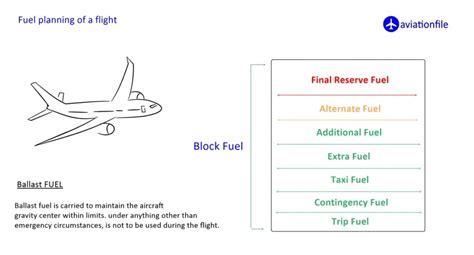
In aviation, fuel planning involves a unique set of terms and definitions. This guide highlights the key concepts you need to know. Different regulatory authorities and flight planning organizations may use various terms interchangeably, so we’ll clarify these differences.
Additional Fuel: This is fuel added to meet specific regulations or company requirements. Examples include fuel needed for ETOPS, for flights to remote destinations without alternates, and for satisfying Minimum Equipment List (MEL) performance penalties.
Alternate Fuel: This refers to the fuel needed from the missed approach point at the destination until landing at an alternate aerodrome. It accounts for the missed approach, climbing to cruising altitude, cruising, descending, and landing. If two alternates are required, the fuel must be enough for the one that needs more.
Ballast Fuel: Sometimes, ballast fuel is used to keep the aircraft’s center of gravity within limits. For some aircraft, a minimum amount of fuel must be in the wings throughout the flight to prevent excessive wing bending. This fuel is not to be burned unless in emergencies.
Block Fuel / Ramp Fuel / Total Fuel On Board: Block fuel is the total fuel needed for the flight. It includes taxi fuel, trip fuel, contingency fuel, alternate fuel, final reserve fuel, additional fuel, and any extra fuel carried.
Contingency Fuel / Route Reserve: This is fuel carried to cover unexpected enroute consumption due to wind, routing changes, or ATM/CNS restrictions. The recommended minimum is either 5% of trip fuel or enough to hold for 5 minutes at 1,500 feet above the destination airport. Regulations vary, and some authorities allow reductions under specific conditions.
Extra Fuel: This is fuel added at the discretion of the Captain or dispatcher.
Final Reserve Fuel / Fixed Reserve Fuel / Holding Fuel: Final reserve fuel is the minimum required to hold for 30 minutes at 1,500 feet above the alternate or destination. Some authorities require 45 minutes instead.
Minimum Brake Release Fuel: This is the minimum fuel required for legal departure at the start of the takeoff roll.
Reserve Fuel / Minimum Diversion Fuel: Reserve fuel combines alternate fuel and final reserve fuel.
Taxi Fuel: This fuel is used before takeoff and includes pre-start APU consumption, engine start, and taxi time. It’s usually a fixed amount but should be adjusted based on local conditions.
Trip Fuel / Burn / Fuel to Destination: Trip fuel is the fuel needed from brake release at takeoff to touchdown at the destination. It includes fuel for takeoff, climb, cruise, descent, approach, and landing, with adjustments for any known air traffic restrictions.