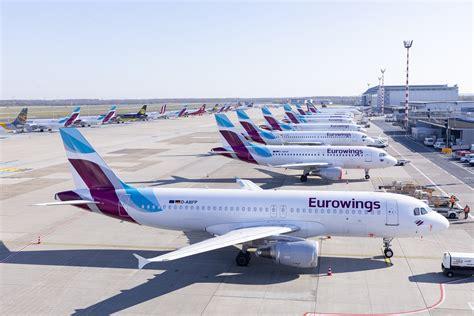
London Gatwick’s momentum in 2026 is no accident. The airport is riding a wave of surging passenger demand, strategic slot availability, and competitive operating economics that are increasingly hard for airlines to ignore. The confirmation that Eurowings will begin services this spring marks the seventh new airline to add Gatwick to its network in 2026, reinforcing the airport’s status as the UK’s most dynamic long-term growth platform.
This latest addition arrives at a moment when Gatwick’s traffic recovery has shifted decisively into expansion. Airlines are no longer simply returning; they are repositioning networks, reallocating capacity from congested hubs, and chasing demand where operational flexibility still exists. Gatwick, with its single-runway efficiency and deep leisure-market reach, fits that strategy neatly.
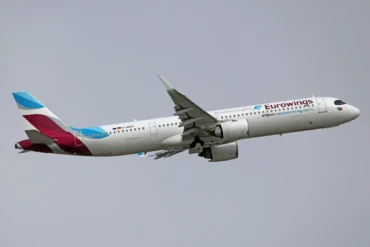
Eurowings’ entry is particularly telling. As a Lufthansa Group carrier traditionally associated with Heathrow, its move signals a broader recalibration of how European airline groups view London’s airport hierarchy. Gatwick is no longer the alternative—it is becoming a primary node in its own right.
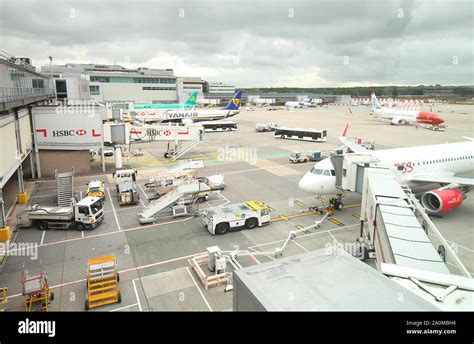
Eurowings Adds Gatwick as Heathrow Strategy Shifts
Eurowings will launch its Gatwick operations on March 29, 2026, aligning with the start of the IATA summer season. The timing matters. Summer schedules define airline profitability, and shifting airports at this point reflects long-term intent rather than experimentation. While Eurowings previously served London Heathrow from Cologne and Stuttgart, the airline is now rebalancing capacity rather than expanding blindly.
Historically, the Gatwick–Germany market is no stranger to Eurowings’ corporate lineage. The now-defunct Germanwings, later absorbed into Eurowings, operated from Gatwick until 2008. That legacy gives the airline a familiarity with the airport’s catchment and traffic flows, reducing execution risk as it re-enters.
The airline will initially operate two routes from Gatwick, targeting markets with proven demand but recent service gaps. This approach reflects Eurowings’ evolving role within the Lufthansa Group as a cost-efficient European connector, feeding both point-to-point leisure traffic and broader network flows.
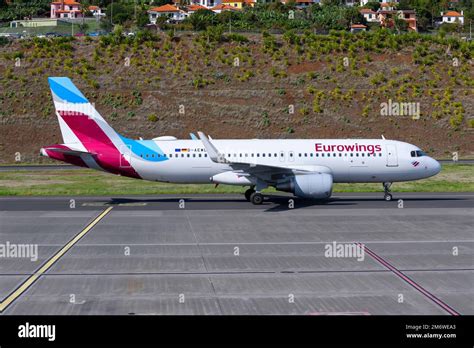
Cologne and Stuttgart Return to Gatwick’s Network
The first route, Gatwick–Cologne, begins on March 29 with up to 13 weekly flights, including a Saturday service. Cologne has a complex history at Gatwick, last seeing regular service in 2022 before easyJet withdrew. British Airways briefly operated the route before shifting it back to Heathrow, and Jet2 is planning limited seasonal flights in late 2026. Eurowings’ entry restores consistent connectivity and signals confidence in sustained demand despite strong rail competition between London and Germany’s Rhine region.
The second route, Gatwick–Stuttgart, launches on April 12 with six weekly flights, excluding Saturdays. Stuttgart last had regular Gatwick service in 2020, also previously operated by easyJet. Eurowings’ decision to reopen this route highlights Gatwick’s strength in serving secondary European business and industrial centers that remain underserved post-pandemic.
Crucially, Eurowings will continue operating 18 weekly flights to Heathrow from Stuttgart, meaning the airline is not abandoning Heathrow altogether. Instead, it is splitting London capacity across two airports, optimizing costs while maintaining market presence.
Slot Leasing Reveals Lufthansa Group Coordination
One of the most strategically revealing elements of this move is how Eurowings secured its Gatwick slots. The airline is leasing them from ITA Airways, which is returning capacity to Heathrow following its partial acquisition by the Lufthansa Group. This intra-group coordination underscores how large airline groups now treat airport slots as shared strategic assets, redeployed to maximize collective advantage rather than siloed by brand.
The broader Heathrow reshuffle adds context. Both Eurowings and British Airways are ending Cologne–Heathrow flights on March 28, leaving Gatwick as the sole London airport with regular air service to Cologne. High-speed rail undoubtedly plays a role, but airline economics and slot scarcity at Heathrow are equally decisive factors.
Gatwick’s Growing Appeal to New Entrants
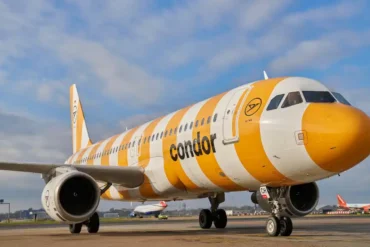
Eurowings’ arrival brings the total number of new airlines launching at Gatwick in 2026 to seven: Air Arabia, Air France, Animawings, Capital Airlines, Condor, Eurowings, and Jet2. This list spans low-cost, leisure-focused, and full-service carriers, illustrating Gatwick’s diversified appeal rather than reliance on a single market segment.
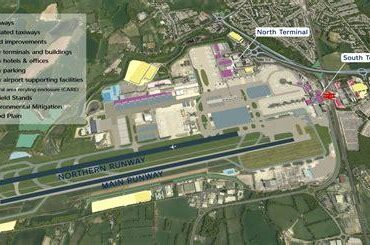
The airport’s advantages are structural. Compared with Heathrow, Gatwick offers greater slot availability, lower airport charges, and faster operational turnaround. For airlines navigating thin margins and volatile fuel costs, those differences translate directly into route viability.
Passenger demand is the final, decisive factor. Gatwick’s catchment includes London, the South East, and major leisure flows that rebound quickly even during economic uncertainty. Airlines are voting with capacity, and the verdict is clear.
A Snapshot of Momentum, Not the Final Picture
While seven new airlines are confirmed as of late January, Gatwick’s 2026 network remains fluid. Airline schedules evolve, exits occur, and new announcements are likely. Recent departures, including Delta Air Lines and Eastern Airways, are reminders that aviation growth is never linear.
Still, the pattern is unmistakable. Gatwick is emerging as Europe’s most strategically flexible major airport, absorbing growth that constrained hubs cannot. Eurowings’ decision to shift meaningful capacity there is not a one-off—it is part of a wider realignment that positions Gatwick at the center of London’s next aviation chapter.
In an era defined by constraint, Gatwick’s greatest asset may simply be room to grow.